






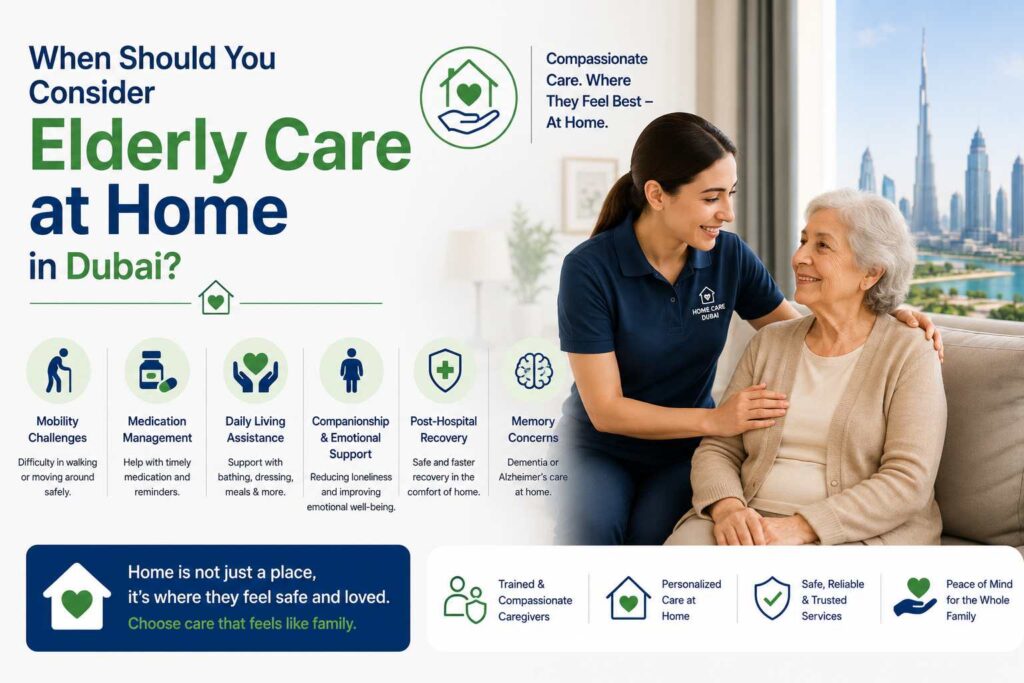
Watching a parent or elderly relative age is rarely a single, obvious moment where you suddenly realise they need more support. It’s usually a gradual accumulation of small signs, until one day you look back and realise things have shifted more than you initially noticed. Knowing when to actually consider home-based elderly care, rather than waiting for a crisis to force the decision, can make a genuine difference in both safety and quality of life. Here’s a practical look at the signs worth paying attention to.
1. Increasing Difficulty With Daily Tasks
If a parent or relative is starting to struggle with everyday activities, bathing, dressing, cooking, or managing household chores, this is often one of the clearest early signs that additional support is needed. These struggles don’t necessarily mean a full transition to a nursing facility, but they’re a strong indicator that some level of home-based assistance would genuinely improve daily quality of life and safety.
2. Frequent Falls or Mobility Concerns
Falls are one of the most serious risks for elderly individuals, and even a single fall can sometimes signal broader mobility or balance issues developing. If you’ve noticed unsteady walking, difficulty getting up from chairs, or an actual fall has already occurred, this is a strong signal that professional support, whether physiotherapy, mobility assistance, or general home care supervision, should be considered sooner rather than later.
3. Medication Management Becoming Confusing
Managing multiple medications, correct dosages, timing, and potential interactions becomes genuinely difficult as memory and organisational ability naturally shift with age. Missed doses, doubled-up medications, or general confusion about a medication schedule are signs that professional oversight, through home nursing support, could meaningfully reduce serious health risks.
4. Noticeable Changes in Memory or Cognitive Function
Occasional forgetfulness is a normal part of ageing, but more consistent memory lapses, confusion about time or place, or difficulty following conversations can indicate something requiring closer attention and professional guidance. If you’ve noticed these changes, it’s worth discussing them with a doctor, who can help determine what kind of support and care approach would genuinely help, rather than assuming a particular diagnosis yourself.
5. Social Isolation and Withdrawal
Elderly individuals living alone, particularly those whose family members have busy schedules or live at a distance, can experience significant social isolation, which carries real risks for both mental and physical health. If a relative seems increasingly withdrawn, uninterested in previously enjoyed activities, or simply isolated for long stretches during the day, home care support that includes companionship and regular engagement can make a genuine difference.
6. Recovery After a Hospital Stay or Surgery
Following a hospital admission, surgery, or serious illness, the transition back home can be genuinely challenging without proper support. This is often when families first seriously consider elderly care at home services, since the combination of physical recovery, medication management, and mobility support needed during this period usually exceeds what family members alone can safely manage without professional guidance.
7. Managing Chronic Health Conditions
Ongoing conditions like diabetes, heart disease, or respiratory issues require consistent monitoring, medication management, and lifestyle support. As these conditions progress or become more complex to manage, professional home care becomes an increasingly practical option for ensuring consistent, proper management rather than relying solely on family members juggling their own responsibilities alongside caregiving.
8. Caregiver Burnout Among Family Members
It’s important to recognise that family caregivers have limits too. If you or another family member providing care is feeling consistently exhausted, stretched too thin, or unable to properly balance caregiving with work and personal responsibilities, this is a completely legitimate reason to consider additional professional support. Bringing in trusted home nursing care services doesn’t mean stepping away from caring for your relative, it means ensuring they receive consistent, professional support while you remain involved in a sustainable, healthy way.
9. Difficulty Managing Nutrition and Hydration
Noticeable weight loss, an empty fridge, or signs of poor nutrition can indicate that meal preparation and general dietary management have become genuinely difficult for an elderly relative to manage alone. Home care support that includes meal planning and preparation assistance can address this practically, before it develops into more serious health complications.
10. A Family Request for Peace of Mind
Sometimes the deciding factor isn’t a specific crisis or dramatic decline, but simply a family’s growing sense that additional oversight would provide genuine peace of mind, particularly for families managing care from a distance or juggling demanding work schedules. There’s nothing wrong with seeking support proactively rather than waiting for an emergency to force the decision.
What Home Elderly Care Can Actually Look Like
Home-based elderly care isn’t a single, fixed service, it typically ranges considerably depending on individual needs:
- Companionship and light assistance, for relatives who are largely independent but benefit from regular check-ins and social engagement
- Personal care support, covering bathing, dressing, and general daily living assistance
- Nursing care, for medication management, wound care, or monitoring chronic conditions
- Physiotherapy and rehabilitation support, particularly following surgery, illness, or injury
- Full-time or live-in care, for individuals requiring more comprehensive, ongoing supervision and support
Why Choosing a Properly Licensed Provider Matters
Whatever level of support your family needs, working with a properly regulated, DHA-licensed provider ensures care is delivered by qualified professionals following recognised medical and safety standards, rather than relying on informal or unverified arrangements. Trusted home nursing care services in Dubai, such as those offered by Proactive Care, typically provide a range of coordinated support, from nursing and physiotherapy to general companionship care, allowing families to adjust the level of support as needs evolve over time rather than needing to switch providers entirely as circumstances change.
Starting the Conversation With Your Family
Bringing up the topic of additional care with an elderly parent can feel genuinely difficult, since it often touches on sensitive feelings around independence and ageing. Approaching the conversation with empathy, focusing on specific, practical concerns rather than general statements about ageing, and involving your relative directly in decisions about their own care tends to lead to a much more positive, collaborative outcome than an approach that feels imposed on them.
Final Thoughts
Deciding when to consider elderly care at home in Dubai rarely comes down to one single moment. It’s usually a combination of gradual signs, difficulty with daily tasks, mobility concerns, medication confusion, or simply a family’s growing need for peace of mind. Recognising these signs early, rather than waiting for a crisis, allows for a more thoughtful, gradual transition into the right level of support. Working with a trusted, properly licensed provider ensures that whatever stage of care your family needs, it’s delivered safely, professionally, and with genuine attention to your relative’s dignity and comfort.









Leave a Reply