






Cereal is one of the most common breakfast foods across the world. It is quick, easy, and often fortified with essential nutrients. But when you focus on nutrition, the main question that comes up is: how many grams of protein are in cereal? This is an important point because protein helps you stay full, supports muscle repair, and maintains energy levels throughout the day.
On average, a single cup of regular cereal contains between 2 and 8 grams of protein, based on the brand and kind of cereal. The lower end would be traditional cereals produced using refined grains, whereas the high-protein cereal options may contain a lot more. Certain brands go that extra mile and allow a serving of over 15 grams of protein by incorporating soy, pea, or whey as an added source of protein.
There’s much more to know if you are truly curious about your cereal consumption!
Why Protein in Cereal Matters
Protein is a necessary macronutrient that helps the body in numerous ways. It aids in the formation of tissues, muscle preservation, and appetite. A majority of cereals contain a lot of carbohydrates, and this implies that they provide short-term energy and not long-term satiety. This is the same as when you add protein, you achieve a superior balance. Protein breakfast cereal will keep your body going throughout the morning and control your appetite.
When you seem to be hungry an hour after breakfast, then changing to cereals rich in protein will suffice. Protein slows the rate of digestion, which ensures that you are satisfied. It also aids in maintaining blood sugar levels, and this prevents energy crashes.
Average Protein in Different Types of Cereal
Not all cereals have the same protein amount. Here is a basic overview to help you compare: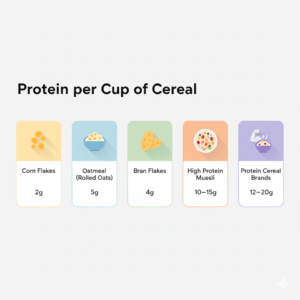
- Corn flakes: around 2 grams per cup
- Oatmeal (rolled oats): 5 grams per cup
- Bran flakes: 4 grams per cup
- High protein muesli: 10 to 15 grams per cup
- Protein cereal brands (fortified): 12 to 20 grams per serving.
Such figures indicate that the higher the quantity of whole grains and seeds in a cereal, the higher its protein value is likely to be. You will always want to make sure the amount of grams in a cup of cereal by always checking the nutrition label.
Top Protein Cereals for Daily Breakfast
If you are searching for cereals high in protein, there are some strong options on the market. These brands focus on nutrition while keeping sugar levels low.
Some top protein cereals include:
- Kashi GO – around 13 grams of protein and 9 grams of fiber per serving.
- Magic Spoon – 13 to 14 grams of protein and only 1 gram of sugar.
- Premier Protein Cereal – 20 grams of protein per serving, often considered the cereal with the most protein.
- Catalina Crunch – a high-protein, low sugar cereal made from plant-based ingredients.
These cereals are good choices for people who want more protein in the morning without excess sugar or processed grains.
Comparing Regular vs High-Protein Cereal
Refined flour and sugar are commonly used to make regular cereals. They make a good snack meal and do not offer sustained energy. On the other hand, high-protein cereal is made by the use of added protein sources such as soy, milk protein isolate, or pea protein. These assist in making the meal balanced and enhancing satiety.
Milk, yogurt, or nuts can also be added to the already existing cereal to increase the protein content. E.g., 1-2 cups of milk would increase protein by about 8 grams, and 1-2 cups of almonds would increase the protein by about 6 grams. Those few additions will make a simple breakfast a balanced meal that is high in protein.
When packaging these cereals for retail or personal branding, many health food businesses use custom cereal boxes wholesale to maintain freshness and branding quality.
Whole Grain Cereals Without Sugar
Many people want a healthier breakfast without refined sugar. Whole grain cereals without sugar are a great option because they are nutrient-dense and rich in fiber. They often contain oats, quinoa, or barley, which naturally have higher protein levels.
For instance, one serving of whole oats contains about 5 grams of protein, while quinoa flakes offer around 8 grams. These cereals keep you full and also support better digestion. Pairing them with a protein-rich ingredient like Greek yogurt can create a strong breakfast balance.
The Healthiest Cereal Choices
In selecting the healthiest cereal, whether in Whole Foods or any other grocery store, you must consider three primary factors: the amount of protein, fiber, and sugar. A cereal with a minimum of 10grams of protein, 5grams of fiber, and fewer than 5grams of sugar is a good one.
Cereals should avoid artificial flavoring or refined sugar. Rather, get those that contain natural sweeteners or lack sweeteners. This not only assists in keeping the energy level constant but also aids in improving long-term health.
High-protein muesli is also a good option if you like a combination of textures. It is an oat, nut, seed, and dried fruit mix, which contains crunch and nutrients.
High-Protein, Low-Sugar Cereals for Fitness Goals
Fitness lovers find it convenient to use the high-protein, low-sugar cereal to complement their diet. These grains aid in the post-exercise recovery of the muscles and aid in achieving the daily protein intake. Most brands today incorporate plant-based ingredients in order to make their cereal fit every dietary requirement.
- These grains are also high in fiber, which assists in digestion and maintains calories in balance. They are better matched with milk or soy milk.
- Others go as far as consuming pure protein cereal products that are rich in protein sources and fiber, and excluding the unnecessary carbs.
- To make these cereals more appealing for store shelves, brands often pack them in custom kraft cereal boxes that highlight eco-friendly values and clean ingredients.
Practical Tips to Get More Protein from Cereal
- Choose cereal with at least 10 grams of protein per serving.
- Add nuts, seeds, or protein powder to boost protein naturally.
- Use milk or Greek yogurt instead of water for extra nutrition.
- Keep sugar levels below 5 grams per serving for better balance.
- Mix different cereals like muesli and oats to create a custom blend.
These small steps make a big difference in the nutritional value of your meal.
Conclusion
Cereal is not only good but also healthy, provided it is wisely selected. The protein content of most standard cereals is 2 to 5 grams per cup, whereas high-protein cereal products are 10 to 20 grams. The most effective option is to consume cereals with high protein content and low sugar. This will provide you with energy, satisfy your stomach, and help you become more athletic.
When you are monitoring your food, you must read nutrition labels. Search for cereals prepared using whole grains or seeds and added sources of protein. A balanced cereal breakfast helps you throughout the day until early in the evening.



Leave a Reply