






Introduction
Are you tired of struggling with your old multi-tool? Or maybe you’re standing in the hardware store, completely overwhelmed by the options, not knowing which oscillating tool will actually get the job done? You’re not alone. Choosing the right oscillating tool can make the difference between a project that’s smooth and satisfying versus one that’s frustrating and exhausting.
In this guide, I’m walking you through the five best oscillating tools available in 2026, so you can make a decision based on what actually matters—power, reliability, ease of use, and value. Let’s find the tool that’s right for you.
Why an Oscillating Tool Matters (And Why You Need the Right One)
Look, oscillating tools are absolute workhorses. Whether you’re cutting drywall, sanding trim, or getting into tight spaces that your other power tools can’t reach, these multi-tools handle jobs that would take forever by hand. But here’s the thing: not all oscillating tools are created equal.
A good oscillating tool should have enough power to tackle real work without bogging down, a comfortable grip for hours of use, and versatility that justifies the investment. A bad one? It’ll make you regret the purchase in the first week. That’s why finding the best oscillating tool for your specific needs is worth taking the time to figure out.
Let me break down what makes an oscillating tool actually good, then show you five options that genuinely deliver.
The 5 Best Oscillating Tools in 2026
1. DeWalt DCS356C1 Cordless Oscillating Tool
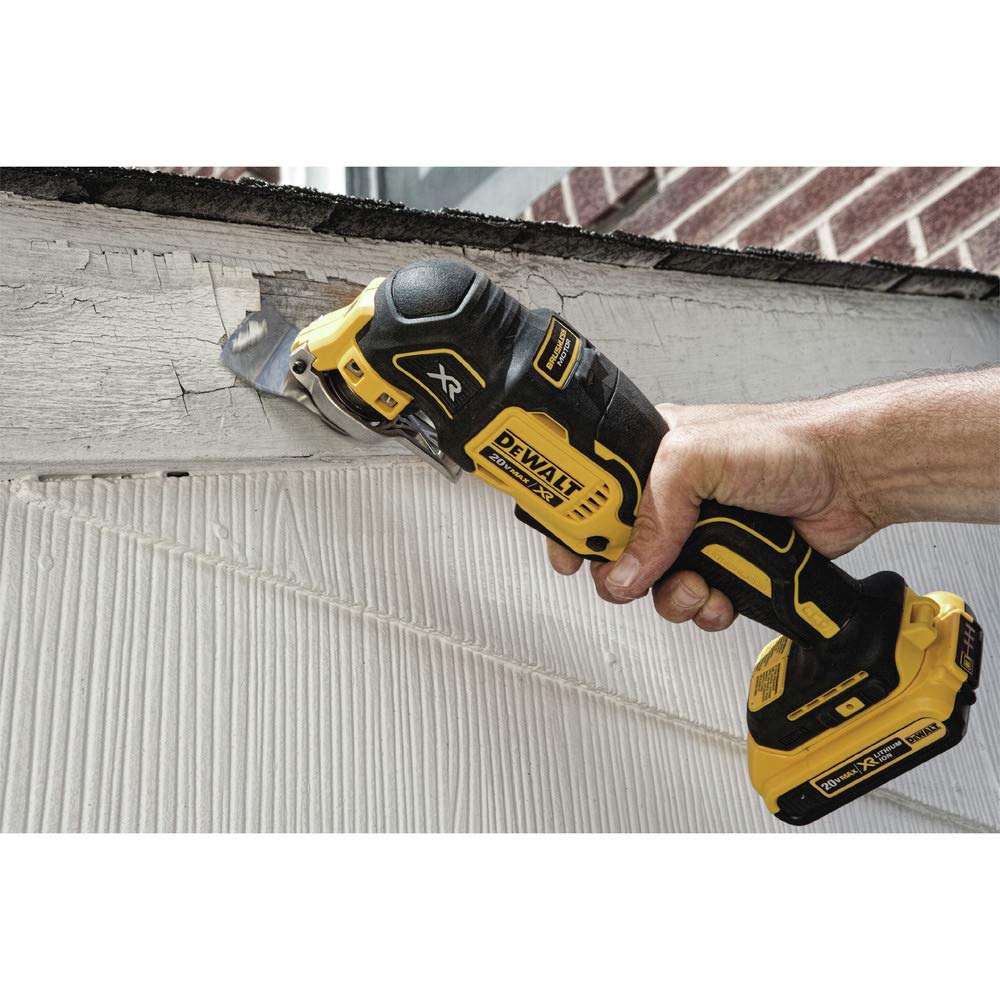
If you want a tool that does everything and never leaves you frustrated, the DeWalt DCS356C1 is the one to grab. This is the kind of oscillating tool that pros recommend to friends, and homeowners return to again and again.
Power & Speed: 20V lithium-ion battery system with variable speed up to 3000 oscillations per minute. You get enough power for serious cutting and sanding, plus the battery lasts through a whole day of project work.
Accessories: Comes with a full kit—a charger, two batteries, and multiple cutting and sanding attachments. You’re ready to work right out of the box.
Design: Lightweight and well-balanced, which matters when you’re holding it overhead or working in tight corners for an hour straight.
✓ Pros
- Excellent runtime with dual batteries
- Great for both cutting and sanding
- Solid warranty and support
- Comfortable grip reduces fatigue
- Accurate, smooth cutting results
✗ Cons
- Higher price point upfront
- Battery replacement adds to cost
- Heavier than corded competitors
- Requires charging time between sessions
Perfect For: Homeowners who want cordless convenience, professionals doing light to medium work, and anyone who already owns DeWalt 20V batteries (they’re compatible with tons of tools).
2. Bosch GOP 40-30 Oscillating Tool
When German precision engineering meets affordability, you get the Bosch GOP 40-30. This corded powerhouse delivers consistent, reliable performance day after day. It’s the tool you buy when you want it to just work.
Power Source: Corded electric, so you never worry about battery life. Just plug it in and go—perfect for longer projects or workshop use.
Performance: 4-amp motor with speed control from 10,000 to 40,000 oscillations per minute. This range gives you flexibility for different materials and tasks.
Vibration Control: Bosch’s damping system keeps vibration low, which matters if you’re using this tool for hours. Your hands will thank you.
✓ Pros
- Consistent, unlimited runtime
- Wide speed range for different materials
- Low vibration—less hand fatigue
- Excellent build quality
- Affordable price for the quality
✗ Cons
- Corded—limits mobility and range
- Need to manage a power cord
- Higher vibration than premium models
- Slightly louder than cordless options
Perfect For: Budget-conscious buyers, people with a dedicated workshop, anyone who does a lot of detail sanding, and professionals who need reliability without breaking the bank.
3. Makita JM23100 (Corded) Oscillating Tool
Makita has built a reputation on tools that last longer, work harder, and handle abuse that would kill other brands. The JM23100 is no exception. It’s the workhorse for people who take their projects seriously.
Motor: 3.2-amp motor pushing out impressive cutting speeds up to 6,800 strokes per minute. This is real power in a handheld tool.
Comfort Feature: Soft grip and low vibration design mean you can work for hours without your hand cramping up or going numb.
Durability: Heavy-duty construction that feels professional-grade. This is the tool that sits in a contractor’s van for years of hard use.
✓ Pros
- Incredible cutting power
- Built to last with heavy-duty construction
- Solid, professional performance
- Moderate price point
- Excellent for detail work
✗ Cons
- Corded—requires power outlet
- Heavier than some competitors
- Learning curve for speed control
- Not ideal for rough cutting
Perfect For: Serious DIYers, contractors who need a tool they can count on, and anyone doing precision cutting or detailed sanding work where power and accuracy both matter.
4. Milwaukee M12 Cordless Oscillating Tool
Milwaukee’s M12 platform is all about compact power. If you’re looking for something you can toss in a bag, carry up a ladder, and use in tight spaces, this might be your answer.
Size & Weight: Genuinely compact and lightweight, designed to work in places where full-size tools just don’t fit. It’s the tool you reach for when space is tight.
Battery System: Milwaukee’s M12 system is widespread and affordable. Tons of tools use the same batteries, so your investment pays off across your whole tool collection.
Speed: Variable speed up to 3,000 oscillations per minute—adequate for most home projects, though not quite at the level of full-size corded models.
✓ Pros
- Genuinely portable and lightweight
- Works in tight spaces other tools can’t
- Affordable battery ecosystem
- Good for detail work
- Quick battery charge time
✗ Cons
- Lower power for heavy cutting
- Short battery runtime on intensive work
- Limited to smaller accessory size
- Not ideal for large-scale projects
Perfect For: Homeowners with smaller projects, tight spaces that need work, anyone who travels to job sites frequently, and people who want a backup tool without a big investment.
5. Festool VECTURO Cordless Oscillating Tool
Here’s the thing about Festool: they’re expensive, but they’re expensive for a reason. If you want the premium experience and you don’t mind paying for it, the VECTURO is the best oscillating tool money can buy in 2026.
Precision & Refinement: This tool feels different in your hand. Smooth, balanced, quiet. Every feature is designed for comfort and accuracy on high-end finishing work.
Dust Extraction: Festool’s integrated dust extraction system keeps your workspace clean and removes more harmful dust—something other tools largely ignore.
Accessories: Festool’s ecosystem of premium sanding pads and attachments is unmatched in quality, though it comes at a premium price.
✓ Pros
- Exceptional build quality and design
- Superior dust extraction
- Smooth, quiet operation
- Perfect for fine finishing work
- Excellent warranty and support
✗ Cons
- High initial cost
- Accessories are very expensive
- Overkill for basic DIY work
- Battery ecosystem is Festool-only
- Learning curve for beginners
Perfect For: Professionals who bill by the hour and want minimal vibration, serious woodworkers, furniture makers, and anyone doing high-end finishing work where the investment pays for itself in quality results.
DeWalt DCS356B vs DCS356C1: Which Should You Choose?
Here’s a question I hear all the time: “What’s the difference between the DeWalt DCS356B and DCS356C1?” It’s a fair one, because they’re both solid tools. Let me clear this up.
The DCS356B is the bare tool—you’re buying just the oscillating motor. You bring your own batteries (if you have DeWalt 20V batteries already) or buy them separately. This is cheaper upfront if you’re already in the DeWalt ecosystem.
The DCS356C1 is what I recommended earlier. It’s the complete kit. You get the tool plus two batteries and a charger, ready to go. Yes, it costs more, but you’re not hunting down batteries and a charger afterward. If you don’t already own DeWalt batteries, this is the smarter choice—the bundle actually saves you money compared to buying everything separately.
So here’s the simple answer: Choose the B if you already own DeWalt 20V gear. Choose the C1 if you’re starting fresh. Both are excellent tools; the C1 just makes more sense for most people because it’s actually more affordable as a complete package.
How to Choose the Right Tool for You (The Real Talk)
I’ve given you five solid options, but which one is actually right for you? Here’s how to think about it:
Ask Yourself These Questions:
- How much work do you actually have? If you’re a homeowner doing occasional projects (caulk removal, light sanding, minor cuts), the Milwaukee M12 or a lower-cost corded option is plenty. If you’re doing serious renovation work or professional jobs, invest in something with more power like the Makita or Festool.
- Do you already own batteries from a brand? This matters more than you’d think. If you own DeWalt, Makita, or Milwaukee batteries, buying a compatible oscillating tool means they all share power sources. That’s real convenience and cost savings.
- Corded or cordless? Cordless is more flexible and portable. Corded gives you unlimited runtime and more consistent power. For workshop use, corded wins. For moving around job sites, cordless wins.
- What’s your budget honestly? This isn’t just about the tool price. It’s about accessories and batteries too. Budget $150-$300 for a decent corded model, $250-$400 for a good cordless, and $500+ if you want Festool quality. Don’t stretch too far beyond what makes sense for your actual usage.
- Will you actually use it? This sounds silly, but honestly, buy based on what you’ll actually do. There’s no point buying a $600 professional-grade tool if you rent one twice a year.
What Features Really Matter (And Which Are Just Hype)
Things That Actually Matter:
- Oscillation Speed: More speed = better for cutting. Variable speed is genuinely useful—lets you dial in what works for different materials.
- Vibration Levels: High vibration ruins your hands. This matters more than people realize. Check reviews from actual users who’ve spent hours with the tool.
- Accessory Availability: Can you actually find blades, sanding pads, and attachments? The best tool is useless if you can’t find supplies for it.
- Runtime (Cordless): If you buy cordless, a short runtime is frustrating. Dual batteries in the kit is actually valuable.
Things That Don’t Matter As Much:
- Brand names alone—get the specific model, not just the brand.
- Maximum power specs—what matters is usable power for your actual tasks.
- Fanciest ergonomic design—comfort varies by person; read user reviews for your hand size.
- Included accessories if they’re low-quality—you’ll replace them anyway.
Real Questions People Ask (And Honest Answers)
Q: Is oscillating tool worth buying if I only have a few projects?
A: Honestly? Consider renting for one-off jobs. But if you’re doing anything with caulk removal, detail work, or cuts in tight spaces, having one on hand is invaluable. A budget model ($100-150) is reasonable for homeowners who’ll use it a few times a year.
Q: How long do oscillating tools actually last?
A: A decent tool, with normal use, lasts 5-10 years minimum. High-end brands like Festool and Makita regularly outlast that. It depends more on how often you use it and how hard you work it.
Q: Can you use an oscillating tool for metal? Or just wood and drywall?
A: You can cut some metals with the right blade, but it’s not ideal. These tools shine with wood, drywall, plastic, and soft composites. Metal work is possible but slower and harder on the motor.
Q: Do I need a wet/dry vacuum attachment?
A: It helps with dust management, especially indoors. If you’re doing detailed work or working in finished spaces, it’s worth getting. For outdoor work or rough cutting, less critical.
Q: Is cordless worth the extra cost?
A: Yes, if you move between projects or work on different levels (like ladders). No, if you have a workshop setup with a power outlet nearby. Cordless is convenience; corded is power and runtime.
The Bottom Line: What Should You Actually Buy?
Here’s what I’d do, real talk:
If you’re a homeowner with occasional projects: Get the DeWalt DCS356C1 or the Milwaukee M12. Both are cordless, both are affordable for their quality, and both work great for the stuff homeowners actually do. The DeWalt has more power; the Milwaukee is more portable.
If you have a workshop and want the best value: The Bosch GOP 40-30 is the answer. Corded power, solid performance, affordable. You plug it in and trust it to work reliably for years.
If you want a tool that’ll last forever and handle heavy work: Go with the Makita JM23100. This is the tool professionals choose when they’re buying their own gear.
If money isn’t the issue and you want the best possible tool: The Festool VECTURO is genuinely the best. It’s expensive, but if you use it regularly, you’ll notice the difference every single day.
Ready to make your choice? The best oscillating tool is the one that matches your actual needs and budget—not the most expensive or the most features, but the right fit for how you’ll actually work.
Final Thoughts
Choosing an oscillating tool isn’t complicated if you stop thinking about specs and start thinking about your actual work. What are you cutting? How often? Do you need mobility or are you stationary? Those answers lead you to the right tool.
The five options I’ve given you represent different points on the spectrum. Each one is genuinely good at what it does. You literally can’t go wrong with any of them—you can only choose the one that’s wrong for your situation.
So pick one, buy it, and stop second-guessing yourself. Your projects will get done faster, easier, and with better results. That’s what a good oscillating tool does.



Leave a Reply