






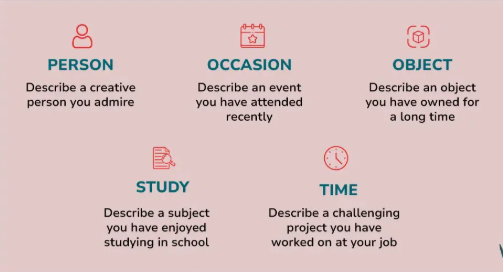
Speaking tests are an important part of many language exams. In this section, the examiner gives a topic and asks you to speak for a short time. These topics are often called Speaking Cue Cards. They test how well you can express your ideas in simple and clear English.
Many students feel nervous during this part. But if you understand the common types of Speaking Cue Cards, you can prepare better. This article explains the most common topic types and how to approach them in an easy way.
What Are Speaking Cue Cards?
Speaking Cue Cards are short prompts given in a speaking test. You get a topic with a few points. You usually have one minute to think and then speak for one to two minutes.
The purpose is to check:
- Your fluency
- Your vocabulary
- Your confidence
- Your ability to organize ideas
The topics are simple and related to daily life.
Why Understanding Cue Card Topics Is Important
Many students try to memorize answers. This is not helpful. The topics can change, but the pattern stays similar.
If you understand common Speaking Cue Cards, you can:
- Speak naturally
- Avoid panic
- Give better answers
- Improve your score
Main Types of Speaking Cue Card Topics
Most Speaking Cue Cards fall into a few common categories. Let’s look at each one.
1. Personal Experience Topics
These topics ask about your life experiences.
Examples :
- Describe a memorable trip
- Talk about a happy day in your life
- Describe a time you helped someone
How to Answer :
- Start with a short introduction
- Explain what happened
- Share your feelings
- End with a simple conclusion
Tip :
Use past tense and simple sentences.
2. People Description Topics
These topics focus on a person you know.
Examples :
- Describe a teacher who helped you
- Talk about a friend you like
- Describe a family member
What to Include :
- Who the person is
- How you know them
- Their qualities
- Why you like them
Tip :
Use simple adjectives like kind, helpful, friendly.
3. Place Description Topics
You may be asked to describe a place.
Examples :
- Describe your favorite place
- Talk about a city you visited
- Describe a quiet place
What to Include :
- Location
- What it looks like
- What you do there
- Why you like it
Tip :
Use simple words to describe the environment.
4. Object or Thing Topics
These Speaking Cue Cards ask about an object.
Examples :
- Describe a useful gadget
- Talk about a gift you received
- Describe something you use daily
What to Include :
- What the item is
- How you got it
- How you use it
- Why it is important
Tip :
Focus on use and importance.
5. Event Topics
These topics ask about events or occasions.
Examples :
- Describe a festival you enjoy
- Talk about a wedding you attended
- Describe a school event
What to Include :
- What the event was
- When and where it happened
- What you did
- How you felt
Tip :
Use past tense and keep it simple.
6. Activity Topics
These are about things you do.
Examples :
- Describe a hobby
- Talk about a sport you like
- Describe a daily activity
What to Include :
- What the activity is
- How often you do it
- Why you enjoy it
- How it helps you
Tip :
Use present tense for regular activities.
7. Future Plan Topics
Some Speaking Cue Cards focus on the future.
Examples :
- Describe a place you want to visit
- Talk about a skill you want to learn
- Describe your future goal
What to Include :
- What your plan is
- Why you want it
- How you will do it
Tip :
Use simple future forms like “I will” or “I want to”.
8. Opinion-Based Topics
These topics ask what you think.
Examples :
- Describe a good way to stay healthy
- Talk about the importance of education
- Describe a useful skill
What to Include :
- Your opinion
- Reasons
- Examples
Tip :
Keep your ideas clear and simple.
Common Structure for All Speaking Cue Cards
No matter the topic, you can follow a simple structure:
- Introduction (1-2 lines)
- Main points (3-4 ideas)
- Personal feeling
- Short conclusion
This helps you speak in an organized way.
Simple Tips to Answer Better
1. Use Simple English
Do not try to use difficult words. Simple English is better.
2. Speak Clearly
Speak slowly and clearly. Do not rush.
3. Practice Daily
Practice different Speaking Cue Cards every day.
4. Do Not Memorize
Try to understand the topic instead of memorizing.
5. Use Examples
Examples make your answer more natural.
Common Mistakes to Avoid
- Speaking too fast
- Using very long sentences
- Going off topic
- Staying silent for too long
- Repeating the same words
How to Practice Speaking Cue Cards
You can practice at home easily.
Method :
- Pick a topic
- Set a timer for 1 minute
- Think of ideas
- Speak for 2 minutes
You can also record your voice and listen again.
Useful Ideas for Practice
Here are some simple practice ideas:
- Talk about your daily routine
- Describe your favorite food
- Speak about your school or work
- Talk about your best friend
These help improve fluency.
Understanding common Speaking Cue Cards makes preparation easier. Most topics are based on daily life, so you already have ideas.
Focus on:
- Clear speech
- Simple words
- Good structure
With regular practice, you can answer any Speaking Cue Cards confidently.



Leave a Reply