






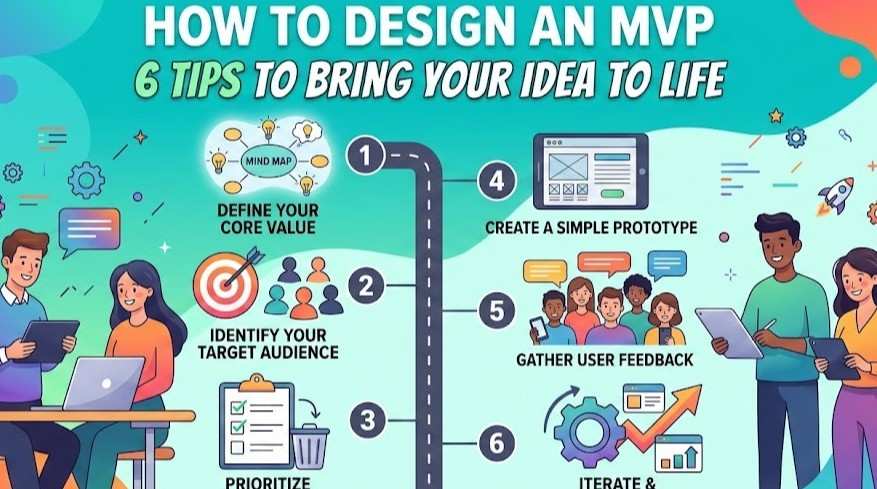
How does any business begin? With a strong idea. An aspiring entrepreneur decides to start developing a project but soon faces an important challenge: how to engage customers. Before investing in a complex software solution, whether for a large enterprise or a mid-sized startup, it is important to evaluate the product’s market potential and clearly define the target audience.
That is why businesses of all kinds need a minimum viable product, or MVP, from the very beginning. This approach enables turning an idea into a product with a limited set of core features. Many startups fail because they ignore the MVP concept. Without validated research on customer needs, business results can suffer. An MVP helps determine whether an idea aligns with current market trends and customer expectations.
So, if you recognize the importance of an MVP, the next logical question is: what is the best way to create one?
Go for the Minimal Thing
Customers do not care about your background or experience unless you promote it yourself. They judge your product by what they can see and use.
Your MVP is not a complete product. It only needs to survive in the market and attract early adopters. Do not try to build many features at once. Focus on one feature and make sure it works well enough to engage your target audience.
Here is something to think about. Facebook began as a simple platform that connected students and allowed them to comment. Amazon started by selling books only. Dropbox gained attention by sharing a video of a product that did not yet exist to collect feedback. The examples go on.
Keep Pace with Your Consumers
It is not enough to wake up one day with an idea and assume it is brilliant. You may believe it is original, but you could simply be reinventing something that already exists.
Take time to understand the market you want to enter and define a clear niche for your business. Use open data and tools from Square, HubSpot, and similar platforms to measure customer engagement and support your analysis.
You can also turn to social media platforms. Most of them are free and offer detailed insights that help you better understand your audience.
Stay on the Safe Side
MVP is known as a cost-saving, risk-reducing development approach. It is not wise to rely on luck and remove QA from your MVP plan. By including this service, you will detect and fix bugs before consumers are infuriated by your product. Moreover, ensure that the work of your Development and QA teams is synchronized, i.e., the teams maintain ongoing communication and have full-time access to all project materials. And one more tip: choose an expert assistant for launching your startup and ensure forward-looking project development.
Make It Engaging
Daily, a great number of business ideas strive to conquer the market. It is not easy to win consumer attention, so do not be reluctant to invest in UX design: make it user-friendly and easy to use. To reach an understanding with your development team, prepare a wireframe for the product. You will reduce costs and make the process easier for the development team, thereby accelerating your product’s time-to-market.
Take Care of the Development Process
Let’s assume you have already reviewed different case studies, observed the technology market, and handpicked your development team. You still have to keep an eye on the implementation of your pre-planned steps, as this is the perfect time to refine and improve your MVP and clearly define your follow-up marketing strategy.
You Are About to Rest on Your Laurels…
And there it is—the final stage: delivering your MVP to the target audience. The main business objective is to receive any feedback that will enable further improvements to your product. Make it simple and convenient for users to leave comments and reviews. Consider all consumers’ reactions, as their feedback may help reshape your product and your business. Stick to these principles, and you will have a chance to create and deliver a competitive product that becomes a perfect fit in the market.
Conclusion
A great idea by itself is not enough to guarantee success. When supported by careful planning and a structured development process, it can move your business confidently into the market. By studying consumer interest in detail, you strengthen your chances of long-term success. And by choosing the right software development team, you secure high-quality design, strong features, and alignment with current trends for your product.



Leave a Reply