






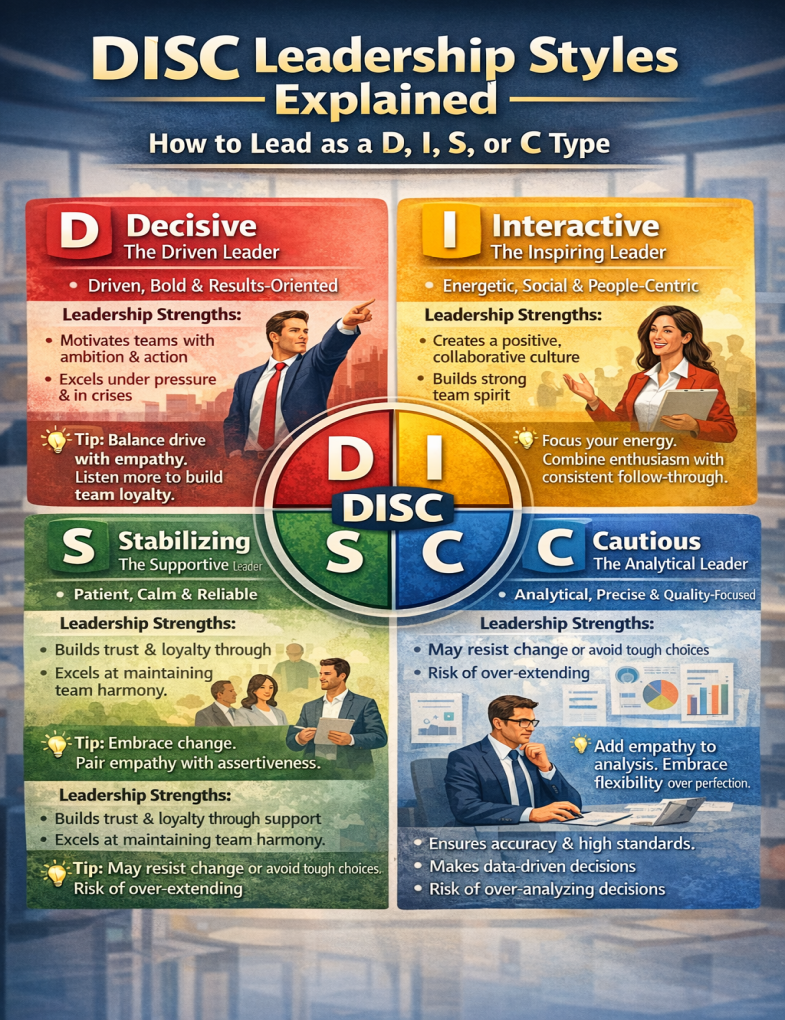
Leadership is more than just giving directions — it’s about understanding people, motivating them, and guiding them toward shared goals. One of the most effective tools for understanding leadership behavior is the DISC assessment, which breaks down personalities into four primary styles: D (Decisive), I (Interactive), S (Stabilizing), and C (Cautious). When applied in the context of disc assessment leadership, these styles reveal how different leaders think, communicate, and inspire their teams.
The beauty of DISC is that it doesn’t label people as good or bad leaders. Instead, it helps each individual recognize their natural strengths and growth areas, allowing them to lead with self-awareness and adaptability. In today’s dynamic workplace — where emotional intelligence and communication are critical — understanding your DISC leadership style can transform the way you manage and connect with others.
Let’s explore each of the four leadership styles and see how they influence your approach to leading a team.
1. D – The Decisive Leader: Driven, Bold, and Results-Oriented
Key Traits: Assertive, goal-focused, direct, competitive
Leaders with a dominant D-style personality are natural drivers. They set ambitious goals, take quick action, and thrive in challenging environments. These leaders love results — they’re decisive, fearless, and confident in their decisions. They often embody the “lead from the front” mindset, inspiring others through vision and determination.
However, their intensity can sometimes come across as impatience or insensitivity. They may prioritize speed over collaboration or overlook team members’ emotional needs.
Strengths:
- Motivates teams to push boundaries and achieve ambitious goals
- Excels under pressure and thrives in crises
- Makes confident, timely decisions when others hesitate
Challenges:
- May appear intimidating or overly demanding
- Can overlook input from quieter team members
- Risk of burnout due to constant drive for achievement
Leadership Tip for D-Types:
Balance your drive with empathy. Pause to listen before deciding, and show appreciation for the people behind the results. By softening your edges, you’ll build loyalty as well as performance.
2. I – The Interactive Leader: Inspiring, Energetic, and People-Centered
Key Traits: Enthusiastic, persuasive, social, optimistic
If you’re an I-style leader, you lead through inspiration. You thrive on energy, connection, and positivity — and your charisma naturally draws people to you. You enjoy building relationships and motivating your team through encouragement and recognition.
Your communication style is warm and engaging, making you a strong influencer. However, I-leaders may struggle with follow-through, structure, or confrontation, as they prefer to keep morale high.
Strengths:
- Creates a fun, collaborative, and motivating work culture
- Builds strong personal connections within the team
- Encourages creativity, innovation, and open communication
Challenges:
- May struggle with time management and organization
- Tends to avoid difficult conversations or criticism
- Can lose focus on details and long-term planning
Leadership Tip for I-Types:
Channel your energy into structured goals. Combine your enthusiasm with accountability by setting measurable objectives. Your optimism fuels motivation — but consistency ensures results.
3. S – The Stabilizing Leader: Supportive, Patient, and Dependable
Key Traits: Calm, steady, loyal, empathetic
Leaders with an S-style personality are the heart of their teams. They lead with empathy, patience, and reliability — creating a sense of security and trust. S-leaders excel at listening, supporting others, and maintaining harmony in the workplace.
Their approach makes them excellent mentors and conflict mediators. However, they may struggle with assertiveness or resist rapid change, preferring stability and predictability.
Strengths:
- Builds loyal, cohesive, and cooperative teams
- Maintains calm and order even during stressful times
- Excels in mentoring and supporting team members’ growth
Challenges:
- Hesitant to make tough or unpopular decisions
- May resist change or new directions
- Can overextend themselves trying to please everyone
Leadership Tip for S-Types:
Don’t be afraid to take charge when needed. Your empathy is a strength — but pair it with assertiveness. Embrace change as a path to growth, not disruption.
4. C – The Cautious Leader: Analytical, Precise, and Quality-Driven
Key Traits: Logical, detailed, disciplined, perfectionist
C-style leaders are methodical and data-driven. They focus on accuracy, compliance, and process improvement — ensuring the team maintains high standards. These leaders excel in environments that require structure, analysis, and quality control.
Their strength lies in thoroughness, but their perfectionism can slow progress or cause friction with more fast-paced team members.
Strengths:
- Sets clear expectations and high performance standards
- Makes well-researched, data-backed decisions
- Ensures compliance, organization, and quality in every project
Challenges:
- Can be overly critical or cautious in decision-making
- May struggle to delegate or trust others’ work
- Tends to prioritize data over emotion, affecting rapport
Leadership Tip for C-Types:
Balance logic with empathy. Your precision keeps teams on track, but remember that people, not just processes, drive success. Allow flexibility when perfection isn’t necessary.
The Power of Adaptability in DISC Leadership
The most effective leaders rarely fit into just one DISC category. Instead, they demonstrate adaptability — recognizing when to lean into different traits depending on the situation.
For example:
- A D/I leader balances decisiveness with inspiration.
- An S/C leader combines empathy with structure.
- A C/D leader brings analysis to ambitious strategies.
Understanding your blend through a DISC assessment helps you adjust your leadership approach to meet your team’s needs. This is the essence of disc assessment leadership — leading not just from your strengths, but with awareness of others’ styles.
Using DISC to Lead Diverse Teams
Today’s teams are more diverse than ever — in background, thinking styles, and communication preferences. DISC provides leaders with a framework to navigate these differences productively.
Here’s how:
- For D-teams: Offer challenges, autonomy, and measurable goals.
- For I-teams: Provide recognition, collaboration, and creative outlets.
- For S-teams: Foster stability, appreciation, and consistent support.
- For C-teams: Set clear expectations and recognize their precision and diligence.
By flexing your communication and management style to fit your team’s DISC mix, you’ll reduce friction and increase engagement.
How to Develop as a DISC-Aware Leader
If you want to elevate your leadership effectiveness, start with self-awareness. Take a DISC assessment to identify your dominant and secondary styles. Then, seek feedback from your peers and team members — their perspectives can reveal blind spots.
You can also consider professional DISC training or certification to deepen your understanding of behavioral dynamics. This knowledge not only sharpens your leadership but also helps you coach others using the same framework.
Final Thoughts
Leadership isn’t about being perfect — it’s about being self-aware and adaptable. The DISC leadership model offers a practical lens for understanding your natural style and improving how you connect with others.
Whether you lead with the boldness of a D, the charisma of an I, the steadiness of an S, or the precision of a C, the key to success lies in balance. When leaders apply disc assessment leadership principles, they transform teams through empathy, strategy, and insight — turning self-awareness into sustained performance.



Leave a Reply