






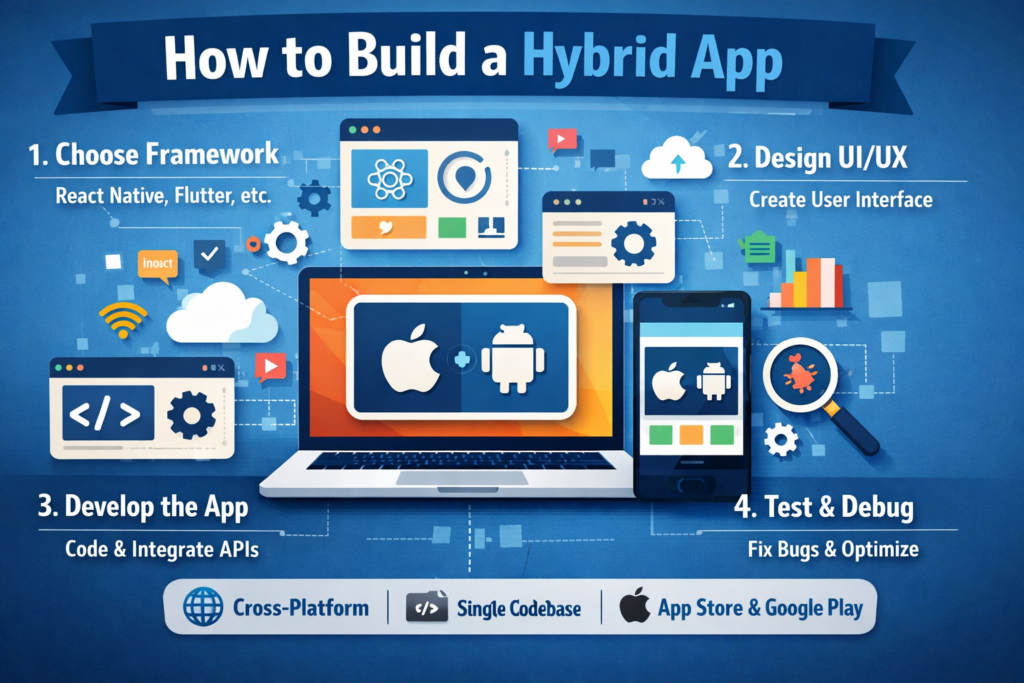
The demand for mobile applications has grown rapidly as businesses aim to reach users on both Android and iOS platforms without increasing development time and costs. In this evolving digital environment, hybrid apps have become a practical and efficient solution for developers and companies alike. Many organizations now want to understand how to build a hybrid app that works seamlessly across multiple platforms while maintaining performance, user experience, and scalability. Hybrid app development offers a streamlined approach that allows developers to write a single codebase and deploy it on multiple operating systems, making the process faster and more cost-effective.
As businesses focus on digital transformation and mobile accessibility, learning how to build a hybrid app has become an essential skill for developers and technology teams. This approach simplifies development while ensuring that applications can reach a wider audience with minimal effort.
Understanding Hybrid App Development
Hybrid apps combine elements of both native and web applications. They are built using web technologies such as HTML, CSS, and JavaScript and then wrapped in a native container that allows them to run on different mobile platforms. This approach eliminates the need to create separate applications for Android and iOS.
Developers exploring how to build a hybrid app often choose frameworks that support cross-platform functionality, enabling them to write code once and deploy it across multiple devices. This reduces development time and ensures consistency in design and functionality. Hybrid apps also allow businesses to maintain a unified user experience across platforms, which is crucial for brand identity and customer satisfaction.
The ability to reuse code and simplify updates makes hybrid development an attractive option for companies aiming to launch apps quickly without sacrificing quality.
Why Developers Prefer Hybrid Apps
Hybrid app development has gained popularity because it offers several advantages over traditional native development. Creating separate apps for different platforms requires more resources, time, and maintenance. Hybrid apps address these challenges by providing a unified development process.
When developers focus on how to build a hybrid app, they benefit from faster development cycles, lower costs, and easier maintenance. Updates can be applied across all platforms simultaneously, reducing the need for repetitive work. This efficiency allows businesses to allocate resources to other important areas such as marketing and user experience improvements.
The flexibility of hybrid apps also makes them suitable for startups and small businesses that need affordable yet powerful mobile solutions.
Tools and Frameworks That Simplify Development
Modern frameworks have made it easier than ever for developers to create hybrid apps. Technologies such as cross-platform development tools and integrated development environments provide ready-to-use components that simplify coding and testing.
Developers learning how to build a hybrid app typically rely on frameworks that offer strong community support, regular updates, and compatibility with multiple platforms. These tools help streamline the development process, reduce errors, and improve overall efficiency.
With advanced development tools, even small teams can create high-quality hybrid apps that perform well across devices and operating systems.
Streamlining the Development Process
Creating a hybrid app involves a structured process that ensures smooth functionality and reliable performance. Developers begin by defining the app’s purpose, target audience, and core features. This planning stage helps create a clear roadmap for development.
The next step in how to build a hybrid app involves designing the user interface and integrating essential features such as navigation, data storage, and API connections. Developers then test the application on multiple devices to ensure compatibility and performance.
This systematic approach helps reduce errors and ensures that the final product meets both technical and user requirements.
Improving Performance and User Experience
One common concern about hybrid apps is performance. However, modern technologies have significantly improved the speed and responsiveness of hybrid applications. Developers now focus on optimizing code, reducing loading times, and enhancing user interfaces to ensure a smooth experience.
When learning how to build a hybrid app, developers prioritize performance optimization techniques such as efficient coding, caching, and responsive design. These strategies help hybrid apps perform similarly to native applications while maintaining cross-platform compatibility.
A well-designed hybrid app can deliver a fast, reliable, and engaging experience that meets user expectations and supports business goals.
Cost Efficiency and Faster Deployment
Cost efficiency is one of the biggest reasons businesses choose hybrid app development. Developing separate native apps for different platforms can be expensive, especially for small and medium-sized companies. Hybrid apps reduce these costs by using a single codebase.
Understanding how to build a hybrid app allows businesses to launch their applications faster and reach the market more quickly. Faster deployment gives companies a competitive advantage, enabling them to respond to market trends and customer demands efficiently.
This cost-effective approach makes hybrid development a smart choice for organizations looking to maximize their return on investment.
Supporting Multiple Business Needs
Hybrid apps are suitable for a wide range of industries, including e-commerce, healthcare, education, and entertainment. Their flexibility allows businesses to customize features according to their specific requirements.
Developers who understand how to build a hybrid app can create solutions that support online transactions, real-time communication, and data management. This adaptability makes hybrid apps a valuable tool for businesses aiming to enhance their digital presence and improve customer engagement.
The ability to integrate various features ensures that hybrid apps can meet diverse business needs while maintaining efficiency and performance.
Future of Hybrid App Development
The future of hybrid app development looks promising as technology continues to evolve. Advances in frameworks, cloud computing, and artificial intelligence are expected to further improve the capabilities of hybrid applications.
Developers focusing on how to build a hybrid app will benefit from new tools that enhance performance, security, and scalability. As mobile usage continues to grow, hybrid apps will play a crucial role in helping businesses connect with users across multiple platforms.
This ongoing innovation ensures that hybrid development remains a key part of the mobile app industry.
Conclusion
Hybrid app development has transformed the way businesses and developers approach mobile application creation. By using a single codebase and modern frameworks, developers can create powerful applications that work across multiple platforms with ease. Understanding how to build a hybrid app allows organizations to reduce costs, speed up development, and deliver consistent user experiences.
As the demand for cross-platform solutions continues to grow, hybrid apps will remain an essential part of digital innovation. Businesses and developers who invest time in learning how to build a hybrid app can gain a competitive edge, reach a broader audience, and achieve long-term success in the rapidly evolving mobile technology landscape.



Leave a Reply