






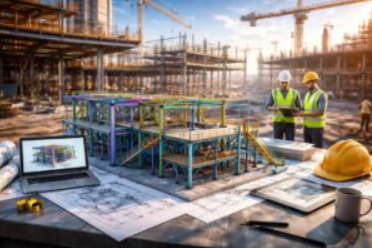
Modern buildings are getting taller, smarter, and more complex but that complexity brings risk if designs aren’t precise. From commercial towers to industrial plants and infrastructure projects, Structural Steel Modelling Services have become a critical foundation for creating structures that are not only visually impressive but also safe, efficient, and buildable. For architects, engineers, contractors, and project owners across the UK, USA, and global markets, steel modelling is no longer optional. It’s a necessity for avoiding costly errors, improving coordination, and ensuring structures perform as intended throughout their lifecycle.
Let’s explore why Structural Steel Modelling Services play such a vital role in modern construction and engineering and how they’re shaping safer, more reliable building outcomes.
What Are Structural Steel Modelling Services?
Structural Steel Modelling Services involve creating detailed 3D digital representations of steel frameworks used in buildings and infrastructure. These models go far beyond basic drawings, capturing:
- Exact steel member sizes and profiles
- Connections, joints, bolts, and welds
- Load paths and structural behavior
- Fabrication and erection details
Using advanced Structural 3D Modeling Services, teams can visualize, analyze, and validate steel structures before fabrication or construction begins.
Why Is Accuracy So Critical in Structural Steel Design?
Steel structures rely on precision. Even small inaccuracies can lead to:
- Misaligned connections on site
- Fabrication errors and steel rework
- Delays in erection schedules
- Compromised structural safety
According to industry research by the American Institute of Steel Construction (AISC), rework caused by design inconsistencies can account for up to 10% of total construction costs, particularly in steel-intensive projects. Accurate modelling significantly reduces these risks by identifying issues early.
How Do Structural Steel Modelling Services Improve Buildability?
One of the biggest advantages of Structural Steel Modelling Services is their ability to bridge the gap between design intent and real-world construction.
Key buildability benefits include:
- Clash-free steel layouts coordinated with architectural and MEP systems
- Fabrication-ready drawings aligned with shop-floor processes
- Clear erection sequencing for safer on-site assembly
By using Custom 3D Modeling Services, project teams ensure steel components fit together seamlessly saving time, money, and stress on site.
How Do 3D Models Enhance Safety in Steel Structures?
Can digital steel models actually improve safety?
Yes; significantly.
Structural steel models allow engineers to simulate real-world conditions before construction begins. This includes:
- Load distribution and stress behavior
- Stability under seismic and wind loads
- Connection strength and tolerance checks
By visualizing how a structure behaves digitally, engineers can address weak points long before workers step on site. This proactive approach contributes to safer working conditions and long-term building performance.
Why Are Structural Steel Models Essential for Coordination?
What happens when steel isn’t coordinated with other trades?
Coordination failures are one of the most common causes of construction delays. Structural steel often intersects with:
- HVAC ductwork
- Electrical containment
- Plumbing systems
- Architectural finishes
With Structural 3D Modeling Services, all disciplines can collaborate within a shared digital environment. This reduces conflicts and eliminates guesswork during construction.
According to a McKinsey construction productivity study, projects using coordinated 3D models experience up to 15% fewer schedule overruns, especially on complex builds.
How Do Steel Models Support Fabrication Efficiency?
Fabricators rely heavily on accurate steel models to produce components efficiently.
Structural steel models help fabricators by:
- Generating precise shop drawings automatically
- Providing exact material quantities
- Reducing manual interpretation of 2D drawings
- Supporting CNC and automated fabrication workflows
This leads to faster turnaround times, reduced material waste, and improved quality control especially valuable for large-scale or high-rise projects.
Why Are Structural Steel Modelling Services Important for Architects?
Architects benefit from steel modelling even if they’re not designing the structure themselves.
Key advantages include:
- Clear visualization of structural constraints
- Early validation of design feasibility
- Better integration between aesthetics and structure
When architectural concepts align seamlessly with structural reality, projects move forward with fewer redesigns and smoother approvals.
How Do Structural Steel Models Improve Engineering Decision-Making?
Can 3D models actually help engineers make better choices?
Absolutely.
Engineers use steel models to:
- Test multiple design options efficiently
- Optimize steel weight without compromising safety
- Evaluate cost-effective connection details
With Custom 3D Modeling Services, engineering teams can fine-tune designs while balancing performance, constructability, and budget constraints.
What Role Do Structural Steel Models Play in Sustainability?
Sustainability is becoming a priority across the UK, USA, and global construction markets.
Steel modelling supports sustainable practices by:
- Minimizing material overuse through optimization
- Reducing waste during fabrication
- Supporting accurate quantity take-offs for procurement
Optimized steel designs can significantly lower embodied carbon while maintaining structural integrity, an important consideration for green building certifications.
How Do Steel Models Support Compliance and Approvals?
Regulatory bodies increasingly expect clear, verifiable documentation.
Structural steel models help demonstrate:
- Compliance with local and international building codes
- Load capacity and safety margins
- Accurate coordination with approved design documents
Clear digital models often speed up approvals by reducing ambiguity and improving communication between stakeholders.
What Are the Latest Trends in Structural Steel Modelling?
Key industry trends shaping steel modelling today:
- Integration with BIM platforms for end-to-end coordination
- Cloud-based collaboration for global project teams
- Advanced connection modelling for complex geometries
- Increased use of automation in detailing and fabrication
In both the UK and USA, demand for experienced 3D Modeling Company partners is growing as projects become more data-driven and time-sensitive.
What Challenges Do Projects Face Without Proper Steel Modelling?
Projects that rely solely on traditional 2D drafting often face:
- Increased RFIs and site queries
- Costly change orders
- Construction delays due to clashes
- Safety risks from unclear erection sequences
Structural steel modelling reduces these risks by delivering clarity and confidence throughout the project lifecycle.
Who Benefits Most from Structural Steel Modelling Services?
Structural steel modelling delivers value across the entire project ecosystem:
- Business owners gain predictability and cost control
- Architects achieve design clarity and feasibility
- Engineers improve accuracy and performance
- Contractors reduce rework and site risks
- Fabricators enhance efficiency and precision
This collaborative advantage makes steel modelling indispensable for modern construction.
Are Structural Steel Modelling Services Worth the Investment?
Short answer: yes.
While modelling may add upfront design effort, it delivers substantial long-term value by preventing errors, improving safety, and accelerating construction timelines. For complex or steel-intensive projects, the return on investment is clear and measurable.
Final Thoughts
As buildings become more ambitious and timelines tighter, Structural Steel Modelling Services have emerged as a cornerstone of safe, buildable, and efficient design. By improving accuracy, enhancing coordination, and supporting smarter decision-making, steel modelling helps projects succeed in today’s demanding construction environment.
For organizations seeking reliable results, collaborating with an experienced 3D Modeling Company particularly a leading UK CAD Drafting and Design company can make a meaningful difference in project outcomes without compromising safety or quality.
In an industry where precision defines success, structural steel modelling isn’t just helpful it’s essential.









Leave a Reply