






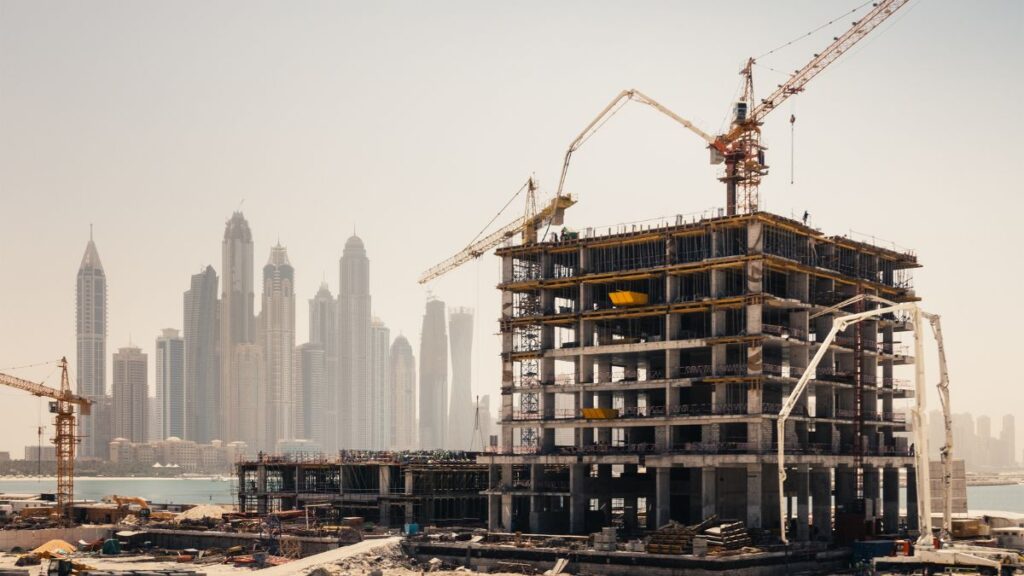
A New Era of Construction Driven by Innovation
At its heart, construction is one of the cornerstones of our society. It has created the infrastructure and buildings for our daily lives-homes to live in, offices to conduct business, and even smart cities and intelligent infrastructure to move our society forward. As our projects have become incredibly complex, and there’s a pressure to build quicker and faster than ever, it is clear we needed to approach this industry a modern way.
Given the increasingly complex nature of projects, soaring material costs, worker shortages, worker safety concerns and a trend towards more environmentally friendly buildings the construction industry has needed to devise innovative solutions to building and managing projects. A transformation is occurring towards smart construction; this transition relies on critical technologies such as artificial intelligence (AI), BIM, IoT, robots, and automation to make smarter, informed decisions, reduce risks and improve project outcomes.
The market size of construction according to an analysis conducted by Expert Market Research, construction market size was estimated to be valued at around 14.45 trillion USD in 2025 and it’s expected to grow at a CAGR of nearly 6.50% between 2026 and 2035. It’s projected to be 27.12 trillion USD by 2035, fueled by factors like rapid urbanisation, infrastructure growth, the uptake of smart city concepts, and more implementation of construction technologies in construction and infrastructure building.
The Challenges Transforming the Construction Industry
The way that many building sites work has remained largely based around the physical, and much of the day to day, work based around manual tasks and management. This is despite that these very methods have resulted in the great work that forms part of our infrastructure today but often, problems arise.
Projects can often overrun or even become delayed by huge amounts of money or time, which could be easily mitigated if only the planning was accurate, or coordination was there on a large scale. Complex work involving dozens of workers, materials, and several different trades are at risk to this in all projects that get larger.
A shortage of appropriately skilled labor also creates problems for construction companies, and there are jobs in construction now which require workers with a blend of traditional construction skills and a working knowledge of technology. Smarter infrastructure, that needs the ability to react and adapt to new systems needs an industry that has adapted as well.
In terms of risks of physical harm, then construction sites still need an adequate level of safety management, and workers can sometimes still be at great risk from heavy equipment and complex works if not properly managed.
With the industry under more scrutiny than ever before, and governments around the world pushing for a sustainable built environment which minimises environmental impact, from energy waste and carbon emissions through to waste management on building sites, then the industry must adapt.
This is being done so that companies can manage their building work more efficiently using a variety of new technologies that allow them to plan, monitor, and execute.
Artificial Intelligence: Creating Smarter Construction Decisions
Future of Construction Technology Artificial intelligence is set to be one of the leading technology tools affecting the future of construction. AI technology uses its analyzing and identification capabilities to sift through vast amounts of data for patterns that businesses use to increase effectiveness of their decisions. During the planning phase of the project, Artificial Intelligence technology aids to predict possible risks during the project, optimizes schedules and manages resources in the construction project better.
Artificial intelligence analyzes historical data of projects to uncover potential project delays and suggests preventive measures before they become significant issues.
Artificial intelligence technology can also benefit worker safety protocols. AI powered surveillance systems analyze conditions at a workplace, identifies hazards that can create unsafe environments and suggests preventive actions. Construction projects have always had some proactive measures but AI in construction takes them to another level, from reactionary to predictive approaches.
Building Information Modeling (BIM): Improving Collaboration and Accuracy
Building Information Modeling has become a significant advancement in modern construction. Unlike traditional drawings, BIM creates detailed digital representations of buildings that allow architects, engineers, and contractors to collaborate more effectively.
Through BIM, teams can visualize projects before construction begins and identify possible design conflicts early. This helps reduce errors, improve communication, and minimize unnecessary expenses.
BIM also supports the entire lifecycle of a building. From initial design and construction to maintenance and renovation, digital models provide valuable information that helps professionals manage infrastructure more efficiently.
As construction projects become larger and more complex, BIM will continue to play an essential role in improving transparency and collaboration across the industry.
The Role of IoT in Developing Smart Construction Sites
Building on how it’s revolutionizing job sites – where devices, equipment and systems communicate over networks, the Internet of Things has a growing presence on construction sites. IoT sensors can provide crucial data from devices on building structures and equipment in real-time – allowing to them monitor the building and how well it’s progressing. From the machines and systems you’re using in your projects, you can gather an array of data.
Construction sites could use sensors to track the performance of your machinery, reduce downtime, and optimize equipment maintenance scheduling, thereby streamlining operational procedures and reducing expenses.
By analyzing IoT device readings, you can identify hazards, measure the quality of your working environment and detect the likelihood of accidents to enhance your teams safety. With Internet of Things connectivity you’ll be able to bring all of your systems together to ensure a more controllable, operational construction. The combining of this with AI and Data Analytics capabilities further bolsters the evolution of intelligent construction systems and eco-systems.
Robotics and Automation: Building Faster and Safer
New doors are opening for the construction sector thanks to robotics and automation. This will help streamline many construction projects by enabling them to handle repetitive, time-consuming, or even unsafe activities more easily. Robotics technology in material handling, site inspections, deconstruction and demolition, and automated advanced construction applications enhance precision, minimize physical labor for construction crews, and protect workers’ physical health.
Human professionals remain vital in the construction workforce, as they use their expertise, knowledge and creativity to handle the planning and execution of complex projects, which robotic automation cannot replicate or execute fully. The union between human intellect and the new robotic generation is set to lead the construction sector of tomorrow.
Sustainable Construction and the Future of Green Buildings
Sustainability is becoming one of the most important priorities in the construction industry. With increasing awareness of climate change and resource limitations, companies are focusing on developing greener buildings and more responsible construction practices.
Digital technologies are supporting sustainable construction by helping companies optimize material usage, reduce waste, and improve energy efficiency. Smart building systems can monitor energy consumption and create more efficient environments.
The future of construction will involve designing buildings that are not only stronger and smarter but also environmentally responsible. Sustainable construction will become a major factor influencing how cities and communities develop.
Smart Cities: Connecting Construction With Future Urban Development
Emergence of Smart Cities Presents Opportunities for Construction Tech Smart construction technologies stand to benefit from the rise of smart cities and the subsequent need for improved infrastructure to accommodate an expanding urban population and its demand for services ranging from transportation and housing to energy and public facilities. Smart construction refers to the construction of connected buildings and the smart infrastructure that will power them.
Connected buildings and the built environment of smart cities, which rely on digital planning, real-time monitoring and data-based decisions to support their residents, are not entirely disparate from one another; in many ways, they are intrinsically linked. Together, the technologies underpinning smart cities and smart construction pave the way for a better quality of life in communities worldwide.
The Future of Construction: Moving Toward Construction 4.0
The next chapter in construction innovation, dubbed as ‘Construction 4.0’, will involve increased digitalization within the field. The rise of the convergence of AI, robotics, IoT, cloud computing, big data analytics and numerous digital applications to create ‘smart’ construction environments will also take centre stage.
Future projects will likely see increased automation, real time communication between various teams, and enhanced project planning with more predictive decision-making. As digital technology continues to evolve, construction workers are expected to leverage these tools more regularly in order to create smarter designs and manage resources efficiently to deliver higher project outputs.
While it is the digital transformation that has accelerated progress within the construction industry, it is knowledge sharing and increased collaboration between professionals, researchers, businesses and universities which will drive change. The evolution of construction requires the creation of innovation and knowledge sharing networks worldwide.
Conclusion: Building a Smarter and More Sustainable Future
Industry transformation The construction sector is all set for a huge transformation! The worldwide construction market size is expected to boom from USD 14.45 trillion in 2025 to USD 27.12 trillion in 2035, with technological innovation driving much of this progress. The use of AI, BIM, IoT, robotics, and smart solutions are all paving the way for construction companies to meet and manage such expansion challenges and revolutionize the entire way of construction.
Beyond expanding the size of constructions, we’re entering into an age of smarter, more secure, and greener building constructions. Through the consolidation of technology advancement, sharing of knowledge, and working together, the construction industry will build a better future across the globe for businesses, professionals, and the society we inhabit.
Frequently Asked Questions (FAQs)
What is smart construction?
Smart construction refers to the use of advanced technologies such as artificial intelligence, IoT, BIM, robotics, and automation to improve construction planning, efficiency, safety, and sustainability.
How is AI transforming the construction industry?
AI helps construction companies analyze data, predict risks, optimize project planning, improve safety, and make more informed decisions.
Why is BIM important in modern construction?
BIM improves collaboration by creating digital models of buildings that allow professionals to identify issues early, reduce errors, and manage projects more effectively.
How does technology support sustainable construction?
Technology helps reduce waste, optimize resource usage, improve energy efficiency, and create environmentally responsible buildings.
What is the future of the construction industry?
The future of construction will be shaped by digital transformation, automation, smart infrastructure, and stronger collaboration between technology and human expertise.









Leave a Reply