






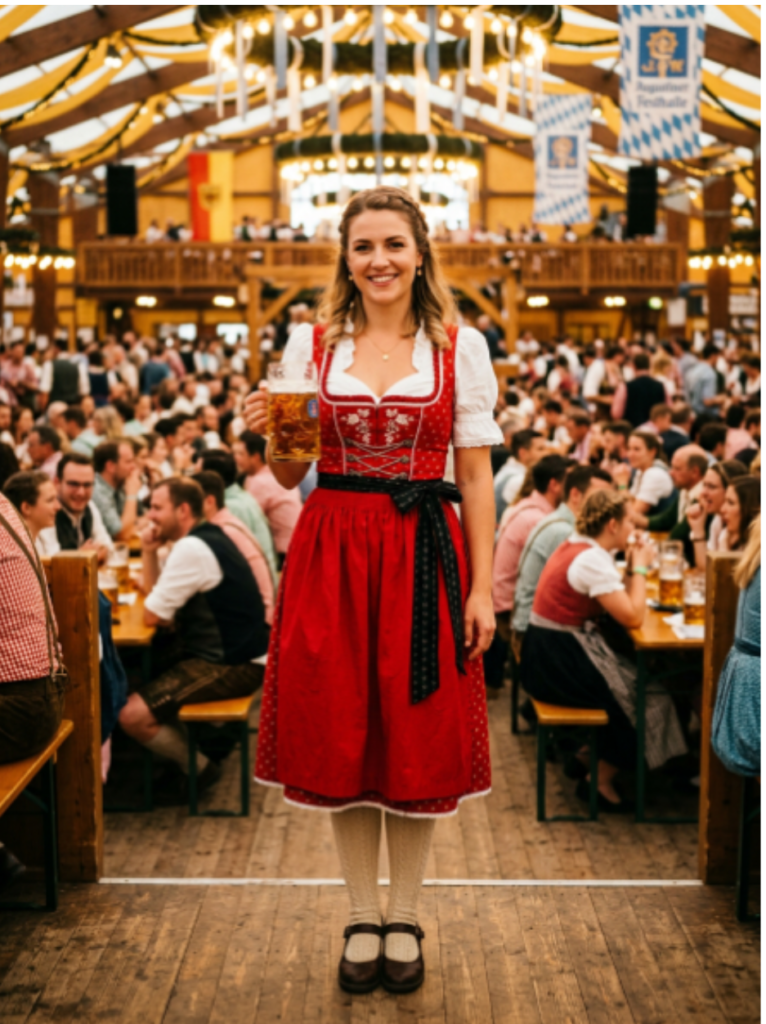
For women shopping the 2026 festival season, choosing the right ladies oktoberfest dress comes down to three decisions made in the right order: length for your occasions, construction for your money, and color for your photographs. Buyers who decide in that order almost always end up with a dress they love and re-wear for years; buyers who start from a pretty product photo and work backward are the ones writing disappointed reviews about thin fabric and strange fit. The dress is the anchor of the entire festival look every other piece coordinates around it so getting the anchor right is most of the battle.
This guide walks the three decisions in order, then covers the fit details and supporting pieces that turn a good dress into the outfit that owns the beer tent.
Decision One: Length Sets the Occasion Range
Oktoberfest dresses come in three lengths, and each maps to a different slice of the festival calendar. Midi hemline just below the knee — is the classic and covers the widest range: daytime festival grounds, evening tents, family events, and semi-formal occasions all welcome it. If you are buying one dress, buy midi.
Mini above the knee brings contemporary festival energy and suits warm afternoons, younger crowds, and party-forward evenings. It photographs vibrantly and pairs naturally with ankle boots and modern styling, but it narrows your occasion range at the formal end. Long at or near the ankle runs the other direction: maximum elegance for galas, Bavarian weddings, and evening events where you want the most refined presence in the room, at the cost of casual-daytime versatility.
Decision Two: Construction Is Where Money Matters
The difference between a dress that owns the tent and one that embarrasses you by 9 p.m. is construction, and it shows in four places. The bodice should be genuinely structured, boned or firmly interfaced so it holds its shape and holds you, rather than collapsing like a sundress. The skirt should carry real gathered fullness; generous fabric is what produces the characteristic silhouette and swing. The apron must be a separate real garment, never printed on or lightly tacked in place. And the fabric should be cotton or a substantial natural blend; thin shiny polyester is the single most reliable marker of costume-grade product.
Realistic 2026 pricing follows construction. Complete quality dresses at the accessible tier run roughly $130 to $250; mid-range construction with premium detailing runs $250 to $450. Listings far below the accessible floor are costumes wearing a dress’s photography.
Decision Three: Color Drives the Photographs
With length and construction settled, color is an enjoyable decision. Deep green is the most universally flattering traditional choice and reads richly in both daylight and warm tent lighting. Red delivers maximum festive presence and dominates group photos. Royal and navy blue photographs are polished and slightly formal. Black anchors the most elegant looks, particularly with floral or metallic bodice embroidery. Pastels blush, cream, lavender — suit daytime and springtime events with a softer register.
Let the apron carry the contrast: cream over green, black over red, white over blue. That two-tone interplay is what makes the silhouette pop from across a crowded tent.
Building the Complete Oktoberfest Outfit Around the Dress
The dress anchors the look, but the complete oktoberfest outfit is what people actually see, and it requires the supporting system: a separate white Dirndlbluse blouse under the bodice, stockings in cream or white matched to your hemline, flat leather footwear built for twelve-hour days, and restrained Bavarian jewelry such as an Edelweiss pendant or heart charm. A small crossbody bag keeps essentials secure through crowded tents, and a flower crown or braided styling finishes daytime looks beautifully.
Two conventions complete the outfit’s fluency. The apron bow placement signals status — left single, right taken, center-front undecided, center-back widow or server and hemline-to-stocking coordination keeps the lower half coherent: knee stockings with midi and mini, full-length hosiery with long dresses. Small details, but they are exactly what experienced festival-goers notice.
Fit Notes That Prevent Returns
Dirndl-style dresses fit differently from standard dresses, and three notes prevent most sizing disappointment. First, the bodice is designed to fit snugly ordered by your actual bust and underbust measurements against the retailer’s chart, not by your usual dress size. Second, lace-up bodice fronts and backs provide several centimeters of adjustment range, which accommodates festival meals generously. Third, check the stated skirt length against your height; a listed midi on a tall frame can land above the knee, and petite wearers may prefer explicitly petite-cut options.
Wearing It Beyond One Festival
A quality ladies Oktoberfest dress earns its price across a surprisingly broad calendar: regional Oktoberfests running late August through October, German American club events, Christmas markets with a warm cardigan layered over, spring festivals, themed parties, and Bavarian weddings as a guest. Cared for properly gentle washing, hung storage, cedar protection for wool blends, quality construction serves ten to twenty years of this calendar, which is the real answer to whether the better dress is worth thirty dollars more than the costume.
Frequently Asked Questions
Which length should a first-time buyer choose?
Midi. It covers daytime festivals, evening tents, and semi-formal events the entire typical first-year calendar.
How do I spot a costume-grade dress before buying?
Thin shiny polyester, printed or tacked-on aprons, unstructured zipper bodices, and pricing far below $130 for a “complete” outfit.
What should I wear under the dress?
A proper white Dirndlbluse blouse it is a required separate garment, not an optional accessory.
What colors photograph best in beer tents?
Deep green and red carry warm tent lighting best; black with bright embroidery also photographs richly at night.
How should the bodice fit?
Snugly, by design. Order from your measured bust and underbust against the retailer’s size chart, and use the lacing for fine adjustment.
Can I wear the same dress to multiple types of events?
Yes restyle with different blouses, footwear, and accessories across festivals, weddings, markets, and parties.








Leave a Reply