






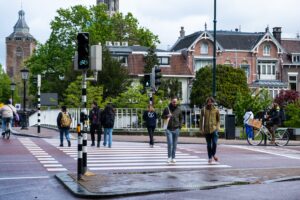
For decades, urban road design focused primarily on one objective: moving automobiles as quickly as possible from point A to point B. However, streets are far more than conduits for cars. They are the public backbone of our communities where people walk, bike, wait for buses, open businesses, and live their daily lives.
When street design prioritizes motor vehicle speed above all else, safety inevitably suffers. High-speed multi-lane thoroughfares create dangerous environments for pedestrians, cyclists, children, and elderly residents.
Today, urban planners, civil engineers, and community advocates are fundamentally rethinking roadway safety. But what specific factors actually transform a hazardous road into a secure, welcoming space for every user? Here is a breakdown of the design principles and infrastructure engineering that make streets safer for everyone.
The Direct Answer: What Makes Streets Safer?
Streets become safer when they adopt a holistic design approach that physically separates vulnerable road users from vehicle traffic, manages driving speeds through street geometry, ensures high visibility at intersections, and rests on a structurally sound engineering foundation.
Rather than relying solely on driver behavior or law enforcement, modern safe street design uses physical self-enforcing infrastructure to prevent crashes and reduce the severity of impacts when mistakes occur.
1. Embracing the Complete Streets Framework
The foundation of modern street safety is the complete streets framework. This design philosophy asserts that streets should be planned, built, and maintained to enable safe access for all users—regardless of age, mobility level, or mode of transportation.
In a traditional vehicle-centric street, pedestrians and cyclists are treated as afterthoughts. In contrast, a Complete Street integrates balanced modal options:
- Wide, unobstructed sidewalks buffered by street trees or parked cars.
- Dedicated public transit lanes that reduce congestion and transit delays.
- Accessible curb ramps and tactile paving for individuals with visual or mobility impairments.
When a roadway accommodates every travel option, motor vehicle dominance decreases, traffic flow becomes more predictable, and overall collision risks drop significantly.
2. Implementing Physical Traffic Calming Measures
Human error is inevitable, but high speeds turn minor driving mistakes into fatal accidents. A pedestrian struck by a vehicle traveling at 20 mph has a 90% chance of survival; at 40 mph, that survival rate plummets below 20%.
To naturally control speeds without relying solely on posted speed limit signs, engineers utilize traffic calming measures:
- Curb Extensions (Bulb-Outs): Narrowing the roadway at intersections shortens the distance pedestrians must cross while forcing drivers to slow down when turning.
- Roundabouts: Replacing traditional four-way intersections with roundabouts eliminates high-speed T-bone collisions and reduces fatal crashes by up to 78%.
- Narrower Travel Lanes: Wide 12-foot lanes feel like highways, encouraging drivers to speed. Reducing lane widths to 10 feet naturally induces drivers to pay closer attention and maintain lower, safer speeds.
3. Protecting Vulnerable Road Users Through Physical Separation
Painted lines on asphalt do not protect a cyclist from a turning truck. Truly safe roads utilize physical barriers to protect non-motorized travelers from heavy motor vehicles.
Effective pedestrian infrastructure design relies on spatial separation:
- Protected Bike Lanes: Positioned between the sidewalk and a row of parked cars (or concrete bollards), protected lanes keep cyclists safely out of vehicle traffic lanes.
- Pedestrian Refuge Islands: Mid-block islands give pedestrians a safe place to stop halfway across wide multi-lane streets, allowing them to cross one direction of traffic at a time.
- Raised Crosswalks: Elevating crosswalks to sidewalk level acts as a continuous speed table, forcing motorists to yield while keeping pedestrians clearly visible.
4. Building on the Ground: Quality Site Prep and Excavation
While surface features like bike lanes and crosswalks get most of the attention, a street’s safety and long-term durability depend heavily on what lies beneath the asphalt.
Redesigning an existing corridor to include wider sidewalks, storm drainage, utility relocations, and new curb profiles requires extensive heavy civil construction. Proper earthwork, ground stabilization, and subsurface drainage prevent road sagging, potholes, and standing water—hazards that cause vehicles to hydroplane and cyclists to lose control.
For municipalities undertaking major infrastructure overhauls, expert site preparation and heavy earthmoving are essential. Specialized heavy civil contractors handling bulk earthwork and utility excavation in Salt Lake City provide the structural groundwork required before safety features—like traffic-calming median islands, signalized intersections, and reinforced retaining walls—can be safely built.
5. Harnessing Smart Technology and Intersection Controls
Intersections represent the highest-risk conflict zones on any roadway. Integrating smart signal technology significantly reduces collision potential:
- Leading Pedestrian Intervals (LPI): Giving pedestrians a 3-to-7-second head start on the walk signal allows them to enter the crosswalk before turning vehicles start moving, making them vastly more visible.
- Pedestrian Hybrid Beacons (HAWK Signals): Activated by push-buttons at high-risk mid-block crossings, these signals flash red to stop vehicle traffic only when a pedestrian is ready to cross.
- High-Visibility LED Lighting: Upgrading street lighting around conflict points ensures drivers can clearly see pedestrians and road edges during rain, fog, or darkness.
Safe Streets vs. Traditional Roadways: Key Differences
| Street Element | Traditional Vehicle-Centric Road | Safe Complete Street |
| Lane Widths | Wide (12+ feet) to maximize speed | Narrowed (10–11 feet) to naturally reduce speed |
| Bicycle Space | Unprotected painted lines or no space | Physically protected lanes separated by barriers |
| Intersections | High-speed right-turn lanes & wide turns | Tight corner radii & curb extensions (bulb-outs) |
| Crossing Distance | Long, multi-lane crossings without stops | Shortened crossings with mid-block refuge islands |
| Primary Goal | Vehicle throughput and speed | Multi-modal access, safety, and community life |
Common Road Safety Myths
-
Myth: Wider lanes are safer because they give drivers more room to correct mistakes.
Fact: Wide lanes create a highway-like feel, encouraging drivers to speed and pay less attention, which increases crash frequency and severity. -
Myth: Traffic calming creates unacceptable gridlock and congestion.
Fact: Well-designed traffic calming regulates traffic flow, reducing the aggressive acceleration and sudden braking cycles that frequently trigger bottlenecks and rear-end collisions.
Frequently Asked Questions
What is Vision Zero?
Vision Zero is a global strategy to eliminate all traffic fatalities and severe injuries while increasing safe, healthy, and equitable mobility for all. It views traffic deaths as preventable design problems rather than inevitable accidents.
How do curb extensions help both pedestrians and drivers?
Curb extensions shorten the crossing distance for pedestrians and improve sightlines by preventing cars from parking too close to the corner. For drivers, they make pedestrians standing at the curb much more visible.
Conclusion
Making streets safer is not a matter of luck or simply telling drivers to “be careful.” It is an intentional engineering choice. By adopting Complete Streets principles, introducing physical traffic calming, separating cyclists and pedestrians from vehicle traffic, and investing in robust underground engineering and site preparation, communities can transform dangerous thoroughfares into vibrant, secure spaces where everyone can travel safely.









Leave a Reply