






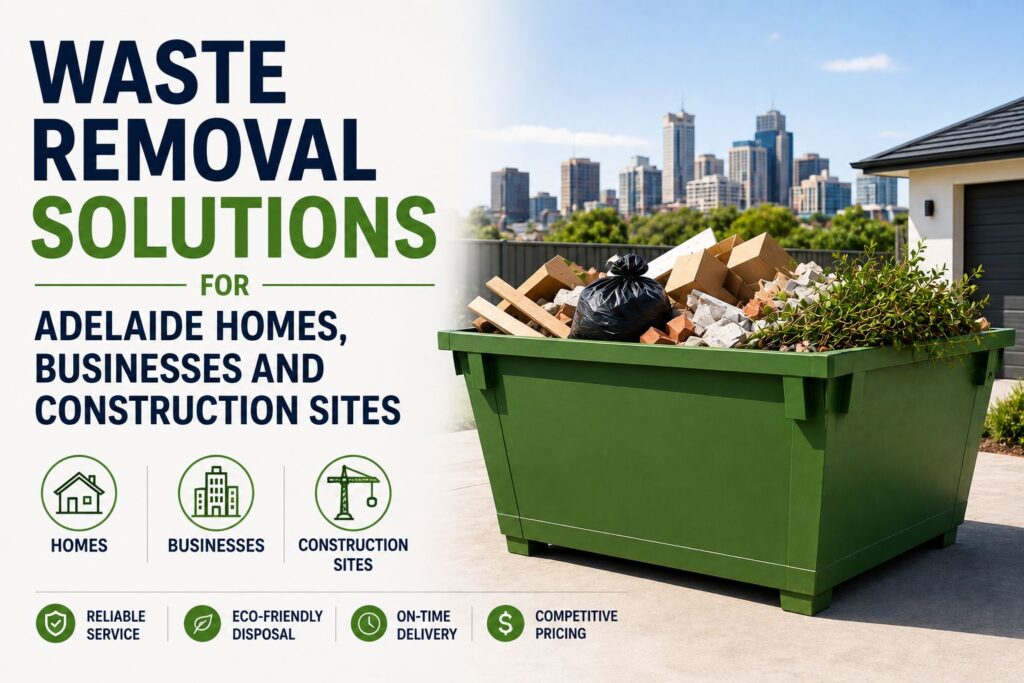
Waste removal requirements can vary significantly depending on the property, the type of project and the materials being disposed of. A homeowner clearing a garage has very different needs from a business completing an office fit-out, while a construction site may need to manage heavy materials such as bricks, concrete, timber and other building debris.
Choosing the right waste-removal approach can make the process safer, more efficient and easier to manage. Bin capacity is important, but so are the type and weight of the waste, placement requirements, collection schedule and disposal restrictions.
This guide explains practical waste removal solutions for Adelaide homes, businesses and construction sites and the key factors to consider before hiring a skip bin.
Waste Removal for Adelaide Homes
Residential waste removal can range from a small garden clean-up to a major house declutter before moving. Identifying the type and approximate volume of waste before booking a bin can help homeowners avoid ordering too little capacity or paying for space they do not need.
Common Household Waste Removal Projects
Typical residential projects include:
- Spring cleaning and decluttering – unwanted household items, furniture, toys and accumulated general waste
- Garage and shed clean-outs – boxes, old equipment, tools and other stored items
- Garden clean-ups – grass clippings, branches, leaves and other accepted green waste
- Moving house – unwanted furniture and household items that will not be taken to the new property
- Minor renovations – approved building materials generated during smaller home-improvement projects
For relatively small clean-ups, a 2–3 cubic metre skip bin may provide sufficient capacity. Larger garage clean-outs or projects involving bulky household items may require a 4 cubic metre or larger bin.
These sizes should be treated as indicative rather than universal recommendations. The appropriate bin will depend on the actual volume, material type and any applicable weight restrictions.
Those comparing options can review available skip bin sizes from Formula Skips to understand how different capacities may suit different projects.
Check What Can Go Into the Bin
Not every material can be placed in a standard general-waste skip.
Commonly restricted materials can include asbestos, chemicals, liquids, wet paint and certain hazardous or food wastes. Rules can vary depending on the waste provider and bin category.
Before loading a bin, check the provider’s accepted-waste requirements. This can help prevent additional charges, rejected loads or the need to remove prohibited materials before collection.
Waste Removal for Adelaide Businesses
Commercial waste removal has different priorities. Offices, shops, schools and other facilities may need to coordinate waste collection around employees, customers, deliveries and normal operating hours.
Businesses may also generate different types of waste depending on whether they are completing a one-off clean-out, refurbishment or ongoing operation.
Common Commercial Waste Projects
Examples include:
- Office clean-outs and relocations – furniture, fittings, packaging and general office materials
- Retail refurbishments – shelving, displays, fixtures and approved fit-out materials
- School and facility clean-ups – furniture and general waste generated during maintenance or renovation periods
- Commercial fit-outs – flooring, fixtures and other approved building materials
- Periodic bulk-waste removal – larger items that cannot be accommodated through normal waste collection
A 6 cubic metre bin, for example, may provide a useful starting point for some office or retail clean-outs, while larger projects may require greater capacity.
Again, the correct size should be determined by the volume, weight and classification of the waste, rather than the property type alone.
Why Scheduling and Placement Matter
For businesses, a skip bin should not unnecessarily interfere with customer access, parking, loading areas or pedestrian movement.
Delivery and collection should therefore be coordinated with normal operations wherever possible.
Placement requirements are another important consideration. If a skip needs to be positioned on a road, verge or another public area, requirements can vary between Adelaide councils. Depending on the location and circumstances, permission or specific placement conditions may apply.
Businesses should confirm the relevant local requirements before delivery rather than assuming the same rules apply across every Adelaide council area.
Waste Removal for Construction and Renovation Sites
Construction sites can present a more complex waste-management challenge because they often generate both high volumes and heavy materials.
Depending on the project, waste may include:
- Timber
- Plasterboard
- Bricks
- Concrete
- Tiles
- Soil
- Packaging
- Fixtures
- Scrap metal
- General construction debris
Correct waste classification becomes particularly important in this environment.
Separate Waste by Material Type
A construction project may require different waste categories depending on the materials being removed.
For example, clean masonry materials such as bricks and concrete may need to be separated from general construction waste. Soil and clean fill may also be subject to specific acceptance requirements.
Placing heavy masonry into a bin intended only for lighter general waste can result in excess weight, additional charges or collection problems.
For larger projects, planning waste streams before work begins can make disposal easier throughout the project rather than trying to separate mixed materials after the bin has already been loaded.
Choosing a Skip Bin for Construction Waste
Smaller renovations may be able to use a 3–4 cubic metre bin, while some medium-sized projects may require around 6 cubic metres of capacity. Larger construction and demolition projects can require 9 cubic metres or more, depending on the waste provider and material involved.
However, bigger is not automatically better for heavy waste.
Concrete, bricks, soil and similar materials can become extremely heavy before a large-volume skip is physically full. Providers may therefore impose specific bin sizes, fill limits or weight conditions for heavy materials.
Always confirm both the permitted material and allowable load before selecting a construction skip.
Comparing Waste Removal Needs
The following sizes provide general starting points rather than fixed recommendations:
| Property or Project | Typical Waste | Indicative Bin Size |
|---|---|---|
| Residential general clean-up | Household items, furniture, approved general waste | 2–3 m³ |
| Residential bulky clean-up | Furniture, appliances and larger items | Around 4 m³ |
| Office or retail clean-out | Furniture, fixtures and packaging | Around 6 m³ |
| Small renovation | Approved light building materials | 3–4 m³ |
| Medium construction project | Approved building and general waste | Around 6 m³ |
| Larger construction project | Larger volumes of approved construction waste | Up to 9 m³ or more* |
Actual bin capacity and permitted load depend on the material, weight restrictions and individual provider’s conditions.
What Makes a Good Waste Removal Solution?
Regardless of whether the project involves a home, commercial property or building site, several factors should guide the decision.
- Choose capacity based on the actual project. Estimate the volume of waste before booking rather than selecting a bin solely because it is commonly associated with a particular type of property.
- Identify the waste type first. Green waste, general household waste, construction materials and heavy masonry may require different disposal arrangements.
- Check weight restrictions. A relatively small volume of concrete can weigh considerably more than a much larger volume of lightweight household items.
- Plan delivery and collection. Consider vehicle access, gates, driveways, customer areas and the space required for the delivery vehicle.
- Check placement requirements. If the bin cannot remain entirely on private property, investigate the relevant local council requirements before delivery.
- Confirm prohibited materials. Do not assume that every provider accepts the same waste.
These checks can reduce unexpected charges and make collection more straightforward.
Why Responsible Waste Disposal Matters
Convenience is only one part of waste management. Where the collected material goes afterward also matters.
Separating recyclable materials can reduce the amount of recoverable material sent to landfill. Depending on the facility and waste stream, materials such as metals, concrete, bricks, timber and green waste may potentially be recovered or processed.
When comparing waste-removal companies, customers can ask how collected material is sorted and what recycling or recovery processes are used.
Formula Skips states that it recycles more than 95% of collected waste through its waste-processing operations. Customers considering environmental performance should review the provider’s current information and, where important to their decision, ask how the recycling figure is calculated and which waste streams it covers.
Choosing the Right Waste Removal Option
The best skip-bin solution is not necessarily the largest or cheapest available. It is the option that matches the project’s waste type, volume, weight, location and collection requirements.
Before booking, consider five questions:
- What materials am I disposing of?
- Approximately how much waste will the project generate?
- Is any of the material particularly heavy?
- Where will the bin be positioned?
- Are there prohibited materials or special disposal requirements?
Answering these questions first makes it much easier to compare providers and select an appropriate bin.
For Adelaide homeowners, businesses and construction professionals comparing local options, Formula Skips provides skip bins across multiple sizes and waste categories. Before booking with any provider, confirm current pricing, waste restrictions, weight conditions, delivery availability and any council requirements that may apply to the intended placement.
Frequently Asked Questions
What size skip bin do I need?
The appropriate size depends on both the amount and type of waste. A small household clean-up may only require a 2–3 m³ bin, while larger commercial or construction projects can require considerably more capacity. Heavy materials should also be assessed by weight rather than volume alone.
Can household and construction waste go in the same skip bin?
Not necessarily. Construction materials may fall into specific waste categories, and concrete, bricks, soil or other heavy materials can have different requirements from household general waste. Check the provider’s waste classifications before mixing materials.
Can I put concrete and bricks in a general-waste skip?
Do not assume so. Heavy masonry is commonly subject to specific disposal and weight requirements. A dedicated masonry or clean-fill option may be more appropriate depending on the provider and exact materials.
Do businesses need different skip bins from households?
Not automatically. The important differences are usually waste volume, material type, frequency of collection, site access and operational requirements. Commercial projects may simply require larger capacity or more carefully coordinated delivery and collection.
Do I need council approval for a skip bin in Adelaide?
It depends on where the bin will be located and the requirements of the relevant local council. A skip placed entirely on private property may be treated differently from one positioned on a road, verge or other public area. Check the applicable council requirements before delivery.
How quickly can a skip bin be delivered?
Delivery times depend on the provider, location, bin availability and booking time. Some Adelaide providers offer same-day service under certain conditions, but availability should be confirmed at the time of booking.
Final Thoughts
Waste removal becomes much easier when it is planned around the material rather than simply the property.
A homeowner may need a compact bin for a weekend declutter, a business may prioritize convenient scheduling and access, while a construction project may require careful separation of heavy and mixed building materials.
Whatever the project, determine the waste type first, estimate the volume, consider weight restrictions, check prohibited materials and confirm where the bin can legally and safely be positioned.
With those factors established before booking, Adelaide homeowners, businesses and builders can choose a waste-removal solution that is practical, cost-conscious and better suited to responsible disposal.










Leave a Reply