






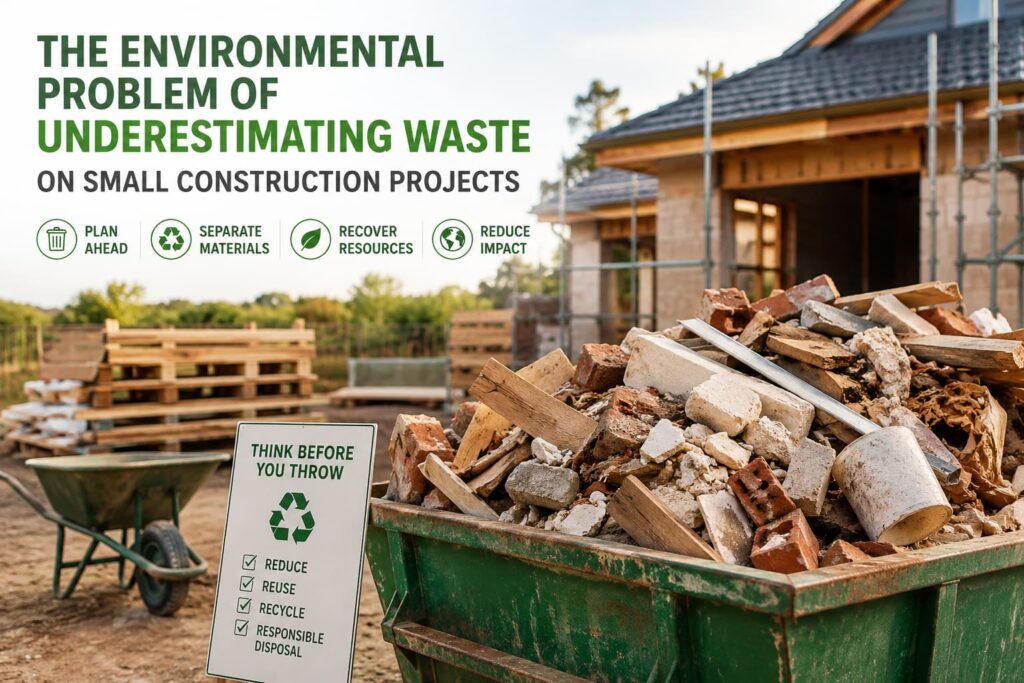
Small renovation, landscaping, and construction projects can generate far more waste than expected. A bathroom renovation may involve tiles, plasterboard, timber, fixtures, fittings, and packaging, while even a modest landscaping project can produce soil, green waste, concrete, bricks, and other materials.
The environmental challenge is not simply how much waste a project generates, but what happens to those materials afterwards. When waste volumes are underestimated or different materials are mixed together without a plan, opportunities for reuse, recycling, and resource recovery may be reduced.
Planning waste removal before work begins can help keep the site organised, reduce unnecessary contamination, and improve the likelihood that suitable materials are recovered rather than disposed of as general waste.
Why Small Projects Can Produce More Waste Than Expected
The physical size of a project does not necessarily reflect the amount or variety of waste it will generate.
A kitchen replacement, bathroom renovation, landscaping project, shed demolition, or small building extension can produce several different waste streams.
Common materials may include:
- Concrete and bricks
- Timber
- Plasterboard
- Tiles and flooring
- Metals
- Old fixtures and fittings
- Soil and garden materials
- Cardboard and plastic packaging
- General construction waste
Heavy materials such as concrete and bricks can quickly add substantial weight, while timber, cabinetry, packaging, and other bulky materials can consume significant space.
Homeowners and contractors can therefore underestimate how much waste even a relatively small project will generate. A project that initially appears manageable can quickly produce enough waste to reduce usable workspace and make the site more difficult to manage.
Construction and demolition waste represents a significant component of Australia’s overall waste stream. At the same time, improvements in resource recovery demonstrate that many construction materials can potentially be diverted from landfill when appropriate collection, sorting, and processing systems are available.
This makes effective waste planning relevant not only to major developments but also to smaller residential and commercial projects.
What Happens When Construction Waste Is Mixed Together?
One of the challenges with construction waste is that it is rarely a single material.
A mixed load may contain concrete, timber, metal, plasterboard, packaging, tiles, and general rubbish. Once different materials become mixed or contaminated, separating them for reuse or recycling can become more difficult.
This does not mean every project needs a separate container for every type of material. The appropriate approach depends on the size of the project, the materials involved, local processing options, and the requirements of the waste provider.
However, identifying the main waste streams before work begins can make waste management considerably more effective.
Materials such as metals, concrete, bricks, and some timber products may have established reuse or recycling pathways depending on their condition and local processing facilities. Keeping suitable materials appropriately separated can therefore improve their chances of recovery.
The important shift is to stop thinking of construction waste as one uniform category.
What appears to be a single pile of rubbish may actually contain several different materials, each requiring a different disposal or recovery pathway.
The Environmental Impact Goes Beyond Landfill
Landfill is often the first environmental concern associated with construction waste, but the broader impact involves more than the final disposal location.
Loss of Recoverable Resources
When potentially recoverable materials are discarded rather than reused or recycled, the resources and energy already invested in manufacturing those products may effectively be lost.
Recovering suitable materials can, in some circumstances, reduce demand for virgin resources and allow existing materials to remain in productive use for longer.
Transportation and Collection
Waste transport also needs consideration.
Underestimating waste volumes may result in additional collections or unnecessary movement of materials. Poorly positioned waste can also interfere with a worksite and potentially require materials to be moved several times before collection.
Accurately estimating waste requirements and planning collection can make the overall process more efficient.
Contamination
Potentially recoverable materials may become more difficult to process when contaminated with unsuitable waste.
For example, a relatively clean stream of bricks, concrete, metal, or timber may offer different recovery possibilities from the same materials mixed with general rubbish or restricted substances.
Better sorting at the project level can therefore support more effective processing further along the waste-management chain.
Australia’s Construction Waste Recovery Opportunity
Australia has made considerable progress in recovering construction and demolition materials.
Government waste reporting has shown strong resource-recovery performance for the construction and demolition sector, demonstrating that building materials do not automatically have to become landfill waste.
However, recovery rates and disposal outcomes can vary by material, location, contamination level, collection method, and available processing infrastructure.
For this reason, homeowners and contractors should avoid assuming that simply placing construction materials into a waste container means everything will automatically be recycled.
Where specific recovery statistics are quoted in project documentation or published content, the latest figures should be checked against the relevant Australian Government or state and territory waste reporting before publication or decision-making.
Better Waste Planning Starts Before Demolition
One of the simplest ways to improve construction waste management is to think about waste before work starts.
Before removing a wall, replacing a kitchen, renovating a bathroom, clearing a garden, or demolishing a structure, consider what materials are likely to be generated and where they will go.
1. Estimate the Likely Waste Volume
Consider both the materials being removed and the additional waste generated while completing the project.
Packaging from newly purchased products, timber offcuts, damaged materials, old fixtures, and unexpected demolition waste can all increase the final volume.
Allowing some capacity for unexpected waste can be sensible because renovation and demolition work sometimes reveals materials that were not apparent during the initial inspection.
2. Identify the Main Waste Streams
Determine what types of materials the project is likely to generate.
For example:
- Concrete and masonry
- Timber
- Metals
- Green waste
- Soil
- Plasterboard
- Packaging
- General construction waste
Once the main materials have been identified, you can investigate whether particular waste streams should be separated.
3. Consider Reuse Before Disposal
Not every item removed during renovation or demolition is necessarily waste.
Doors, fittings, cabinetry, timber, bricks, fixtures, and other materials may sometimes be suitable for reuse, resale, donation, or recycling depending on their condition.
Considering these possibilities before demolition begins can prevent potentially reusable items from becoming damaged or contaminated.
4. Choose an Appropriate Collection Method
The collection method should reflect the expected volume, weight, and type of waste.
Using a suitable container can help keep materials contained, maintain a more organised worksite, and reduce the likelihood of waste spreading into working areas.
For projects in and around Darwin, arranging appropriate local waste management solutions before work begins can help coordinate collection with the expected type and volume of waste.
For smaller renovations and construction work in Palmerston, organising practical waste removal for Palmerston projects can similarly help prevent waste collection from becoming an unplanned part of the project.
Know Which Materials Require Special Handling
Not every material generated during renovation or construction should be placed into a standard general or construction-waste container.
Depending on the property and type of work, a project could uncover materials that require specialised handling or disposal.
These may include:
- Asbestos-containing materials
- Chemicals and solvents
- Paints and liquids
- Oils and fuels
- Batteries
- Gas cylinders
- Contaminated soil
- Other hazardous or regulated materials
Requirements can vary according to the material, location, waste provider, and applicable regulations.
Before placing uncertain materials into a waste container, confirm whether the provider accepts them and whether specific handling, transport, or disposal requirements apply.
This is particularly important when renovating or demolishing older buildings where potentially hazardous materials may not be immediately obvious.
A Practical Waste-Planning Checklist
Before beginning a renovation, landscaping, or construction project, consider working through a simple checklist:
- Estimate the likely volume of waste.
- Identify the major types of materials being removed.
- Consider which materials could potentially be reused.
- Determine whether suitable materials can be separated for recycling or recovery.
- Identify hazardous or restricted materials before demolition.
- Confirm which materials your waste provider accepts.
- Choose a collection method appropriate for the volume and weight.
- Decide where waste containers can be positioned safely.
- Avoid unnecessary mixing or contamination of recoverable materials.
- Arrange collection before accumulated waste begins obstructing the worksite.
- Review unexpected materials as they are uncovered during the project.
A few decisions made before work begins can prevent waste management from becoming a problem later.
Small Projects Can Contribute to Better Resource Recovery
Large construction companies may have formal waste-management procedures, but smaller projects also have an important role to play.
A homeowner renovating one bathroom will obviously generate far less waste than a major commercial development. However, thousands of smaller renovation, landscaping, and building projects collectively generate substantial quantities of material.
This is why practical decisions at the individual-project level matter.
Better estimation can prevent unnecessary collections. Separating suitable materials can support recovery. Identifying reusable items before demolition can extend their useful life. Correctly managing hazardous materials can help prevent contamination.
None of these actions requires treating every small renovation like a major infrastructure project. They simply require waste to be considered as part of project planning rather than as something to deal with after the work is finished.
Final Thoughts
Even small construction, renovation, and landscaping projects can generate substantial amounts of waste. The environmental impact depends not only on how much waste is produced, but also on how effectively those materials are identified, sorted, collected, reused, recycled, recovered, or appropriately disposed of.
Better waste management therefore begins before the first wall is removed or the first load of material is discarded.
By estimating waste requirements in advance, identifying different material streams, separating appropriate materials, checking for restricted waste, and arranging suitable collection, homeowners and contractors can keep project sites more organised while supporting broader resource-recovery efforts.
Small projects may represent only one part of Australia’s construction waste challenge, but better decisions across thousands of those projects can collectively make a meaningful difference.










Leave a Reply