






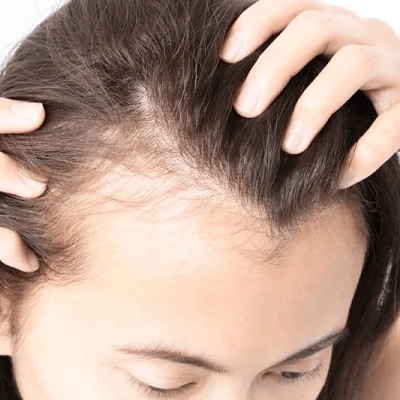
“Why am I losing so much hair during the rainy season?”
It is a question many people ask after noticing more strands than usual on their comb, pillow, shower drain, or bathroom floor during humid and rainy months. Seeing an increase in shedding can be worrying, especially when it continues for several weeks.
But increased hair shedding during the monsoon does not automatically mean you are going bald—and rainfall itself should not automatically be blamed for hair loss.
Hair naturally moves through growth, transition, resting, and shedding phases. A variety of factors—including illness, stress, nutritional deficiencies, hormonal changes, medications, scalp conditions, and hereditary hair loss—can influence this cycle.
Understanding the difference between temporary shedding and progressive hair loss is therefore more important than simply attributing the problem to the weather.
Why Does Hair Fall Seem Worse During the Rainy Season?
The monsoon brings changes in humidity, temperature, sweating, and everyday hair-care routines. Some people may notice that their scalp feels oilier, hair takes longer to dry, or existing scalp problems become more noticeable.
However, humid weather should not be treated as a universal or direct cause of hair loss.
Increased shedding can have many possible causes, including:
- Significant physical or psychological stress
- Recent illness or high fever
- Rapid weight loss or major dietary changes
- Iron or other nutritional deficiencies
- Thyroid disorders
- Hormonal changes
- Certain medications
- Scalp disorders
- Hereditary pattern hair loss
This means that the time of year when you notice hair loss may not necessarily tell you what caused it.
Understanding the Normal Hair-Growth Cycle
Hair does not grow continuously forever. Individual hairs move through different phases of a natural cycle.
During the active growth phase, a hair continues growing from its follicle. It eventually transitions into a resting phase before being shed, after which the follicle can begin another cycle.
Because different follicles are normally at different stages, losing some hair every day is expected.
The concern arises when shedding becomes noticeably greater than usual, continues for an extended period, produces visible thinning, or occurs alongside other symptoms.
Rather than counting every strand, it is usually more useful to observe whether there has been a meaningful change from your normal shedding pattern or overall hair density.
What Is Telogen Effluvium?
One possible cause of increased diffuse shedding is telogen effluvium.
This condition can occur when a larger-than-usual proportion of hair follicles enter the resting phase of the hair cycle. The affected hairs may then be shed later.
An important point is that the trigger and the visible shedding may not happen at the same time.
Potential triggers can include significant illness, fever, surgery, major psychological or physical stress, childbirth, rapid weight changes, nutritional problems, and certain medications.
Consequently, someone noticing increased shedding during the rainy season may need to consider events that occurred weeks or months earlier rather than assuming that current humidity or rainfall is responsible.
A healthcare professional can help determine whether excessive shedding is consistent with telogen effluvium or another condition.
Temporary Shedding vs. Progressive Hair Loss
Not every type of hair loss behaves in the same way.
Imagine two people.
The first notices increased shedding across the scalp for several weeks, but the hairline remains relatively unchanged and there are no obvious bald areas.
The second notices a gradually receding hairline, increasing visibility around the crown, or progressive thinning in a recognizable pattern.
These situations may have different underlying causes and require different approaches.
| More Consistent With Temporary Shedding | Worth Professional Evaluation |
|---|---|
| Increased diffuse shedding without obvious bald areas | Progressive recession of the hairline |
| Overall hairline remains relatively stable | Increasing crown or scalp visibility |
| Possible recent illness, stress, or other trigger | Continuing patterned thinning |
| Shedding rather than clearly defined patches | Circular or patchy areas of hair loss |
| No significant scalp symptoms | Significant itching, inflammation, pain, scaling, or other scalp symptoms |
This table provides general guidance rather than a method of self-diagnosis. Different hair-loss conditions can overlap, and an examination may be necessary to establish the cause.
Can Humidity Affect Your Hair and Scalp?
Humidity can certainly change how hair looks and behaves. Hair may become frizzier, take longer to dry, or feel different from how it does in drier weather.
Sweat, oil, environmental debris, and changes in hair-care habits can also affect scalp comfort.
However, it is important to distinguish between changes in the hair and scalp environment and a medical diagnosis of hair loss.
If the scalp develops persistent itching, significant scaling, inflammation, pain, lesions, or other unusual symptoms, professional evaluation may be more appropriate than assuming the problem is simply seasonal.
What About Ayurvedic Remedies for Monsoon Hair Fall?
Traditional practices sometimes recommend remedies such as coriander-seed water, Triphala, herbal oils, or dietary changes for hair and scalp health.
Such approaches may have cultural or traditional significance, but they should not automatically be presented as scientifically established treatments for hair loss.
More importantly, a home remedy should not replace investigation of the underlying cause when hair loss is significant or persistent.
If you are considering herbal preparations or supplements, discuss them with an appropriately qualified healthcare professional, particularly if you take medications, are pregnant, or have an existing medical condition.
“Natural” does not necessarily mean appropriate for every person.
What Can You Do During the Monsoon?
While there is no universal “monsoon hair-loss cure,” sensible hair and scalp care can reduce unnecessary damage and help maintain a comfortable scalp.
Keep Your Scalp Clean
Sweat, oil, and environmental debris can accumulate on the scalp. Wash your hair according to your scalp type, activity level, and individual needs using an appropriate shampoo.
There is no need to aggressively scrub the scalp in an attempt to stop shedding.
Avoid Leaving Hair Damp for Long Periods
After washing or getting caught in the rain, allow your hair and scalp to dry appropriately rather than leaving them damp beneath a cap, scarf, helmet, or other covering for unnecessarily long periods.
If using a hairdryer, avoid excessive heat and rough handling.
Handle Shedding Hair Gently
When people become concerned about hair loss, they sometimes repeatedly comb or pull their hair to check how much is falling.
This can create additional mechanical stress.
Use gentle detangling techniques, avoid unnecessarily tight hairstyles, and limit practices that repeatedly pull on the hair.
Avoid Constantly Changing Products
Switching between shampoos, oils, serums, and home remedies every few days makes it difficult to understand what is actually happening.
If significant shedding continues, identifying the underlying cause is more useful than continually experimenting with cosmetic products.
Nutrition, Deficiencies and Hair Shedding
Adequate nutrition supports normal hair growth, but that does not mean every person experiencing hair loss needs supplements.
A balanced diet should generally provide appropriate protein and a range of nutrients. When clinically indicated, a healthcare professional may investigate potential contributors such as iron deficiency, nutritional problems, or thyroid dysfunction.
Avoid automatically starting iron, biotin, zinc, or multiple “hair-growth” supplements solely because you notice shedding.
Supplements are not substitutes for diagnosis, and taking more of a nutrient does not necessarily produce more hair growth. Supplementation is most appropriate when there is an identified deficiency or another legitimate clinical reason.
Can PRP Help With Hair Loss?
PRP, or platelet-rich plasma therapy, is used by some clinicians as part of treatment for certain forms of hair loss.
However, PRP should not simply be scheduled according to the weather—for example, before the monsoon, during the rainy season, and afterward—with the assumption that it will prevent seasonal shedding.
Whether PRP is appropriate depends on factors such as the type and extent of hair loss, individual characteristics, existing treatments, and clinical assessment. Evidence and expected outcomes can also vary according to the condition being treated.
The diagnosis should therefore come before the procedure.
A qualified clinician can determine whether PRP has a reasonable role in an individual’s treatment plan or whether another approach would be more appropriate.
When Should You See a Hair Specialist?
Occasional changes in shedding do not necessarily indicate a serious problem. However, professional evaluation becomes more important when hair loss is persistent, progressive, patchy, or accompanied by scalp symptoms.
Consider seeking medical advice if:
- Excessive shedding continues for an extended period
- Overall hair density is noticeably decreasing
- Your hairline is progressively receding
- The crown is becoming increasingly visible
- You develop clearly defined bald patches
- Hair loss occurs suddenly or rapidly
- Your scalp develops persistent inflammation, significant scaling, pain, or other symptoms
- You are concerned about an underlying medical or nutritional cause
Early assessment can help distinguish temporary shedding from conditions such as androgenetic alopecia, alopecia areata, telogen effluvium, scalp disorders, or other causes of hair loss.
When Is a Hair Transplant Actually Considered?
A hair transplant is not a treatment for every person who notices increased shedding.
Hair transplantation is generally considered for selected individuals with established forms of permanent hair loss who have an appropriate donor area and are suitable candidates for surgery.
Temporary shedding should therefore be properly evaluated before someone begins considering transplantation.
A responsible hair-restoration assessment should consider:
- The diagnosis and pattern of hair loss
- Age and likely future progression
- Quality and density of the donor area
- Existing hair that may continue to thin
- Medical or non-surgical treatment options
- Realistic graft requirements
- Surgical limitations
- Long-term expectations
In some situations, preserving existing hair may be an important part of the treatment strategy even when transplantation is eventually considered.
How to Evaluate a Hair-Transplant Provider
Internet searches for terms such as the Best Hair Transplant in Tehran or the Best Hair Transplant in Ludhiana can provide starting points for researching available providers, but a search ranking or promotional claim should never be treated as proof of clinical quality.
Instead, patients should investigate factors such as:
- The clinician’s professional qualifications
- Experience in hair-restoration procedures
- Who will perform each part of the procedure
- Whether a proper diagnosis is made before surgery
- How the donor area is evaluated
- The proposed technique and why it is appropriate
- Expected graft requirements
- Potential risks and limitations
- Realistic before-and-after outcomes
- Post-procedure care and follow-up
- Plans for managing future progression of existing hair loss
Be cautious about guarantees of unrealistic density, universal success claims, or recommendations for immediate surgery without adequate assessment.
Hair transplantation should be viewed as a medical and surgical decision rather than simply a cosmetic purchase.
What Not to Do When You Notice Sudden Hair Shedding
Concern about hair loss can lead people to try several interventions at once. That can sometimes create more confusion than benefit.
Avoid:
- Starting multiple supplements without identifying a clinical need
- Aggressively brushing or pulling the hair to measure shedding
- Frequently changing shampoos in search of an instant cure
- Assuming oiling alone can treat medically driven hair loss
- Beginning PRP or other procedures without establishing the type of hair loss
- Assuming a transplant is appropriate for temporary shedding
- Treating every online hair-loss claim as medical evidence
- Delaying assessment when hair loss is progressive, patchy, sudden, or accompanied by significant scalp symptoms
The first question should generally be “Why is my hair falling?” rather than “Which treatment should I buy?”
So, Are You Going Bald Because of the Rain?
Probably not simply because it is raining.
You may become more aware of shedding during a particular season, and changes in humidity can affect the way your hair and scalp feel. But increased shedding has many potential explanations.
Look instead at the pattern, duration, severity, and progression of the problem.
Temporary diffuse shedding may improve when its underlying trigger resolves. Progressive thinning, recession, patchy loss, or persistent symptoms deserve a more detailed assessment.
Determining which situation applies to you is much more useful than blaming the weather.
Frequently Asked Questions
1. Does hair fall increase during the rainy season?
Some people may notice increased shedding during rainy or humid periods, but rainfall itself should not automatically be considered the cause. Hair shedding can be influenced by numerous factors, including previous illness, stress, nutrition, hormonal changes, hereditary conditions, medications, and scalp disorders.
2. Is rainy-season hair fall temporary?
It can be, depending on the cause. Temporary shedding may improve after the underlying trigger has resolved. Progressive recession, widening areas of thinning, or persistent loss may indicate another condition requiring assessment.
3. Can humidity cause permanent baldness?
Humidity can affect hair behavior and scalp comfort, but permanent progressive hair loss should not simply be attributed to humid weather. Conditions such as androgenetic alopecia have different underlying mechanisms.
4. Can PRP prevent monsoon hair fall?
PRP may have a role in treating certain forms of hair loss, but it should not automatically be used because the rainy season has begun. Treatment decisions should be based on diagnosis and individual clinical circumstances.
5. Should I take biotin for excessive hair fall?
Not automatically. Hair loss has many possible causes, and supplementation is most appropriate when there is an identified deficiency or another clinical reason. A healthcare professional can determine whether testing or supplementation is appropriate.
6. When should I see a specialist?
Seek professional advice when hair loss is persistent or worsening, the scalp is becoming visibly thinner, the hairline is progressively receding, bald patches develop, or significant scalp symptoms accompany the shedding.
Conclusion
Finding extra hair on your comb during the monsoon can be unsettling, but it does not automatically mean that rainfall is causing permanent baldness.
Hair shedding can result from numerous factors, and sometimes the underlying trigger occurred well before the shedding became noticeable. Rather than relying on seasonal remedies or immediately pursuing procedures, focus first on determining the cause.
Maintain sensible scalp care, handle shedding hair gently, eat a balanced diet, and avoid unnecessary supplements or aggressive treatments without appropriate guidance.
Most importantly, pay attention to changes in your overall hair density and pattern over time. When shedding persists, thinning progresses, or bald patches appear, professional assessment can help determine what is happening and which—if any—treatment is appropriate.
Editorial Note: This article provides general educational information and is not a substitute for individualized diagnosis, medical advice, or treatment from a qualified healthcare professional.










Leave a Reply