





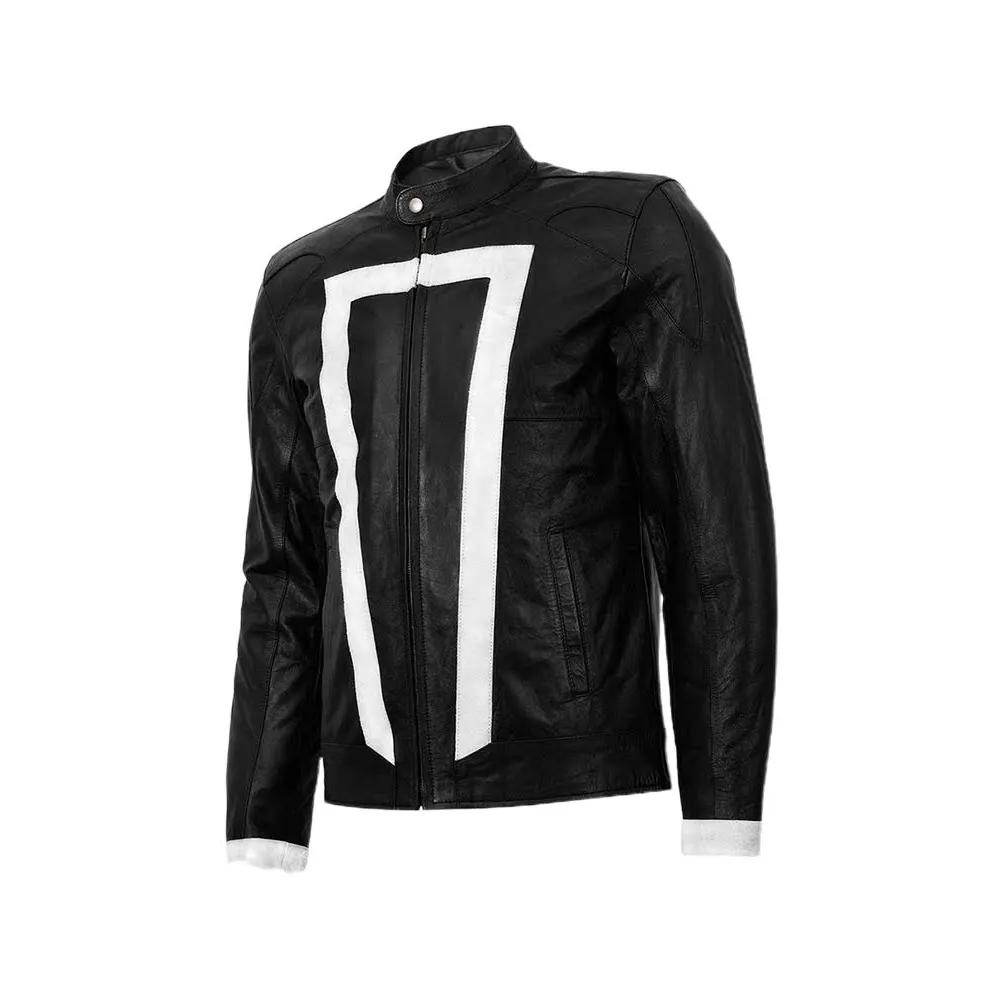
Few pieces of menswear create as much visual contrast as a black leather jacket. Depending on its shape, construction and finish, it can add structure to a simple T-shirt, complement relaxed trousers or change the character of familiar denim.
But not every black leather jacket creates the same effect. A detail-heavy biker jacket, relaxed bomber and streamlined café-racer design can produce very different silhouettes despite sharing the same colour and material.
The key is choosing a jacket that works with the clothing you already own and understanding how its shape interacts with proportion, texture, layering and footwear.
A useful styling framework is:
Shape → Proportion → Texture → Balance → Finish
1. Why Black Leather Is So Versatile
Black is relatively easy to combine with other wardrobe colours, while leather introduces texture that can make even a simple outfit feel more structured.
Consider:
Black Leather Jacket + White T-Shirt + Straight Denim
and:
Black Leather Jacket + Fine Knit + Charcoal Trousers
The jacket remains the focal point in both outfits, but the surrounding garments change its character.
This is one reason a leather jacket can move between casual and smarter-casual wardrobes without requiring an entirely different approach to dressing.
The practical rule is:
Let One Item Lead
If the jacket already contains strong hardware, an asymmetric front, prominent pockets or other visual details, the rest of the outfit does not necessarily need to compete for attention.
2. Shape → Proportion → Texture → Balance → Finish
Instead of memorising individual outfits, think about five decisions.
Shape
Start with the jacket silhouette: biker, bomber, café racer or another streamlined design.
Proportion
Consider the jacket’s length and volume in relation to trousers and layers underneath.
Texture
Leather contrasts naturally with cotton, wool, denim and knitwear.
Balance
Decide which garment should dominate the outfit visually.
Finish
Use footwear and accessories to determine whether the final result feels rugged, minimal, casual or more refined.
This framework can be applied to almost any leather-jacket outfit.
3. Biker vs Bomber vs Café Racer
The jacket shape changes the entire outfit.
Biker Jackets
A biker jacket generally has a stronger visual presence because it may include features such as:
- Asymmetric closure
- Metal hardware
- Multiple zippers
- Wide lapels
- Belt detailing
- More structured construction
It pairs naturally with denim, plain T-shirts, knitwear and boots.
However, a biker jacket does not need to be combined exclusively with rugged clothing.
Try:
Biker Jacket + Plain Knit + Straight Trousers + Minimal Sneakers
This reduces the number of traditional biker references and creates a more contemporary combination.
Bomber Jackets
A leather bomber usually creates a softer, more casual outline.
It can work particularly well with:
- Straight trousers
- Relaxed denim
- Chinos
- Crewneck sweaters
- Hoodies
- Sneakers
Pay attention to the jacket hem. A shorter bomber often creates a cleaner silhouette when the layer underneath does not extend dramatically below it.
Café-Racer Jackets
Café-racer styles generally have a cleaner, more streamlined appearance.
With fewer prominent decorative elements, they can be easier to integrate into understated wardrobes.
Try:
Café Racer + Fine-Gauge Knit + Dark Denim + Boots
or:
Café Racer + Plain Tee + Tailored Trousers + Minimal Sneakers
Minimal Leather Jackets
Leather jackets with relatively clean fronts and limited hardware can work particularly well for men who prefer understated clothing.
They allow the leather texture to provide visual interest without relying on multiple decorative elements.
Quick Comparison
| Jacket Style | Visual Character | Easy Pairings |
|---|---|---|
| Biker | Detailed and assertive | Denim, tees, knitwear, boots |
| Bomber | Relaxed and casual | Chinos, sweaters, sneakers |
| Café racer | Clean and streamlined | Dark denim, trousers, boots |
| Minimal leather | Understated | Tailoring, knits, simple footwear |
4. Fit Matters More Than Following a Trend
Men’s leather-jacket silhouettes move between slim, cropped, oversized and relaxed fits, but trend alone should not determine what you buy.
Think first about how you plan to wear the jacket.
If you usually wear only a T-shirt underneath, you may prefer less layering room.
If you expect to wear:
Knitwear
Sweatshirts
Hoodies
Multiple winter layers
you will need additional room through the chest, shoulders and sleeves.
A jacket should not pull excessively when fastened or unnecessarily restrict ordinary arm movement.
Structured jackets often look cleaner when their shoulders correspond reasonably closely with the wearer’s natural shoulder line.
Relaxed designs can intentionally extend farther, but the additional volume should look deliberate.
5. How to Measure a Leather Jacket
Before buying online, compare the measurements of the jacket with a similar garment you already own and like.
Useful measurements include:
- Shoulder width
- Chest or pit-to-pit width
- Sleeve length
- Back/body length
- Hem width
- Upper-arm width
Do not rely solely on the size printed on the label.
Use:
Body Measurement + Garment Measurement + Layering Allowance + Intended Silhouette
A medium in one design does not necessarily fit like a medium in another.
Measurements are particularly important when comparing fitted biker jackets with relaxed bombers or contemporary oversized designs.
6. Understanding Leather Before Buying
Leather is not one standardized material.
Different materials and surface treatments can affect appearance, texture, maintenance and how a jacket changes through wear.
Full-Grain Leather
Full-grain leather retains more of the natural grain surface.
Natural markings and variations may remain visible, depending on the finish.
Top-Grain Leather
Top-grain leather has generally undergone additional surface processing to create a more uniform appearance or finish.
Suede
Suede has a soft, napped surface and creates a very different visual effect from smooth leather.
Its care requirements also differ from those of smooth leather.
Shearling
Shearling combines the hide with its wool or fleece characteristics and is commonly associated with colder-weather garments.
Faux or Synthetic Leather
Synthetic alternatives can provide a leather-like appearance without using animal leather.
They have different material characteristics, maintenance requirements, aging patterns and price points.
Which Is Best?
There is no universal answer.
Evaluate material according to:
Use + Appearance + Climate + Budget + Maintenance Expectations
A material that works well for one buyer may be unsuitable for another.
7. Look Beyond the Material Label
Leather type alone does not determine whether a jacket is well made.
Construction matters too.
When examining a jacket, consider:
- Stitch consistency
- Seam construction
- Zipper operation
- Snap quality
- Lining
- Pocket construction
- Collar structure
- Cuffs
- Hem finishing
- Panel alignment
- Material consistency
- Comfort through the shoulders
- Ease of arm movement
A higher price does not automatically establish superior construction.
Similarly, terms such as “genuine leather” should not replace an examination of the actual material, finish, construction and workmanship.
8. Black Leather Works With More Than Denim
Blue jeans and leather are familiar companions, but denim is only one option.
A black leather jacket can work with:
- Charcoal trousers
- Grey wool trousers
- Olive chinos
- Stone chinos
- Cream trousers
- Black trousers
- Faded grey denim
- Dark indigo denim
For example:
Black Leather + Off-White Knit + Charcoal Trousers + Simple Sneakers
creates a cleaner look.
For something more refined:
Streamlined Leather Jacket + Fine-Gauge Sweater + Grey Trousers + Leather Boots
The practical rule remains:
Let the Jacket Lead
When the jacket has prominent hardware, a strong collar or substantial texture, quieter supporting garments often create better visual balance.
9. Styling Black Leather With Denim
Denim remains one of the easiest foundations for leather.
Straight Denim
Creates a balanced everyday silhouette.
Relaxed Denim
Works particularly well with contemporary, slightly roomier jackets.
Faded Grey Denim
Maintains a dark palette while creating tonal separation.
Dark Indigo Denim
Introduces colour without moving too far from the jacket’s understated character.
Very distressed denim combined with a detail-heavy biker jacket can create a deliberately rugged look, but it also increases the number of competing visual elements.
If the jacket is already highly detailed, cleaner denim may provide better balance.
10. Styling With Trousers and Chinos
Trousers can make a leather jacket feel less predictable.
Try:
Leather Jacket + Knitwear + Relaxed Wool Trousers
or:
Leather Bomber + T-Shirt + Olive Chinos
or:
Café Racer + Fine Knit + Charcoal Trousers
The contrast between leather and a softer tailored fabric can create a useful high-low combination.
This works because the jacket contributes texture and structure while the trousers introduce cleaner lines.
11. Use Colour With Purpose
Black is easy to combine, but an outfit still benefits from intentional colour choices.
For an understated palette, consider:
- Black
- Charcoal
- Grey
- White
- Cream
- Navy
Earth tones can soften black leather:
- Olive
- Taupe
- Stone
- Brown
- Khaki
A mostly monochromatic outfit can also work particularly well when the materials differ.
For example:
Black Leather + Charcoal Wool + Black Cotton + Suede Footwear
may stay within a narrow colour range while still creating visual separation.
Same Colour ≠ Same Visual Surface
Texture prevents monochrome dressing from becoming visually flat.
12. Styling Leather With Knitwear
Knitwear can soften the harder visual character associated with black leather.
Consider:
- Crewneck sweater
- Fine-gauge knit
- Polo knit
- Turtleneck
- Simple cardigan
A fine knit under a café-racer jacket can produce a cleaner result than a graphic T-shirt, while a heavier crewneck under a relaxed bomber creates a more casual cold-weather outfit.
The important consideration is layering room.
Do not force thick knitwear underneath a jacket that was fitted primarily for a T-shirt.
13. Choosing Footwear
Footwear changes the character of the outfit.
Minimal Sneakers
Useful when you want the jacket to remain the main visual feature.
Chunkier Sneakers
Can balance fuller trousers or a larger jacket silhouette.
Leather Boots
Create a stronger, more rugged combination.
Cleaner Leather Shoes
Can work with streamlined jackets and tailored trousers for a smarter high-low approach.
Think about:
Jacket Volume ↔ Trouser Volume ↔ Footwear Weight
rather than choosing each item independently.
14. Styling Matrix
| Setting | Jacket | Base Layer | Bottom | Footwear |
|---|---|---|---|---|
| Everyday | Bomber | Plain tee | Straight denim | Sneakers |
| Smart casual | Café racer | Fine knit | Tailored trousers | Boots |
| Contemporary | Cropped/clean leather | Tee or knit | Fuller trousers | Minimal sneakers |
| Rugged casual | Biker | Plain tee | Denim | Boots |
| Travel | Relaxed bomber | Lightweight knit | Chinos | Comfortable sneakers |
| Evening casual | Streamlined leather | Dark knit | Charcoal trousers | Leather footwear |
These combinations are starting points rather than fixed rules.
15. Choose a Jacket You Can Actually Rewear
A useful leather jacket should work with more than one carefully constructed outfit.
Before buying, look at what you already wear.
Men who frequently wear:
Jeans + T-Shirts + Boots
may find a classic biker or straightforward leather jacket easy to integrate.
Someone whose wardrobe contains:
Relaxed Trousers + Knitwear + Minimal Sneakers
may prefer a cleaner café-racer, bomber or minimalist silhouette.
For a practical example of how different silhouettes are grouped commercially, the Men’s Black Leather Jackets collection from Next Leather Store includes biker, bomber and other black leather-jacket styles. When comparing any retailer’s products, evaluate the individual garment’s material, measurements, construction, price and care requirements rather than relying only on category names or marketing descriptions.
16. Use the Three-Outfit Test
Before purchasing, ask:
Can I immediately create at least three different outfits with this jacket using clothing I already own?
For example:
Outfit 1
Leather Jacket + T-Shirt + Denim
Outfit 2
Leather Jacket + Knitwear + Trousers
Outfit 3
Leather Jacket + Casual Shirt + Chinos
If you cannot imagine wearing the jacket without buying several additional garments, it may be less versatile for your actual wardrobe than it first appears.
The goal is not to build an imaginary wardrobe around one purchase.
The jacket should integrate into the wardrobe you already have.
17. Think About Cost Per Wear
Leather jackets can vary significantly in price.
Instead of considering purchase price alone, one useful measure is:
Cost Per Wear = Purchase Price ÷ Number of Wears
For example, a more expensive jacket worn regularly over several seasons can have a lower cost per wear than a cheaper jacket worn only a handful of times.
Cost per wear is not a complete measure of value.
Also consider:
- Construction
- Comfort
- Material
- Repairability
- Versatility
- Personal enjoyment
- Maintenance
- How frequently you genuinely expect to wear it
The purpose of the calculation is simply to think beyond the initial price tag.
18. Small Styling Adjustments Can Modernise the Outfit
Some leather combinations can feel tied to a particular period because several familiar references appear simultaneously.
For example:
Fitted Biker + Ripped Skinny Jeans + Graphic Tee + Heavy Boots
creates a very specific aesthetic.
Changing one or two elements changes the result.
Try:
Biker + Straight Denim + Plain Tee + Minimal Sneakers
or:
Cropped Leather Jacket + Fuller Trousers + Simple Footwear
or:
Café Racer + Fine Knit + Tailored Trousers + Boots
You do not necessarily need a different jacket.
Sometimes changing proportion or texture is enough.
19. Common Leather-Jacket Styling Mistakes
1. Too Many Rugged Elements
A biker jacket, heavily distressed jeans, large boots, chains and a graphic tee can compete for attention.
If maximalism is not intentional, simplify.
2. Ignoring Proportion
A cropped jacket creates a different relationship with trousers than a long or oversized design.
Evaluate the entire silhouette.
3. Buying for an Imaginary Wardrobe
A jacket may look impressive by itself but offer little practical value if it does not work with clothing you actually wear.
4. Ignoring Layering Room
A fitted jacket that works over a T-shirt may not accommodate winter knitwear comfortably.
5. Choosing by Size Label Alone
Compare measurements whenever possible.
6. Assuming Expensive Means Better
Evaluate material, construction and fit rather than price alone.
7. Overlooking Maintenance
Different leather types and finishes can require different care.
20. Caring for a Leather Jacket
Leather can change character through wear, but natural aging and neglect are not the same thing.
Start with the manufacturer’s care instructions because different materials and finishes can require different treatment.
General precautions include:
- Use a supportive hanger to help maintain the shoulders
- Store in a cool, dry, ventilated location
- Avoid prolonged exposure to strong direct sunlight
- Keep the jacket away from radiators and other direct heat
- If it becomes wet, allow it to dry naturally
- Avoid automatically applying cleaners or conditioners without checking compatibility
- Test an appropriate treatment in an inconspicuous area when recommended
- Consider professional care for difficult stains or delicate finishes
Smooth leather, suede, nubuck, shearling and synthetic materials should not automatically be treated in the same way.
A product that is appropriate for one surface may damage another.
21. When a Leather Jacket May Not Be Right for You
Leather jackets are versatile, but they are not automatically the best outerwear choice for everyone.
You may prefer an alternative if:
- You do not want animal-derived materials
- You live primarily in a very hot or humid climate
- You want machine-washable outerwear
- You prefer extremely lightweight garments
- You do not want specialist maintenance
- The style does not fit your everyday wardrobe
Alternatives can include:
- Cotton twill jackets
- Waxed cotton outerwear
- Denim jackets
- Technical jackets
- Synthetic leather alternatives
Choosing something you will actually wear is more important than owning a garment simply because it is considered a menswear classic.
Final Thoughts
A black leather jacket works best when it is treated as part of a wardrobe rather than as an isolated statement purchase.
Start with:
Shape → Proportion → Texture → Balance → Finish
Choose the silhouette according to how you actually dress. Check measurements instead of relying solely on size labels. Understand the material and construction before judging value. Use denim, trousers, knitwear and footwear to change the character of the jacket rather than repeating the same outfit formula.
Before buying, apply the Three-Outfit Test and ask whether the jacket works with clothing you already own.
Most importantly, avoid assuming that a particular cut, leather type, price or trend is universally superior.
The right black leather jacket is the one whose fit, material, construction, maintenance requirements and styling possibilities make sense for the person who will actually wear it.









Leave a Reply