






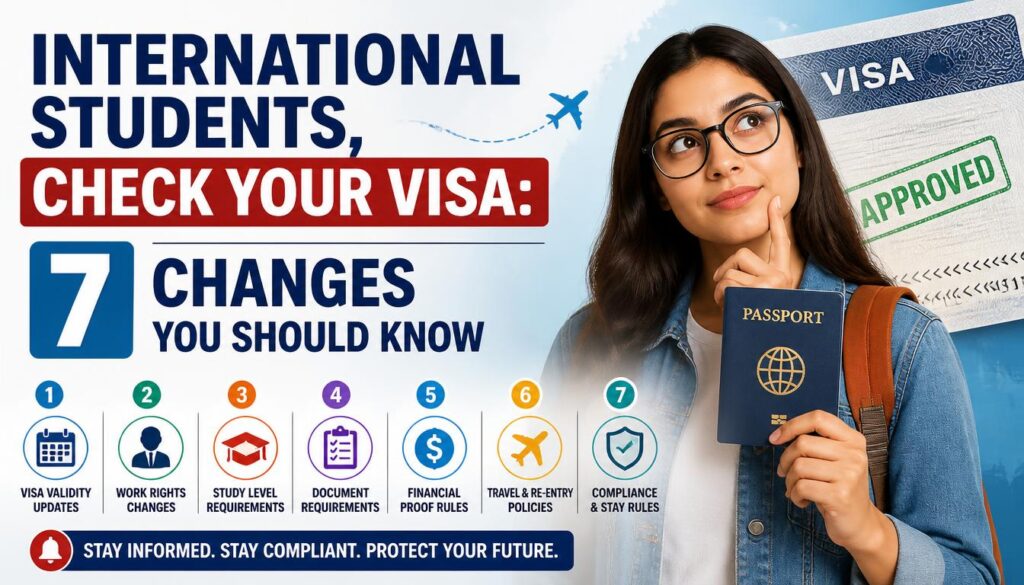
There are multiple steps for international students applying to U.S. universities, including obtaining a letter of admission and completing the required visa process. Visa and immigration requirements can directly affect when and how students can enter the United States and pursue their education.
U.S. immigration and visa procedures can change over time. International students should therefore avoid relying solely on outdated information from previous admission cycles, friends’ experiences from several years ago, or old social media posts. Even small misunderstandings about current requirements can create additional problems or delays.
Whether you are preparing to begin your first semester in the United States or are continuing your studies there, it is important to check current official guidance and stay in contact with your university’s international student office.
1. Visa Interview Is Important
One of the key steps for many international students applying for an F-1 visa is the visa interview.
The U.S. Department of State states that a consular officer will interview student-visa applicants to determine whether they qualify for the visa. Applicants may also be asked for evidence relating to their academic preparation, their ability to pay educational and living costs, and their intent to depart the United States after completing their course of study.
Students should be familiar with the information in their application and supporting documents. They should answer questions truthfully and accurately rather than attempting to memorize scripted responses.
Visa applicants should also check the instructions of the U.S. embassy or consulate where they intend to apply. Current Department of State guidance says that nonimmigrant visa applicants should generally schedule interviews in their country of nationality or residence, subject to the applicable exceptions and designated processing locations.
2. Online Presence Screening Is Part of Visa Vetting
International students should also be aware that online-presence review forms part of the visa screening and vetting process for F-1 applicants.
The U.S. Department of State currently lists F-1, M-1 and certain related student visa categories among those subject to online-presence review. The Department has also instructed applicants in covered categories to adjust the privacy settings on their social media profiles as specified in its current guidance.
Students should ensure that the information they provide during the visa application process is accurate and consistent with their circumstances.
Because screening procedures can change, applicants should consult the latest information published by the U.S. Department of State rather than relying on older advice about social media or visa vetting.
3. Passport, Visa and Other Documents Should Match Your Travel Plans
Students should carefully review their passport, visa and university documents before travelling to the United States.
A visa allows a traveller to seek admission to the United States, but it does not by itself guarantee admission. The final decision on admission is made by U.S. Customs and Border Protection at the port of entry.
For an F-1 student, important documents may include:
- A valid passport
- A valid F-1 visa, where required
- Form I-20
- SEVIS-related documentation
- The student’s university admission information
- Other documents that may be relevant to the individual case
The U.S. Department of State currently advises student-visa applicants to prepare a passport, DS-160 confirmation, Form I-20 and other supporting documentation as applicable.
Students should keep essential documents accessible during travel rather than placing all originals in checked luggage. It is also sensible to maintain secure digital copies of important records.
4. Keep SEVIS Information Accurate
The Student and Exchange Visitor Information System, commonly known as SEVIS, plays an important role in maintaining records for international students in F and M nonimmigrant categories.
Students should remain in contact with their Designated School Official (DSO) and follow their university’s procedures for maintaining their student records.
Information relating to a student’s programme, financial circumstances, school information and other relevant details may need to be kept current. ICE guidance, for example, states that students and DSOs should ensure that financial information on the Form I-20 remains accurate and up to date.
Students should therefore contact their DSO when important circumstances change rather than assuming that an update can be handled later.
5. Do Not Overlook Changes to Your University or Course
Some students may view a change of university, academic programme or programme dates as purely administrative. For international students, however, certain changes can have immigration consequences.
Students should consult their DSO before making significant changes to their academic plans.
For example, ICE guidance explains that an initial F-1 student who receives a visa for one school but wants to attend a different school before entering the United States may need an updated student visa reflecting the new school.
Similarly, students considering changes to their programme dates should discuss the matter with their DSO. ICE guidance notes that students should work with their DSO when a change to the programme start date requires an updated Form I-20.
The international student’s office at the university is therefore an important source of guidance when students are considering changes that could affect their F-1 status.
6. Organize Your Accommodation Before You Travel
Accommodation is another practical issue that international students should consider before travelling to the United States.
Finding suitable housing can be more challenging during peak intake periods, particularly around major university campuses where demand may increase before a semester begins.
When comparing accommodation options, students should consider:
- Distance from campus
- Monthly rent
- Utilities and other additional costs
- Transportation options
- Room type and occupancy arrangements
- Lease duration and termination conditions
- Deposit and payment requirements
- Nearby shops, healthcare facilities and other essential services
- Safety and suitability of the surrounding area
Students unfamiliar with the local rental market should consider using accommodation resources recommended by their university or established housing providers. Before making a payment or signing a lease, students should carefully review the terms and verify the legitimacy of the accommodation provider.
The objective should not simply be to find the cheapest available room. Students should look for accommodation that fits their budget while providing a practical location and suitable living environment.
7. Keep Checking Official Information After Your Visa Is Approved
One of the mistakes international students can make is assuming that the immigration process ends once the visa has been issued.
Students should continue monitoring official U.S. government information and university communications throughout their studies because procedures and requirements can change.
Useful sources include:
- U.S. Department of State for visa information and consular guidance
- U.S. Citizenship and Immigration Services (USCIS) for applicable immigration processes
- U.S. Immigration and Customs Enforcement (ICE) / Student and Exchange Visitor Program (SEVP) for student-related information
- U.S. Customs and Border Protection (CBP) for information concerning admission at U.S. ports of entry
- The university’s international student office and DSO for school-specific guidance
This is especially important before international travel. Continuing F-1 students should discuss international travel with their DSO and ensure that their required documentation and SEVIS information are current. ICE guidance notes that students travelling outside the United States should consult their DSO and maintain the appropriate travel documentation.
What Should International Students Do Before Travelling?
If you are planning to travel to the United States to attend a university, do not leave important preparations until the last minute.
Consider the following checklist:
- Check your passport validity.
- Review your F-1 visa details.
- Make sure your Form I-20 is available and accurate.
- Check your SEVIS-related information with your university where appropriate.
- Read your university’s arrival instructions.
- Contact your DSO if your academic, financial or personal circumstances have changed.
- Organize accommodation before the trip.
- Keep secure digital and paper copies of important documents.
- Check current immigration and visa information before travelling.
- Confirm any travel-specific requirements with your university and the relevant U.S. authorities.
Above all, do not rely exclusively on someone else’s experience or advice found online. Requirements can differ depending on nationality, visa category, university, individual circumstances and the date of travel.
A New Semester, A Fresh Start
Studying in the United States can be an exciting opportunity, but international students also have responsibilities that require ongoing attention. Visa compliance, academic requirements, travel documentation, SEVIS records and accommodation planning can all form part of the student experience.
The safest approach is straightforward: stay informed, check official sources and ask your university when you are unsure.
A few minutes spent reviewing your documents and checking current requirements can help prevent avoidable problems later. For students preparing for their U.S. university journey, being organized and keeping up with official information can make the transition to university life smoother.
Important Note
Immigration and visa requirements can change, and individual circumstances can affect how the rules apply. This article is intended as general educational information and should not be treated as legal or immigration advice. Students should verify current requirements with the relevant U.S. government authority, U.S. embassy or consulate, and their university’s designated international student officials before making travel or immigration decisions.









Leave a Reply