






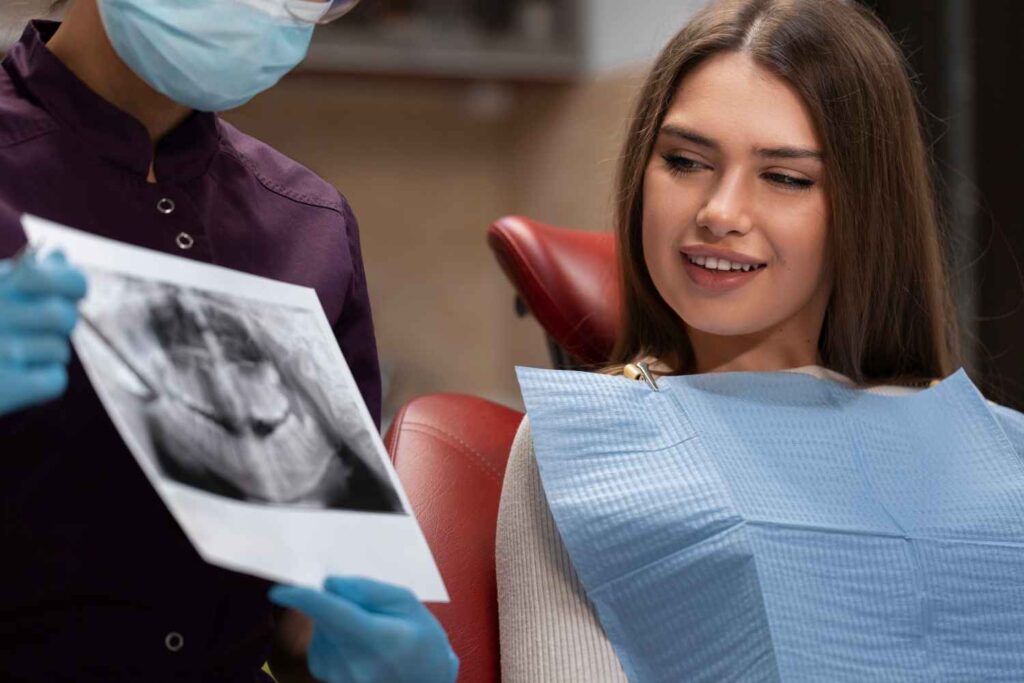
If you’re reading this because a tooth is absolutely killing you and you’ve started eyeing up the pliers in the kitchen drawer, I need you to stop for a second. Pulling one’s own tooth dangers
I know how it feels. The pain’s unbearable, you can’t sleep, you can’t get an appointment for days – maybe weeks – and the thought crosses your mind: what if I pull it out myself? Plenty of people have thought the same thing. Some have even tried it.
I’ve been doing this job for over twenty years now, and I can tell you: almost every single person who’s tried to pull their own tooth has ended up sitting in my chair afterwards, in a far worse state than when they started.
Let me walk you through why it goes wrong.
1. Infection Doesn’t Just Disappear When You Pull the Tooth
Most people think: bad tooth out, infection gone. Job done. That’s not how it works, though.
When a tooth’s badly infected, the bacteria aren’t just sitting on top where you can see them. They’re deep inside the root canals, buried in the bone around the tooth, sometimes spreading into the gum. When you try to yank the tooth out yourself – usually with something that’s nowhere near sterile – you’re actually pushing more bacteria deeper into the wound.
You might tear the gum. You might chip a bit of bone. And if there’s an abscess – that pocket of pus people sometimes feel as a lump – disturbing it the wrong way can make it burst inwards instead of draining out.
I’ve had patients come in with their face swollen up like a balloon because they tried to sort out a tooth at home, and the infection spread into the jaw or the cheek. One bloke ended up in hospital on a drip. Rare, yes – but it happens. And it’s completely avoidable.
2. The Tooth Breaks – And the Roots Stay Behind
This is the bit people don’t expect.
Teeth look small when you see them in the mirror, but underneath the gum, they’ve got roots – sometimes long ones, sometimes curved or hooked. Back teeth can have two or three separate roots, all wedged into the jawbone.
When we take a tooth out properly, we X-ray it first. We need to see the shape of the roots, which way they’re pointing, and whether there’s anything tricky nearby.
At home, you’re just guessing. You grip the tooth, you pull, and more often than not, the crown – the bit you can see – snaps off in your hand. The roots stay put, buried under the gum.
Those broken roots don’t magically go away. They sit there, still infected, still painful. The area swells up again a week or two later, and when you finally come in to see us, getting them out becomes a proper surgical bjob: more cutting, more stitching, more prolonged recovery. What could’ve been simple becomes complicated.
3. The Bleeding Can Properly Scare You
Every tooth sits in a socket that’s full of tiny blood vessels. When we take a tooth out, we know how to manage the bleeding – pack it with gauze, give you clear instructions, and make sure it settles.
At home, you don’t have that safety net.
You’re working in poor light and at awkward angles, and can’t see properly. If the gum tears or the bone cracks, the bleeding can be heavier than you’d think. It’s genuinely frightening when it happens, especially if you’re on your own in the bathroom at two in the morning.
If you’re on blood thinners – warfarin, rivaroxaban, even just daily aspirin – uncontrolled bleeding becomes a real problem. Even without those, some people have clotting issues they don’t know about until something like this kicks it off.
I’ve seen people turn up pale as anything, holding blood-soaked towels, absolutely terrified because they couldn’t get it to stop. That kind of panic is awful – and completely unnecessary.
4. You End Up Damaging Other Teeth, Gums, or Bone
Trying to pull your own tooth is awkward as hell. You can’t see what you’re doing, your hand’s shaking, the angle’s all wrong. Even if you manage to grip it, you can’t apply the kind of controlled, steady pressure we use.
I’ve treated people who’ve:
-
Cracked the tooth next door because the pliers slipped.
-
Sliced their gum open.
-
Chipped bits of bone away, leaving sharp edges that rub for weeks.
-
Cut the inside of their cheek badly enough to need stitches.
When we remove a tooth, it’s not about yanking. It’s about loosening it carefully, rocking it in a specific way, lifting it out without wrecking everything around it. That takes proper tools, a clear view, and a lot of practice.
Trying to copy that with a pair of pliers from the shed? You’re asking for trouble.
5. You Haven’t Actually Fixed Anything
This is the part that gets me the most.
Pulling your own tooth doesn’t solve the real problem. It just removes one piece – and sometimes the wrong piece.
Many things can cause a toothache. Deep decay. A crack you can’t see. Gum disease. An abscess in the bone. Sometimes, even sinus trouble that feels like tooth pain but isn’t.
Without an X-ray, you’re just guessing.
I’ve met people who pulled out a tooth they thought was the culprit, only to find the pain was coming from somewhere else. They lost a healthy tooth – or one we could’ve saved – for absolutely nothing.
And even if you do pull the right one, you haven’t sorted out why it got that bad. You haven’t checked the teeth next to it. You haven’t thought about how losing that tooth will change your bite, your chewing, the way everything else sits in your mouth over the next few years.
Dentistry isn’t just “take out the bad one and move on”. It’s about understanding what’s going on, treating the cause, and keeping as much as we can.
What We Do Differently
When someone comes in with a bad toothache, we don’t just start pulling teeth. We:
-
Listen to what’s been happening.
-
Examine the tooth, the gums, everything around it.
-
Take an X-ray so we can actually see the roots and the bone.
-
Work out whether the tooth can be saved – a filling, a root canal, a crown – or if removal is the safest option.
-
Number it correctly so you don’t feel pain.
-
Use sterile instruments in a clean space.
-
Control the bleeding, protect the socket, and give clear advice for healing.
A lot of the teeth people want to pull at home can actually be saved. A badly infected tooth doesn’t automatically mean extraction. Sometimes we can drain the infection, do a root canal, and the tooth’s fine.
A Bit of Honesty
If you’re thinking about pulling your own tooth, it’s usually because you’re exhausted, scared, or feel like you’ve got no other options. I get that. I really do.
Fear of dentists is common. So is feeling embarrassed about your teeth, or worrying that we’ll judge you. But honestly, we see people in pain every day. You won’t shock us. You won’t be the first or the last.
Emergency dental care is about one thing: getting you comfortable. It’s usually quicker and calmer than you’re expecting. We explain what we’re doing. We listen. We work with you, not against you.
Pulling your own tooth might feel like the only way out, but it almost always makes things worse. Broken roots. Serious bleeding. Spreading infection. Damage to healthy teeth. None of that’s worth the risk.
Help is safer. It’s more effective. And it gives you a proper chance – either to save the tooth or lose it in a way that doesn’t cause lasting damage.
Suppose you’re in a pickle, pick up the phone. Even describing what’s happening can make a difference. You don’t have to do this alone.



Leave a Reply