






When businesses import products into the United States, they must comply with strict federal regulations designed to protect public health and safety. One of the most important enforcement mechanisms used by the U.S. Food and Drug Administration is FDA detention. This process can significantly impact imported shipments, delay market entry, and create financial and legal complications for importers, manufacturers, and distributors.
An FDA detention occurs when the FDA identifies a potential violation or regulatory concern with imported goods at the port of entry. The products are held and cannot be released into U.S. commerce until the importer provides sufficient evidence proving compliance or resolves the identified issue. While this process is not a final rejection, it is a serious regulatory action that requires immediate attention and a structured response.
Understanding how FDA detention works is essential for any business involved in importing food, medical devices, cosmetics, dietary supplements, or other FDA-regulated products. Without proper compliance knowledge, companies risk delays, increased costs, and even permanent refusal of their shipments.
This article provides a comprehensive, optimized guide to FDA detention, explaining what it is, why it happens, how it affects imported products, what documents are required for a strong response, and how businesses can prevent future issues. It also outlines practical strategies for resolving detention cases efficiently and maintaining long-term compliance.
Understanding FDA Detention in the Import Process
What Is FDA Detention?
An fda detention is a regulatory action taken by the U.S. FDA when imported goods appear to violate federal laws or regulations. When a shipment arrives at a U.S. port of entry, it is subject to review by Customs and Border Protection (CBP) and FDA officials. If the FDA identifies potential concerns, it issues a detention notice.
This means the products are physically held and cannot enter the U.S. market until the issue is resolved. The importer is given an opportunity to respond, provide documentation, and demonstrate compliance.
Importantly, an fda detention is not the same as refusal. It is a temporary status that can be resolved if the importer provides adequate evidence.
Purpose of FDA Detention
The main purpose of fda detention is to protect consumers in the United States from unsafe, mislabeled, or noncompliant products. The FDA uses detention as a preventive measure to ensure that only safe and properly regulated goods enter the marketplace.
The system also encourages importers and foreign manufacturers to maintain compliance with U.S. regulatory standards, including proper labeling, ingredient safety, manufacturing practices, and documentation accuracy.
Legal Authority Behind FDA Detention
The authority for fda detention comes from the Federal Food, Drug, and Cosmetic Act (FD&C Act). This law gives the FDA power to inspect imported goods and detain those that appear to be in violation of regulatory requirements.
Under this authority, the FDA does not need absolute proof of violation to detain goods. A reasonable belief or evidence of potential noncompliance is enough to trigger an fda detention.
How FDA Detention Affects Imported Products and Businesses
Shipment Delays and Operational Disruption
One of the most immediate impacts of an fda detention is shipment delay. Once goods are detained, they cannot move forward in the supply chain until the FDA completes its review.
This can cause serious disruptions, especially for time-sensitive industries such as:
- Food and beverage imports
- Medical devices and pharmaceuticals
- Cosmetics and skincare products
- Dietary supplements
Delays caused by fda detention often result in missed delivery deadlines, disrupted retail schedules, and inventory shortages.
Financial Costs and Economic Losses
An fda detention can quickly become expensive for importers. Costs may include:
- Storage fees at ports or bonded warehouses
- Demurrage charges from shipping companies
- Legal and consulting fees for compliance response
- Costs of additional testing or documentation
- Loss of product value due to delays
- Potential destruction or re-export of goods
In severe cases, repeated FDA detention incidents can significantly reduce profit margins and impact long-term business sustainability.
Impact on Supply Chain and Distribution
Global supply chains depend on predictable timelines. An FDA detention disrupts this predictability, creating ripple effects across the entire distribution network.
Common supply chain issues include:
- Delayed production schedules due to missing inventory
- Contract violations with distributors or retailers
- Increased reliance on emergency sourcing
- Higher logistics costs for expedited shipping
For companies relying on continuous import cycles, even a single FDA detention can create long-term operational instability.
Reputational Damage and Business Trust
Beyond financial and operational impacts, an FDA detention can also affect a company’s reputation. Regulatory issues often raise concerns among business partners, distributors, and retailers.
Potential reputational risks include:
- Reduced trust from buyers and suppliers
- Increased scrutiny of future shipments
- Loss of retail partnerships
- Negative perception in competitive markets
Maintaining compliance is therefore not only a legal requirement but also a strategic business necessity.
Common Causes of FDA Detention
Labeling Errors and Misbranding
Labeling issues are among the most common reasons for FDA detention. The FDA requires accurate and complete labeling for all regulated products.
Common labeling violations include:
- Missing ingredient lists
- Incorrect nutritional information
- False or misleading health claims
- Missing allergen declarations
- Improper formatting or language issues
Even minor labeling errors can trigger an FDA detention at the port of entry.
Ingredient and Product Safety Issues
Products containing unapproved or restricted ingredients are at high risk of FDA detention. The FDA maintains strict rules regarding safe substances in food, cosmetics, and supplements.
If a product contains ingredients not approved for use in the U.S. market, it may be immediately detained.
Facility Registration Problems
Foreign manufacturers exporting goods to the United States must be properly registered with the FDA. If registration is missing, expired, or inaccurate, shipments may face FDA detention.
This is especially common among new exporters unfamiliar with FDA requirements.
Import Alerts and Prior Violations
If a company or facility has a history of noncompliance, the FDA may place it under an import alert. This increases the likelihood of FDA detention for future shipments and may require additional proof of compliance before release.
Documentation Issues
Incomplete or inconsistent documentation is another major cause of FDA detention. Required documents may include:
- Commercial invoices
- Certificates of analysis
- Prior notice filings
- Manufacturing records
- Product specifications
Missing or mismatched documentation often leads to delays and regulatory scrutiny.
What Documents Are Needed in an FDA Attorney Import Detention Response?
A successful response to FDA detention depends heavily on accurate and complete documentation. Importers must present evidence that demonstrates compliance with FDA regulations and addresses the specific concerns raised in the detention notice.
Core Documentation Requirements
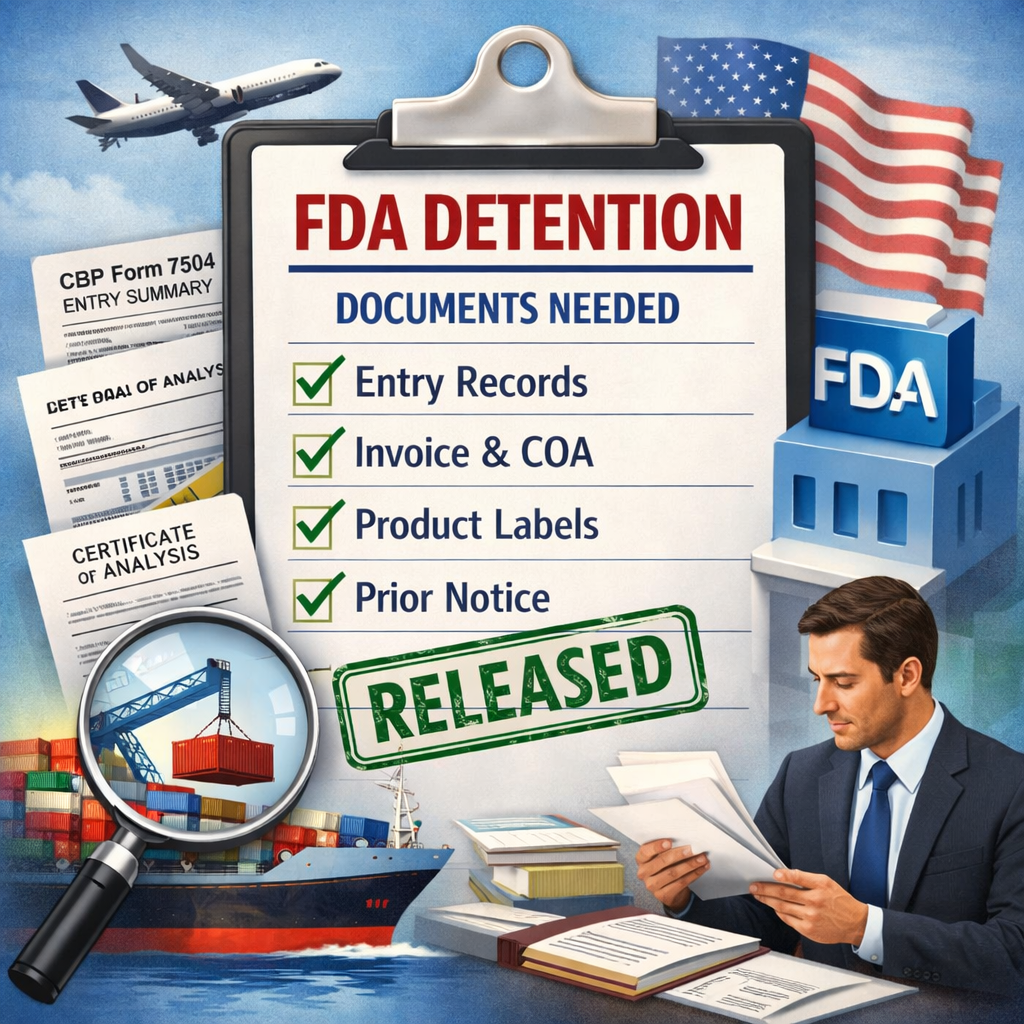
To respond effectively to an FDA detention, businesses typically need to provide:
- Import entry documentation, including CBP filings and shipment records
- Product labeling samples, showing full compliance with FDA labeling standards
- Ingredient lists and formulas, verified for regulatory approval
- Certificate of Analysis (COA) from accredited laboratories
- FDA facility registration records
- Prior Notice confirmation documents
- Manufacturing process documentation
- Quality control and safety testing reports
Each of these documents helps establish that the detained products meet U.S. regulatory standards.
Supporting Evidence for Complex Cases
In more serious or complex FDA detention cases, additional documentation may be required:
- Third-party laboratory testing results
- Facility audit reports and inspection certificates
- Corrective action plans addressing violations
- Historical compliance records
- Scientific safety studies (if applicable)
- Supplier verification records
The stronger and more complete the documentation, the higher the likelihood of resolving the FDA detention successfully.
Importance of Document Consistency
Consistency is critical in any FDA detention response. The FDA compares all submitted documents to ensure alignment. Discrepancies between labeling, invoices, and test results can delay the process or result in refusal of entry.
Businesses must ensure that all documentation is:
- Accurate
- Up to date
- Consistent across all sources
- Fully aligned with FDA requirements
How to Respond to FDA Detention Effectively
Step 1: Carefully Review the Detention Notice
The first step in addressing an FDA detention is analyzing the FDA notice in detail. It outlines the reason for detention and the specific regulatory concern. Understanding this reason is essential before preparing a response.
Step 2: Identify the Compliance Gap
Next, importers must identify what caused the FDA detention. This could be labeling errors, missing documents, ingredient concerns, or registration issues. Identifying the exact problem allows for a targeted response.
Step 3: Gather Required Documentation
Once the issue is identified, all necessary documents must be collected. This includes both mandatory compliance documents and supporting evidence that strengthens the case.
Step 4: Prepare a Formal Response Package
A structured response to an FDA detention should include:
- A written explanation addressing FDA concerns
- Supporting documentation
- Corrective actions taken
- Assurance of future compliance
Step 5: Submit Within Required Timeframe
Timely response is critical. Delays in responding to an FDA detention can lead to refusal of entry, destruction, or re-export of goods.
Preventing Future FDA Detention Issues
Strengthen Internal Compliance Systems
Preventing FDA detention begins with strong internal compliance systems. Companies should implement:
- Regular regulatory audits
- Labeling review procedures
- Supplier verification systems
- Ongoing FDA compliance monitoring
Work Only with Compliant Suppliers
Supplier compliance plays a major role in avoiding FDA detention. Businesses should ensure that all suppliers meet FDA standards and maintain proper documentation.
Maintain Up-to-Date Registrations
Facility registration must always be current. Expired or incorrect registration is a frequent cause of FDA detention.
Conduct Pre-Shipment Compliance Checks
Before shipping goods, companies should conduct a final compliance review to ensure all documentation and labeling meet FDA requirements.
Conclusion
An FDA detention is a serious but manageable regulatory process that can significantly impact imported goods and business operations. While it can lead to delays, financial losses, and supply chain disruptions, it is not a final judgment. With the right approach, most FDA detention cases can be resolved successfully.
The key to handling FDA detention effectively lies in understanding FDA requirements, maintaining accurate documentation, and responding quickly with a well-prepared compliance strategy. Businesses that invest in proactive compliance systems significantly reduce their risk of detention and improve long-term import success.
If your business is currently facing an FDA detention or wants to prevent future regulatory issues, working with experienced FDA regulatory professionals can make a critical difference. Proper legal and compliance guidance ensures that your imported products move smoothly through customs and reach the market without unnecessary delays.
Take action today to strengthen your FDA compliance strategy and protect your supply chain from costly disruptions caused by FDA detention.









Leave a Reply