





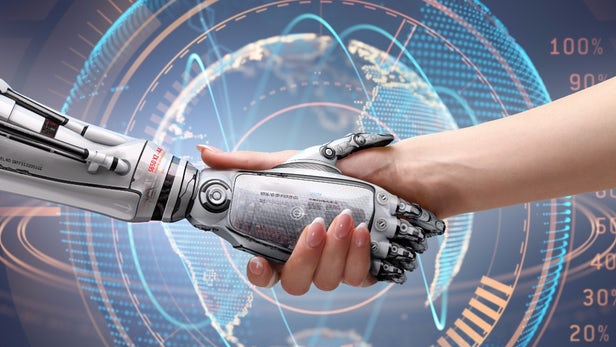
These machines operate in very different environments, yet they share a common purpose: using engineered systems to perform physical tasks with greater consistency, precision or efficiency.
Robotics has been part of industrial production for decades. What is changing in 2026 is the range of tasks robots can perform and the technologies available to support them.
Advances in computer vision, artificial intelligence, sensors, simulation and computing are making certain robotic systems more adaptable. Businesses are also exploring automation in areas where traditional industrial robots were previously difficult to deploy.
However, more sophisticated technology does not automatically make robotics a worthwhile investment.
A robot must solve a specific operational problem, work reliably in its intended environment and justify the costs of installation, maintenance, integration and employee training.
For business leaders, engineers and technology professionals, understanding these practical considerations is just as important as following developments in AI-powered robotics.
This guide examines how robotics works, its applications across industries, the role of artificial intelligence, the costs and risks of adoption, and the technologies shaping its development.
What Is Robotics?
Robotics is a multidisciplinary field concerned with designing, building, programming and operating machines capable of performing physical tasks.
It combines mechanical engineering, electronics, computer science, control systems and, increasingly, artificial intelligence.
A robot typically uses sensors to collect information, software or control systems to interpret instructions, and actuators to produce movement.
Some robots operate through fixed sequences. Others adjust their actions using information from their surroundings.
For example, a robotic arm on a production line may repeatedly move components between two predetermined positions.
A more adaptable system may use cameras to identify objects arriving in different orientations and calculate how to grasp them.
Both are robotic systems, but their operating requirements and technical capabilities differ.
The main components of a robot
Mechanical structure
The mechanical structure determines the robot’s physical form and movement capabilities.
It may include arms, joints, wheels, frames, grippers or specialised tools.
Sensors
Sensors provide information about the robot and its surroundings.
Common examples include cameras, proximity sensors, encoders, force sensors and temperature sensors.
Actuators
Actuators produce physical movement.
Depending on the application, robots may use electric motors, hydraulic systems or pneumatic mechanisms.
Control systems
Control systems coordinate movement and monitor operating conditions.
They process commands and sensor information to determine how the robot should respond.
Software
Software defines tasks, movement sequences, operating limits and communication with other systems.
Advanced applications may include computer vision, machine learning and motion-planning algorithms.
Power systems
Robots require electrical or other suitable power sources.
Mobile robots may rely on batteries, while industrial robots are commonly connected to facility power supplies.
How does a robot perform a task?
Consider a robotic system designed to pick components from a conveyor.
A camera identifies the location of a component.
The control software determines its position and orientation.
A motion planner calculates a suitable movement.
The robot’s actuators move the arm and gripper.
Sensors provide feedback about the movement and whether the component has been grasped successfully.
The process may then repeat.
In practice, the system also needs safeguards for unexpected conditions, such as a missing component, equipment fault or obstruction.
The quality of those safeguards is central to reliable automation.
Why Robotics Matters to Businesses in 2026
Businesses adopt robotics for different reasons.
A manufacturer may need greater production consistency. A warehouse operator may want to reduce unnecessary material movement. A healthcare organisation may need specialised equipment to support clinical procedures.
The common factor is the need to improve a process that involves physical work.
Robotics can offer advantages when tasks are repetitive, physically demanding, hazardous or require consistent positioning.
However, the business case depends on the operating environment.
A robot that performs well in a high-volume factory may be unsuitable for a small workshop producing frequently changing, customised products.
Productivity and throughput
Robots can perform programmed operations repeatedly without the same fatigue-related limitations experienced by people.
This can be valuable in production environments where equipment operates for extended periods.
However, actual output depends on cycle time, equipment availability, material supply and maintenance.
A fast robot provides little benefit if upstream equipment cannot supply components consistently.
Quality and consistency
Robotic systems can repeat movements with controlled positioning.
This is useful in applications such as welding, dispensing, assembly and packaging.
Nevertheless, repeatable movement does not guarantee acceptable product quality.
Tool condition, material variation, calibration and process design still affect results.
Workplace safety
Robots can perform certain tasks that expose workers to heat, hazardous materials, heavy loads or dangerous environments.
This may reduce particular occupational risks.
At the same time, robotic equipment introduces hazards of its own, including moving machinery, unexpected startup and potential collisions.
Automation therefore requires appropriate safety engineering rather than an assumption that machines are inherently safer.
Operational flexibility
Some modern robotic systems can be reprogrammed or adapted for different tasks.
This may be useful for businesses handling multiple product types.
However, changing an automated process may require new tooling, programming, testing and safety validation.
Flexibility should be evaluated against actual production requirements.
Types of Robots Used in Business
Robots are commonly classified according to their structure, operating environment or intended purpose.
Understanding these categories helps organisations narrow their technology choices.
Industrial robots
Industrial robots are widely used in manufacturing.
They may perform welding, painting, assembly, material handling, dispensing, packaging and inspection.
Articulated robotic arms are common because their multiple joints allow movement across several axes.
Other configurations include SCARA robots, Cartesian robots and delta robots.
Each design has advantages for particular tasks.
For example, a delta robot may be appropriate for high-speed handling of lightweight items, while an articulated arm may be better suited to complex positioning tasks.
Collaborative robots
Collaborative robots, often called cobots, are designed for applications involving defined forms of human-robot collaboration.
They may assist with assembly, machine tending, inspection or material handling.
Some include force and torque sensing, speed monitoring or other protective functions.
However, a cobot is not automatically safe to operate beside people under every condition.
The complete application must be assessed, including the tool attached to the robot, the workpiece, movement speed and possible contact hazards.
A sharp tool or heavy payload can create risks even when the robot itself includes collaborative safety features.
Autonomous mobile robots
Autonomous mobile robots, or AMRs, move through facilities using navigation systems and information from their surroundings.
They are commonly considered for warehouse transportation, hospital logistics and internal material movement.
AMRs may use sensors, maps and localisation software to plan routes.
They differ from many traditional automated guided vehicles, which commonly rely on more constrained guidance arrangements.
The distinction is not absolute, however, because navigation capabilities vary across products.
Service robots
Service robots perform useful tasks outside conventional industrial manufacturing.
Examples include commercial cleaning robots, hospital delivery systems and certain hospitality applications.
These robots often operate in environments shared with people.
That creates additional requirements for navigation, obstacle detection and safe interaction.
Medical robots
Medical robotics includes surgical assistance systems, rehabilitation equipment and certain laboratory automation systems.
A surgical robot generally assists a qualified clinician rather than independently replacing clinical judgment.
Medical applications require appropriate testing, regulatory oversight, training and clinical evaluation.
Agricultural robots
Agricultural robots can support crop monitoring, planting, harvesting, weed identification and precision application of agricultural inputs.
Some use cameras and machine learning to distinguish crops from weeds.
Their effectiveness depends on conditions such as crop variation, lighting, terrain and weather.
Construction robots
Construction robotics includes systems for surveying, inspection, material handling, demolition assistance and selected automated building processes.
Construction sites are difficult environments because layouts, surfaces and operating conditions change frequently.
A robot designed for predictable factory conditions may require substantial adaptation before it can operate reliably on a construction site.
How Artificial Intelligence Is Changing Robotics
Traditional industrial automation has often relied on predefined sequences and tightly controlled environments.
Artificial intelligence can help certain robotic systems interpret more complex information and respond to variation.
For example, a conventional robotic arm may require components to arrive in a precisely defined position.
A vision-guided system may identify components arriving in different orientations and calculate an appropriate grasp.
AI does not eliminate the need for mechanical engineering, control systems or reliable sensors.
It adds capabilities that may help robots handle tasks that are difficult to describe using fixed rules alone.
Machine learning
Machine learning allows systems to identify patterns from data.
In robotics, it may support perception, fault detection, object recognition and selected control tasks.
Its performance depends on the quality and relevance of training data.
A system trained under controlled laboratory conditions may not perform equally well in a noisy or unfamiliar industrial environment.
Computer vision
Computer vision enables robots to process information from cameras and other imaging devices.
Applications include identifying objects, inspecting surfaces, estimating positions and supporting navigation.
For example, a robot may use computer vision to locate randomly oriented components in a container.
The system must still account for lighting changes, reflections, occlusion and unusual object positions.
Motion planning
Motion planning determines how a robot can move from one position to another while respecting mechanical and environmental constraints.
Advanced planning systems can consider obstacles, joint limits and alternative routes.
Reliable motion planning is especially important in environments where conditions change.
Reinforcement learning
Reinforcement learning involves developing behaviour through feedback associated with actions and outcomes.
It is being researched and applied in selected robotic tasks, including manipulation and locomotion.
However, transferring learned behaviour from simulation to physical equipment remains challenging.
Unexpected behaviour, equipment wear and safety requirements limit how freely robots can explore actions in real environments.
Generative AI
Generative AI can support robotics-related activities such as software development, documentation, simulation workflows and certain forms of human-machine interaction.
For example, a natural-language interface may help an operator describe a task.
The system must still translate that request into valid, safe and technically feasible instructions.
A language model’s response should not be treated as a substitute for validated robot control.
What Is Physical AI?
Physical AI refers broadly to AI systems that interact with the physical world through sensing, reasoning and action.
In robotics, the term is often associated with systems that combine perception, learned representations and physical control.
Unlike software that operates entirely on digital information, a physical AI system must deal with real-world constraints.
Objects have weight, surfaces create friction, sensors produce imperfect measurements and mechanical components have operating limits.
A robot attempting to pick up an unfamiliar object must estimate its location, select a grasp and control the movement.
Even a small error can cause the object to slip or the robot to collide with surrounding equipment.
This is why physical AI requires more than powerful models.
Successful deployment depends on suitable hardware, reliable sensing, control engineering, simulation, testing and safety measures.
Why simulation matters
Training and testing directly on physical robots can be expensive and sometimes hazardous.
Simulation allows engineers to examine robot behaviour in virtual environments before deployment.
For example, a warehouse operator may simulate different robot routes and traffic patterns to identify congestion.
A manufacturer may test robotic movements against a digital representation of production equipment.
However, simulation results must be validated against real operating conditions.
Differences between virtual models and physical environments can affect performance.
Robotics Applications Across Major Industries
Robotics has different economic and operational implications across industries.
The value of automation depends on the task rather than the technology’s popularity.
Manufacturing
Manufacturing remains a major application area for industrial robotics.
Common tasks include welding, assembly, machine tending, inspection, painting and packaging.
A manufacturer may use robots to reduce variation in a repetitive process or improve throughput.
Before investing, the company should examine production volume, product variation and equipment utilisation.
Warehousing and logistics
Warehouses use robotic systems to transport goods, support picking operations and move materials between locations.
AMRs may reduce the distance employees need to travel during certain workflows.
However, benefits depend on warehouse layout, inventory organisation, software integration and order patterns.
A poorly designed workflow may remain inefficient even after robots are introduced.
Healthcare
Robotic systems support selected surgical, rehabilitation, laboratory and logistics activities.
Their purpose and level of autonomy vary substantially.
Healthcare organisations must consider clinical suitability, staff training, regulatory requirements, maintenance and patient safety.
Technology adoption should be supported by evidence appropriate to the intended clinical use.
Agriculture
Agricultural robotics can support precision operations and reduce manual effort in selected activities.
For example, an automated system may identify weeds and apply treatment to targeted areas.
Its practical value depends on crop type, field conditions, operating speed and equipment reliability.
Construction
Robotics can support surveying, inspection and certain repetitive physical tasks.
However, changing site conditions and complex coordination between workers and equipment make widespread automation difficult.
Projects should be evaluated against actual site requirements rather than demonstrations conducted under controlled conditions.
Commercial services
Cleaning, delivery and other service robots may be useful in suitable commercial environments.
Businesses must evaluate navigation reliability, maintenance requirements, customer interaction and operational supervision.
A robot that performs well in a controlled demonstration may encounter additional challenges during daily use.
Industrial Robots Versus Collaborative Robots
Businesses sometimes assume collaborative robots are a newer and therefore better alternative to traditional industrial robots.
That is not necessarily the case.
The appropriate choice depends on the application.
| Consideration | Conventional industrial robot | Collaborative robot application |
|---|---|---|
| Typical use | Automated industrial tasks | Tasks designed for defined human-robot interaction |
| Operating speed | May support high-speed operation | May operate under speed or force restrictions |
| Payload | Wide range, including heavy-duty systems | Depends on model and application |
| Safety approach | Often uses separation and protective systems | May use collaborative protective functions |
| Integration | Can require extensive cell engineering | May simplify selected applications |
| Human interaction | Usually controlled through safeguards | Depends on assessed collaborative operating mode |
| Best fit | High-volume or demanding automation | Suitable shared-workspace or flexible tasks |
Neither category should be selected without evaluating the complete system.
A collaborative robot handling a sharp component may require protective measures similar to those used with conventional industrial equipment.
Likewise, a traditional industrial robot may be the more efficient option for a high-speed process that does not require direct human interaction.
How to Choose the Right Robot for Your Business
A robotics investment should begin with a clearly defined operational problem.
Buying a robot before understanding the process can lead to expensive integration work and disappointing results.
Step 1: Define the task
Identify exactly what the robot is expected to do.
Is the objective to load a machine, inspect components, transport materials or perform assembly?
Document the current process and its limitations.
Step 2: Measure existing performance
Establish a baseline.
Useful measures may include cycle time, throughput, defect rate, downtime, labour requirements and safety incidents.
Without a baseline, it becomes difficult to determine whether automation has improved performance.
Step 3: Evaluate technical requirements
Important specifications include:
- Payload capacity: The maximum load the robot can handle under specified conditions.
- Reach: The distance and workspace within which the robot can operate.
- Repeatability: How consistently the robot returns to a position under defined conditions.
- Cycle time: The time required to complete an operation.
- End-of-arm tooling: Grippers, welding equipment or other tools attached to the robot.
- Environmental suitability: Compatibility with temperature, dust, moisture and other operating conditions.
- Integration: Ability to communicate with existing machines and software.
- Safety requirements: Protective measures needed for the complete application.
A robot’s advertised specifications should be evaluated against the actual task, including the weight and geometry of the tooling and workpiece.
Step 4: Compare alternatives
Robotics is not always the best solution.
Fixed automation, mechanical fixtures, process redesign or improvements to existing equipment may solve the problem at a lower cost.
The objective is to improve the process, not maximise the number of robots installed.
Step 5: Test the proposed solution
A pilot can reveal problems that are difficult to identify from specifications alone.
For example, a robot may achieve the required cycle time during testing but struggle when components arrive in inconsistent positions.
Pilot testing should use representative operating conditions.
Step 6: Plan integration and training
The robot must work with surrounding equipment, employees and operating procedures.
Training should cover normal operation, fault handling, maintenance responsibilities and relevant safety procedures.
Step 7: Measure results
After deployment, compare performance against the original baseline.
Investigate differences between expected and actual results.
Automation projects should be assessed continuously rather than treated as complete once the equipment is installed.
Understanding Robotics Costs and Return on Investment
The purchase price of a robot is only one part of the investment.
Businesses must also account for integration, installation, tooling, software, safety equipment, maintenance and employee training.
Common cost categories
| Cost category | Examples |
|---|---|
| Equipment | Robot, controller, sensors |
| Tooling | Grippers, fixtures, specialised attachments |
| Integration | Programming and connection to existing equipment |
| Safety | Guards, scanners, interlocks and risk assessment |
| Software | Licences, monitoring and control systems |
| Installation | Site preparation and commissioning |
| Training | Operator and maintenance instruction |
| Maintenance | Servicing, replacement parts and support |
| Operating costs | Energy, consumables and related expenses |
| Lifecycle costs | Upgrades, modifications and eventual replacement |
A proper financial assessment should consider the total cost of ownership over the expected operating life.
Example: A robotic material-handling investment
Consider a hypothetical manufacturer evaluating a robotic system to move components between two production stages.
The company estimates the following:
| Measurement | Illustrative amount |
|---|---|
| Equipment and integration investment | $120,000 |
| Annual gross operating savings | $45,000 |
| Additional annual operating and maintenance costs | $10,000 |
| Annual net operating benefit | $35,000 |
| Simple payback period | 3.4 years |
The calculation is:
Simple payback period = Initial investment ÷ Annual net operating benefit
$120,000 ÷ $35,000 = approximately 3.4 years
These figures are illustrative rather than industry benchmarks.
The calculation excludes financing, taxes, the time value of money and other potential costs or benefits.
Why payback is not enough
Simple payback can help businesses understand how quickly an investment may recover its initial cost.
However, it does not capture every financial consideration.
Larger investments may require discounted cash flow analysis, sensitivity testing and consideration of residual equipment value.
Businesses should also examine how results change if production volumes fall, maintenance costs increase or equipment availability is lower than expected.
Non-financial considerations
Some robotics investments may be justified partly by improved workplace safety, quality consistency or reduced exposure to hazardous tasks.
These benefits should be assessed carefully rather than assigned unsupported financial values.
The final decision should reflect both commercial and operational requirements.
Robotics Safety and Regulatory Considerations
Robots can reduce certain workplace hazards while introducing others.
A robotic arm may move unexpectedly during a fault.
An automated vehicle may encounter a pedestrian.
A gripper may release a component.
These risks require systematic assessment.
Risk assessment
Before deployment, organisations should identify foreseeable hazards and evaluate their consequences.
The assessment should consider normal operation, maintenance, cleaning, troubleshooting and foreseeable misuse.
Safety requirements should be determined for the complete robotic application rather than the robot alone.
Protective measures
Depending on the system, safeguards may include physical barriers, interlocks, protective scanners, emergency-stop functions and safety-rated control systems.
The appropriate combination depends on the assessed risks.
Collaborative robot safety
Collaborative applications require particular attention to possible contact between people and moving equipment.
The robot’s speed, payload, tooling and surrounding environment all affect risk.
A collaborative designation should never replace application-specific safety assessment.
Relevant standards
Organisations should consult applicable machinery and industrial robot safety standards.
Relevant references may include the ISO 10218 series and ISO/TS 15066, where applicable.
The current editions, jurisdictional requirements and suitability of each standard should be confirmed during engineering and compliance work.
Medical and other regulated applications
Medical robots and certain other specialised systems may be subject to additional regulatory requirements.
Compliance depends on the device, intended use and market.
Businesses should obtain appropriate technical and regulatory advice before deployment.
Cybersecurity in Connected Robotic Systems
Modern robots may communicate with manufacturing execution systems, warehouse software, monitoring platforms and remote support services.
Connectivity can improve operational visibility, but it also creates cybersecurity risks.
Unauthorised access or compromised software may interrupt production, expose information or affect equipment behaviour.
Important cybersecurity measures
- Access control: Limit system access to authorised personnel.
- Network segmentation: Separate critical operational systems from networks that do not require direct access.
- Software maintenance: Maintain appropriate processes for updates, vulnerability management and configuration control.
- Remote access security: Protect remote maintenance connections.
- Monitoring: Detect unusual activity and investigate relevant events.
- Recovery planning: Establish procedures for responding to incidents and restoring operations.
- Supplier assessment: Understand the security responsibilities of equipment vendors and integrators.
Cybersecurity should be considered during system design rather than added only after deployment.
Guidance from NIST and relevant industrial control system security frameworks can support risk management.
Robotics and the Future of Work
Robotics changes the tasks people perform.
Some repetitive or physically demanding activities may become automated.
Other responsibilities may expand, including programming, maintenance, quality control and equipment supervision.
The effect on employment varies by industry, business model and technology.
It would be misleading to claim that robots either eliminate all jobs or consistently create more jobs than they replace.
Both outcomes depend on economic and organisational circumstances.
Skills businesses may need
Robotics adoption can increase demand for capabilities in:
- Mechanical engineering and equipment maintenance.
- Electrical systems and industrial controls.
- Robotics programming.
- Sensors and computer vision.
- Data analysis and industrial software.
- AI and machine learning.
- Cybersecurity.
- Safety engineering.
- Process improvement and systems integration.
Not every employee needs to become a robotics engineer.
Operators may need to understand safe equipment use and fault reporting.
Maintenance technicians may require diagnostic and repair skills.
Supervisors may need to interpret production data and coordinate human-machine workflows.
Why workforce planning matters
Automation can fail when employees are not prepared for changes in responsibilities.
Businesses should involve relevant staff during process assessment, testing and deployment.
Training should address practical tasks rather than provide only general presentations about new technology.
Clear operating procedures and defined responsibilities help reduce confusion after implementation.
Robotics Trends to Watch Beyond 2026
Robotics research and commercial development continue across several areas.
Not every emerging technology is ready for widespread deployment, but several developments deserve attention.
AI-enabled manipulation
Researchers and companies are developing systems capable of handling a wider range of objects and tasks.
This could make robotics more useful in environments where objects vary in size, shape and orientation.
Reliable operation remains difficult when objects are unfamiliar or conditions change unexpectedly.
Humanoid robots
Humanoid robots are designed with physical structures resembling aspects of the human body.
Their potential appeal is the ability to operate in environments originally designed for people.
However, balance, energy consumption, manipulation, reliability and safety remain significant engineering challenges.
Commercial demonstrations should not be confused with evidence of dependable large-scale deployment.
Digital twins
Digital twins represent physical systems using digital models connected, to varying degrees, with real-world information.
They can support simulation, monitoring and operational analysis.
For robotics, digital models may help engineers examine movement, equipment layouts and production scenarios before implementing physical changes.
Their usefulness depends on model accuracy and the quality of available data.
Edge computing
Edge computing processes information close to the equipment producing or using it.
This can support applications where communication delays or connectivity limitations matter.
However, system architecture should reflect actual performance, security and maintenance requirements.
Robotics as a Service
Robotics as a Service, commonly abbreviated RaaS, offers access to robotic capabilities through service-based commercial arrangements.
These may reduce the need for some upfront capital expenditure.
However, businesses must examine recurring fees, maintenance responsibilities, service levels, contract terms and total lifecycle costs.
A subscription model is not automatically cheaper than purchasing equipment.
More flexible industrial automation
Improvements in sensing, programming and tooling may allow some robotic systems to handle greater product variation.
This could expand automation opportunities for businesses that do not operate exclusively at very high production volumes.
Nevertheless, flexibility has costs.
Every additional task may require engineering, validation and operational support.
A Practical Roadmap for Robotics Adoption
Businesses considering robotics can follow a structured implementation process.
Phase 1: Identify the operational problem
Select a process with measurable limitations.
Document current performance and the reasons improvement is needed.
Phase 2: Assess automation suitability
Determine whether robotics is technically appropriate.
Compare it with process redesign, conventional automation and other alternatives.
Phase 3: Develop the business case
Estimate investment costs, operating expenses, expected benefits and financial risks.
Consider different production-volume and equipment-availability scenarios.
Phase 4: Evaluate technology and suppliers
Review technical specifications, integration requirements, support arrangements and relevant experience.
Ask suppliers to explain assumptions and limitations.
Phase 5: Conduct a pilot
Test the proposed solution under representative conditions.
Measure cycle time, reliability, quality and operational constraints.
Phase 6: Complete safety and security assessments
Identify hazards and implement suitable protective measures.
Review cybersecurity, access controls and recovery procedures.
Phase 7: Train employees and commission the system
Provide role-specific instruction.
Confirm that operating procedures, maintenance arrangements and escalation responsibilities are clear.
Phase 8: Monitor and improve
Compare actual results with the original business case.
Track performance over time and investigate unexpected outcomes.
Expand automation only when operational evidence supports further investment.
Measuring Robotics Performance
A robotics project should be evaluated using metrics appropriate to the process.
Throughput
How many acceptable units are produced during a defined period?
An increase in robot speed does not necessarily increase overall production if another process remains the bottleneck.
Cycle time
How long does the system take to complete a defined operation?
Cycle time should be measured under representative conditions.
Equipment availability
How much of the planned operating period is the system available for production?
Unplanned downtime can materially affect the financial case.
Defect rate
Does the automated process produce fewer defects than the previous process?
Quality measures should use consistent definitions.
Maintenance cost
How much does the system require in servicing, parts and technical support?
Unexpected maintenance costs may reduce the expected savings.
Safety performance
Has the system reduced exposure to identified hazards?
Safety should be evaluated through appropriate risk and incident measures rather than relying only on the absence of reported accidents.
Financial performance
Compare actual costs and benefits with the original investment assumptions.
A successful project should demonstrate meaningful operational value, not merely that the robot can perform its programmed movement.
Frequently Asked Questions About Robotics
What is robotics in simple terms?
Robotics is the field of designing and operating machines that perform physical tasks using mechanical components, sensors, software and control systems.
Some robots follow fixed instructions, while others can adjust their behaviour using information from their surroundings.
How is AI used in robotics?
AI can help robots interpret sensor information, recognise objects, support navigation and perform selected tasks in changing environments.
It does not replace the need for reliable hardware, control systems and safety engineering.
What is the difference between robotics and automation?
Automation is the broader use of technology to perform tasks with reduced direct human intervention.
Robotics is one form of automation involving machines that perform physical actions.
Not every automated system is a robot.
What are collaborative robots?
Collaborative robots are designed for applications involving defined forms of human-robot collaboration.
Their safe use depends on the complete application, including tooling, payload, speed and risk assessment.
What are autonomous mobile robots?
Autonomous mobile robots are machines that navigate through environments using sensors, mapping and control software.
They are commonly used for material movement and internal logistics.
What is physical AI?
Physical AI refers broadly to AI systems that perceive and interact with the physical world.
In robotics, it can involve combining perception, learning, planning and physical control.
Which industries use robotics?
Robotics is used in manufacturing, logistics, healthcare, agriculture, construction and commercial services.
Applications vary according to the tasks and operating environments involved.
How much does robotic automation cost?
Costs depend on equipment, tooling, software, integration, safety systems, maintenance and training.
Businesses should calculate total ownership costs rather than considering only the robot’s purchase price.
Are robots replacing human workers?
Robots can automate selected tasks and change workforce requirements.
Their effect on employment depends on the industry, business decisions and broader economic conditions.
Is Robotics as a Service cheaper than buying a robot?
Not necessarily.
Service-based arrangements may reduce upfront expenditure, but recurring charges and contractual obligations can affect total costs.
Businesses should compare options over the expected operating period.
What are the main risks of robotics adoption?
Important risks include unsuitable technology selection, integration problems, equipment failures, safety hazards, cybersecurity vulnerabilities and underestimated operating costs.
A structured assessment and pilot can help identify these issues.
How can a small business begin using robotics?
A small business should identify a repetitive or difficult process, measure current performance and evaluate whether automation would provide sufficient value.
A limited pilot may be more appropriate than immediately investing in a large automated system.
Conclusion
Robotics in 2026 is not defined by a single breakthrough or one type of machine.
It reflects the continued development of industrial automation alongside advances in sensing, computing, artificial intelligence and physical control.
Robots are already useful in manufacturing, logistics, healthcare, agriculture and other sectors. New technologies may expand their capabilities, but practical limitations remain.
For businesses, the central question is not whether robotics is becoming more sophisticated.
It is whether a particular robotic system can solve a real operational problem safely, reliably and economically.
Successful adoption requires careful technology selection, realistic financial analysis, appropriate safety measures, employee preparation and continuous performance monitoring.
The organisations most likely to benefit are those that treat robotics as an engineering and operational investment rather than a technology trend to follow at any cost.
References and Further Reading
- International Federation of Robotics (IFR) – https://ifr.org/ – Industry reporting on industrial and service robotics, including World Robotics publications.
- National Institute of Standards and Technology (NIST) – https://www.nist.gov/ – Research and technical resources covering robotics, manufacturing systems, measurement and related technologies.
- International Organization for Standardization (ISO) – https://www.iso.org/ – International standards covering machinery safety, industrial robotics and other relevant engineering requirements.
- Occupational Safety and Health Administration (OSHA) – https://www.osha.gov/ – Workplace safety resources and guidance relevant to industrial equipment and machinery.
- NIST Cybersecurity Framework – https://www.nist.gov/cyberframework – Guidance for identifying, assessing and managing cybersecurity risks.
- NIST Industrial Control Systems Security Guidance – https://csrc.nist.gov/pubs/sp/800/82/r3/final – Security guidance for operational technology and industrial control systems.
Editorial note: The financial example is illustrative and does not represent a verified industry benchmark. Industry adoption figures and forecasts should be checked against the original IFR publications before inclusion. No commercial SEO agency references, unrelated roofing links or sponsored backlinks are included in this article.









Leave a Reply