






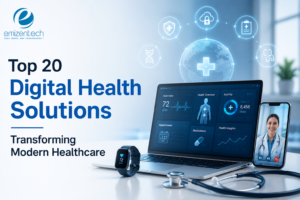
The healthcare industry is experiencing a major digital transformation as technology continues to change how medical services are delivered, managed, and accessed. Patients today expect faster communication, personalized treatment, and convenient healthcare experiences beyond traditional hospital visits. Digital health solutions are helping healthcare organizations improve operational efficiency, enhance patient engagement, and provide better medical outcomes through advanced technologies.
From artificial intelligence and cloud computing to wearable devices and remote monitoring systems, digital innovations are creating a more connected healthcare ecosystem. These solutions enable healthcare providers to make data-driven decisions, improve accessibility, and deliver patient-focused care while reducing administrative challenges.
What Are Digital Health Solutions?
Digital health solutions are technology-based platforms, applications, and systems designed to improve healthcare delivery, patient experience, and medical operations. They combine technologies such as artificial intelligence, data analytics, cloud computing, mobile applications, and connected devices to support better healthcare management.
These solutions help healthcare providers manage patient information, monitor health conditions, automate workflows, and deliver personalized treatment plans. A reliable healthcare app development company can help organizations create secure and scalable digital solutions that meet modern healthcare requirements while improving accessibility and efficiency.
From electronic health records to telemedicine platforms, digital health technologies are enabling a shift from reactive treatment toward preventive and personalized healthcare models.
20 Digital Health Innovations Reshaping the Future of Healthcare
Digital transformation has introduced innovative solutions that address various healthcare challenges, including accessibility, patient engagement, data management, and operational efficiency. Below are the top digital health solutions changing the healthcare landscape.
1. Telemedicine Platforms
Telemedicine platforms allow patients to connect with healthcare professionals remotely through video consultations, secure messaging, and digital communication tools. As virtual healthcare continues to grow, telemedicine app helps create convenient solutions that enable online consultations, improve patient access to medical services, and support timely care delivery without the need for frequent hospital visits.
2. Electronic Health Record (EHR) Systems
Electronic Health Record systems replace traditional paper-based medical records with secure digital databases. They allow healthcare professionals to access patient history, diagnoses, prescriptions, and test reports quickly, improving collaboration and supporting more accurate clinical decisions.
3. Healthcare Mobile Applications
Healthcare mobile applications provide patients with convenient access to medical services through smartphones. These apps support appointment scheduling, medication reminders, health tracking, online consultations, and communication with healthcare providers, improving overall patient engagement.
4. Remote Patient Monitoring Solutions
Remote patient monitoring solutions use connected devices to collect and share real-time health information. They help doctors track vital signs, manage chronic conditions, and provide timely interventions without requiring frequent hospital visits.
5. AI-Powered Healthcare Solutions
Artificial intelligence is improving healthcare through automated diagnosis support, predictive analytics, and personalized treatment recommendations. AI-powered systems analyze large volumes of medical data to identify patterns, improve accuracy, and support healthcare professionals in decision-making.
6. Wearable Health Technology
Wearable health devices such as smartwatches and fitness trackers allow users to monitor important health metrics, including heart rate, activity levels, and sleep patterns. These devices encourage preventive care by providing continuous health insights.
7. Digital Patient Portals
Digital patient portals provide secure platforms where patients can access medical records, schedule appointments, view test results, and communicate with healthcare providers. These solutions improve transparency and encourage patients to actively manage their healthcare journey.
8. Healthcare Chatbots and Virtual Assistants
AI-powered chatbots help healthcare organizations provide instant support for common patient queries, appointment scheduling, and healthcare guidance. These virtual assistants improve response times while reducing the workload on administrative teams.
9. ePrescription Platforms
Electronic prescription platforms simplify the medication process by allowing doctors to send prescriptions digitally to pharmacies. They reduce manual errors, improve medication tracking, and provide patients with a more convenient prescription management experience.
10. Cloud-Based Healthcare Systems
Cloud-based healthcare systems provide secure infrastructure for storing, managing, and sharing medical information. They support better collaboration between healthcare teams, enable remote access to data, and offer scalable solutions for growing healthcare organizations.
11. Healthcare Data Analytics Platforms
Healthcare analytics platforms help organizations analyze patient data, identify healthcare trends, and improve decision-making. These solutions support predictive healthcare by helping providers understand risks, optimize treatments, and improve patient outcomes.
12. Digital Therapeutics
Digital therapeutics use software-based programs to support the prevention and treatment of specific health conditions. These solutions provide personalized interventions for areas such as chronic disease management, behavioral health, and lifestyle improvement.
13. Healthcare IoT Solutions
Internet of Things (IoT) solutions connect medical devices, sensors, and healthcare systems to collect real-time information. They improve monitoring capabilities, automate healthcare processes, and enable better communication between patients and providers.
14. Clinical Decision Support Systems
Clinical decision support systems assist healthcare professionals by providing data-driven recommendations during diagnosis and treatment planning. These systems improve accuracy by analyzing patient information alongside medical guidelines and research.
15. Mental Health Applications
Mental health applications provide digital access to therapy resources, counseling sessions, meditation programs, and emotional wellness tools. They help make mental healthcare more accessible while allowing users to seek support conveniently.
16. Healthcare CRM Solutions
Healthcare CRM systems help organizations manage patient relationships, communication, and engagement activities. They improve appointment management, follow-ups, and personalized interactions between healthcare providers and patients.
17. Medical Billing and Revenue Management Systems
Digital billing and revenue management solutions automate financial processes such as claims processing, payment tracking, and insurance management. They reduce administrative complexity and help healthcare organizations improve financial efficiency.
18. Blockchain Healthcare Solutions
Blockchain technology enhances healthcare data security by enabling transparent and secure information exchange. It helps protect sensitive medical records, improve interoperability, and ensure better control over patient information.
19. Virtual Reality Healthcare Solutions
Virtual reality technology is being used for medical training, rehabilitation, pain management, and therapy. These immersive solutions create realistic environments that support healthcare professionals and improve patient recovery experiences.
20. Personalized Healthcare Solutions
Personalized healthcare solutions use patient data, analytics, and advanced technologies to create customized treatment approaches. They help providers deliver care based on individual health conditions, lifestyle factors, and medical history.
Benefits of Digital Health Solutions for Healthcare Providers
Digital health technologies are helping healthcare organizations improve service quality while reducing operational challenges. These solutions enable providers to deliver efficient, secure, and patient-centered care.
Improved Patient Experience
Digital health solutions make healthcare services more accessible through online consultations, digital communication, and convenient appointment management. Patients benefit from faster services, better engagement, and improved control over their healthcare decisions.
Enhanced Operational Efficiency
Automation helps healthcare providers reduce manual administrative work and streamline daily operations. Digital platforms improve workflow management, allowing medical teams to focus more on patient care rather than repetitive tasks.
Better Data Management
Healthcare organizations generate large amounts of patient information that require efficient management. Digital systems help store, organize, and analyze healthcare data securely, enabling better coordination among medical professionals.
Increased Healthcare Accessibility
Remote healthcare technologies allow patients to receive medical support regardless of location. This is especially beneficial for individuals in remote areas who may face challenges accessing traditional healthcare facilities.
Cost Optimization
Digital solutions help reduce healthcare expenses by automating processes, minimizing paperwork, and supporting remote care delivery. Organizations can improve resource utilization while maintaining high-quality healthcare services.
Future of Digital Health Solutions
The future of healthcare will continue to be shaped by emerging technologies such as artificial intelligence, machine learning, robotics, and advanced analytics. These innovations will support predictive healthcare, personalized treatments, and smarter medical decision-making.
Connected healthcare ecosystems will allow patients, providers, and devices to share information seamlessly. As technology evolves, digital health solutions will focus more on preventive care, early diagnosis, and improving healthcare accessibility worldwide.
Conclusion
Digital health solutions are transforming modern healthcare by improving accessibility, efficiency, and patient outcomes. From AI-powered platforms and wearable devices to telemedicine and data-driven systems, these technologies are creating a smarter and more connected healthcare environment. Businesses looking to adopt innovative healthcare technologies can benefit from expert guidance and scalable digital solutions. Companies help organizations build advanced healthcare solutions that support evolving patient and industry needs.
FAQs
1. What are digital health solutions?
Digital health solutions are technology-based tools that improve healthcare delivery, patient experience, and medical operations. They include telemedicine platforms, healthcare apps, electronic health records, wearable devices, AI-powered systems, and remote monitoring solutions.
2. How do digital health solutions benefit healthcare providers?
Digital health solutions help healthcare providers improve workflow efficiency, reduce administrative tasks, access real-time patient data, enhance communication, and deliver more personalized care while reducing operational costs.
3. What technologies are used in digital health solutions?
Digital health solutions use technologies such as artificial intelligence (AI), machine learning, cloud computing, Internet of Things (IoT), blockchain, data analytics, and mobile applications to create smarter healthcare experiences.
4. Are digital health solutions secure for managing patient data?
Yes, digital health solutions can provide secure patient data management through encryption, access controls, compliance standards, and advanced cybersecurity measures. Proper implementation helps protect sensitive healthcare information and maintain patient privacy.









Leave a Reply