






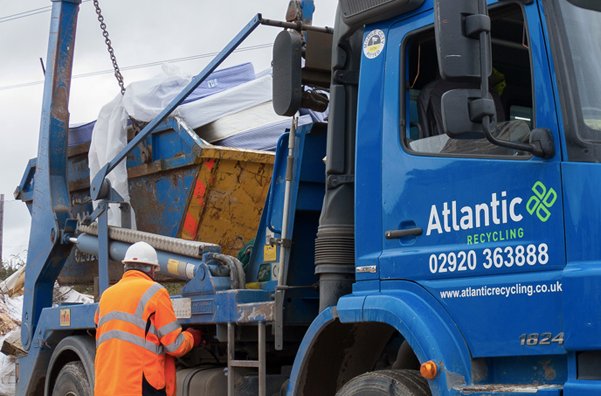
Construction across South Wales has changed like, quite a bit, over the past decade, and now developers, contractors and homeowners are all dealing with a lot more pressure to build in ways that reduce environmental impact rather than just ticking the minimum regulatory boxes. Waste management is right at the middle of this shift. Skip hire Cardiff contractors depend on has, sort of quietly, turned into one of the key tools for delivering genuinely sustainable building projects, because how materials are gathered and processed on site directly affects how much of a project’s waste actually ends up recovered, not just dumped in landfill. And this stays true whether it’s a small residential extension, or a much bigger commercial job stretching across several months of work.
This article looks at how skip hire has evolved to back sustainable construction practices across the region, and the specific ways operators and contractors work side by side to cut down waste. It also unpacks what all of this means for where building projects in South Wales go next. Plus it covers the practical headaches that show up when you try to balance bold environmental plans, with real world project budgets and those tight construction timelines that nobody can really ignore.
Why Sustainable Construction Has Become A Regional Priority
Construction has long been recognized as one of the more resource intensive industries, generating pretty significant volumes of waste at every stage, from demolition through to final fit out. Across South Wales, this reality has taken on greater urgency as landfill capacity starts to shrink and national environmental commitments nudge every sector to reduce its footprint, which sort of places construction firmly in the spotlight alongside energy and transport, as an area that needs meaningful change. Also a number of landfill sites across the region are getting close to capacity limits sooner than originally projected, so it really adds weight to the argument for reducing reliance on disposal wherever possible.
Developers working across Cardiff, Swansea and the nearby valleys have responded by treating waste reduction as a core element of project planning, rather than something done later as an afterthought once a site has already been cleared. This change reflects both regulatory pressure and a real recognition that sustainable practices, including careful waste management, are now expected by clients , local authorities, and the wider public. As a result planning applications for bigger developments often include specific waste management commitments within the submission, showing how central this idea has become for getting approval in the first place.
Environmental Pressures Facing The Construction Sector
This growing regional focus on sustainability has, in turn, put waste management firms in a more prominent role within the construction process than they used to be, because the environmental credentials of a project now really depend heavily on the choices made about how site waste gets collected and processed.
How Skip Hire Fits Into The Sustainable Building Process
Every material that leaves a construction site starts its journey toward reuse , recycling, or disposal at the moment of collection, so the way a skip is loaded and looked after on site is one of those most influential things for a project overall environmental performance. A skip that throws clean timber in with contaminated general waste ends up closing off recycling options that would otherwise have been pretty easy to pursue, kind of undoing a lot of the benefit that careful material selection earlier in the project might have delivered .
For that reason, many contractors across the region now treat their selection of skip hire partner as a real sustainability decision , not just a practical, logistical one. Providers who can show solid recovery rates and clear processing pathways for the materials they pick up give contractors a believable route to back up their own environmental statements when they report to clients or planning authorities. This matters even more on projects where sustainability commitments have been made publicly or are written into some kind of funding agreement.
Collection As The First Step In Material Recovery
The connection between strong site handling and productive skip collection has now become a lot more tight than it used to be, with contractors and operators increasingly teaming up from the very first stages of a project, rather than only coming in at the exact point when a skip is required.
Material Segregation On Site And Its Environmental Impact
On site segregation has become one of the clearer way’s construction projects across South Wales are getting better at sustainability, and honestly since separating materials like timber, metal, rubble and plasterboard before they ever reach a skip, it increases the proportion that can really be recycled rather than being downgraded into general waste during processing. This idea holds up across projects of every size, from one single house extension, right up to a multi unit residential development.
A lot of bigger sites now run with multiple skips, each one set aside for specific material types, which takes more space and coordination than just using one mixed container but it still brings much better recovery rates. Meanwhile smaller residential and commercial projects have been leaning more and more toward simplified versions of the same thing, sometimes sorting just two or three key material streams, to find that practical balance with environmental gain, because even a partial separation still counts as a meaningful upgrade compared to sending everything to a single mixed skip.
Separating Waste Streams Before Collection
Small changes to on site sorting, like keeping clean timber separate from general waste, can shift the portion of a project’s waste that ends up not going to landfill, and you don’t even need a full overhaul in how the site is run. It’s kind of modest but still it matters.
The Role Of Waste Transfer Stations In The Recovery Chain
Waste transfer stations sort of act as the crucial bridge between a construction site and the eventual reuse, or recycling of collected materials , where mixed loads are processed into separate streams that can then get sent off to the right processors. In South Wales the actual capability of these places varies quite a lot, and honestly the transfer station a skip hire operator relies on can have a real impact on how much of the material is diverted from landfill , even if the stuff was separated on site in the first place , like pretty carefully.
Contractors working on larger projects or ones considered more environmentally sensitive have been asking for more assurances recently about which transfer stations their skip hire provider uses. They know that even a load that’s well segregated can end up underperforming if it lands at a site with limited sorting capacity. That’s pushed tighter cooperation between construction firms and waste operators during site logistics planning , and some contractors now actually specify “preferred” transfer stations as part of their waste management agreements.
Processing Capacity Across South Wales
Facilities that have more modern sorting tools, and then also strong processing ties with recyclers, tend to give noticeably better results than older, more basic places, so picking the transfer station is kind of an important thing. It ’s often missed though, and it can really affect a project’s overall sustainability performance, even if people assume it’s minor, or simple.
Reducing Landfill Reliance Through Smarter Waste Planning
More and more, construction projects across the region start with a waste audit, that sort of estimates the type and volume of material a build is likely to throw out before work even starts. That way contractors can plan skip requirements more accurately select the right segregation approach from the get-go, and also spot chances to cut waste during the design stage instead of dealing with it after demolition or construction is already underway.
Projects that bring in this kind of forethought often end up with recycling rates that look noticeably higher than projects where waste management is treated like a secondary thing. Skip hire providers with experience supporting these audits have turned into real valued partners for contractors, who want to show solid environmental outcomes to clients and regulators too.
Pre Construction Waste Audits And Their Benefits
Even a relatively simple audit, done before the first skip is ordered, can help a contractor dodge both under and over ordering capacity, saving cost, while also backing a more accurate and genuinely sustainable approach to the project as a whole.
Supporting The Circular Economy Through Material Recovery
A growing share of the material gathered from construction sites across South Wales now manages to get a second life, rather than being tossed aside , with recovered aggregates used in fresh groundworks, reclaimed timber turned back into joinery, and scrap metal routed into manufacturing supply chains. This circular way of working trims both the need for virgin materials and the strain on landfill capacity, plus it can bring a modest money return on those materials that, without this, would have looked like pure cost.
Skip hire operators sit right in the middle of making this recovery happen, because the quality and purity of a properly separated load, basically decides whether the recovered material can be reused at a meaningful scale, or whether it only ends up being downgraded into weaker value uses. Contractors are increasingly treating this recovery potential as part of the wider worth a waste management partner contributes to a project, next to the usual stuff like price and reliability. And that broader definition of value has shifted how some contractors weigh competing quotes.
Turning Construction Waste Into Reusable Resources
As demand for re recovered materials grows among developers tryin to reduce their own reliance on raw resources, the ability of a skip hire operator deliver, clean well sorted loads has become kind of a genuine advantage rather than just an environmental nicety. And honestly, it’s not only about being “green”, it’s about being precise, efficient, and ready when someone wants the right mix, at the right time.
Regulatory Compliance And Its Influence On Waste Practices
Construction companies around South Wales have a clear duty of care duties, basically about how waste gets managed after it leaves the site and goes off somewhere else. That means there must be proper records, not just “sort of” notes, of what was lifted, where it was delivered, and how it was eventually handled or processed. Because of that, many contractors now end up working closer with skip hire providers , the ones who can supply dependable paperwork that is well organised, like this is just part of the job and not a special request every time.
More than simply dodging fines, the whole regulatory setup has pushed better habits into the sector. People who might have treated waste management in a casual manner now need to show a transparent and auditable route, step by step. And when a skip hire provider makes the documentation easy to find and not a headache, they become a real supporting partner. Not just a pickup for debris, you know.
Meeting Duty Of Care Obligations
For contractors dealing with a bunch of sites at once, working with one skip hire provider who can supply consistent paperwork across each job has, in practice, been far more efficient than trying to manage several smaller operators with different record keeping levels. It just seems less chaotic, you know, and it stays uniform throughout.
Challenges Facing Sustainable Skip Hire Practices
Despite clear progress, sustainable waste management on construction sites is not fully plain sailing, especially on projects running on tight budgets where the added cost of several segregated skips, or those higher priced transfer station fees can be hard to defend against a competitive tender price. That back and forth between cost and environmental ambition is still one of the trickier balances for contractors to find, and they often end up second guessing every decision.
Some operators have tried to respond with tiered service packages that let contractors pick a level of segregation, suited to what they can afford and the project size, instead of treating sustainability as either here or gone, no middle ground. That flexibility, more or less, has helped bring smaller and mid sized builds into waste practices that are more environmentally responsible without pricing them completely out of the process..
Balancing Cost Pressures With Environmental Goals
Over time, quite a few contractors have seen that the extra up-front cost of segregation is at least somewhat balanced out by lower disposal fees, because well sorted loads are often processed more cheaply than mixed waste is sent off for general disposal.
Case For Collaboration Between Contractors And Waste Operators
The most successful examples of sustainable construction waste management across South Wales tend to involve genuine co operation between contractors and their skip hire providers, not just a purely transactional setup driven by price and availability . Operators who actually grasp a contractor’s usual project patterns can give more tailored guidance on skip sizing, segregation approach, and timing, than a provider who sees the site for the first time, and often that means they anticipate the needs even before a contractor has to speak up.
This sort of partnership also helps waste operators plan their own fleet and processing capability more effectively because consistent, predictable demand from familiar contractor clients makes it simpler to invest in the extra skips and sorting infrastructure that sustainable methods call for. Both sides gain from a relationship built around shared ecological intentions rather than short term cutbacks alone, and that alignment can last longer than arrangements built only on the lowest available quote , even if it looks good at first glance.
Building Long Term Partnerships Around Shared Goals
Contractors that have helped form these longer term relationships, often say they see smoother site logistics and also better sustainability results, because a familiar provider can foresee a project’s waste requirements with more precise accuracy than, say, someone who is working with the contractor for the first time, overall it just runs more easy.
Looking Ahead For Sustainable Construction In South Wales
The direction of travel for construction waste management across South Wales is trending toward even more strict expectations, whether that is pushed by regulation, client demand, or a bit of competitive pressure between contractors trying to stand out on environmental performance. Waste segregation and material recovery seem likely to become the baseline expectation not really a bonus add on within the coming years, and not something people can easily skip.
For skip hire operators and contractors alike, staying one step ahead of this whole run means you keep investing in the infrastructure, hands on training, and the practical partnerships that actually enable genuine recovery, not just wrapping sustainability as a marketing message sitting on top of unchanged ways of working. The ones who start changing early, well they are typically best positioned to benefit as expectations across the construction sector keep rising.
Where The Sector Is Likely To Head Next
Ultimately , the trajectory of the sector sort of suggests that waste management will only become a more central factor in how construction projects across South Wales are planned , priced and delivered in the years ahead.
Conclusion
Skip hire has moved well beyond its traditional role as a simple waste collection service, becoming instead a genuine partner in the drive toward more sustainable building practices across South Wales. From on site segregation to the choice of transfer station, decisions made at every stage of the waste journey now carry real weight in determining whether a project’s environmental ambitions are met in practice rather than only on paper.
As construction across the region continues to evolve, the operators and contractors who treat waste management as a core part of sustainable construction, rather than an administrative necessity, will be the ones shaping what responsible building looks like in South Wales for years to come.









Leave a Reply