






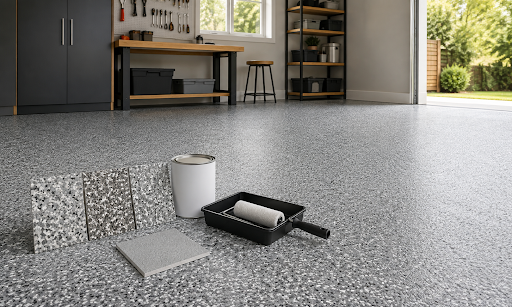
Concrete floors are expected to handle a surprising amount of daily use. Garages deal with vehicles, tools, road salt, and oil, while basements, workshops, and utility areas may face storage equipment, moisture, spills, and frequent foot traffic. Over time, unfinished concrete can become stained, dusty, chipped, or difficult to maintain.
For property owners in Woodland Park, NJ, seasonal moisture, winter road residue, and changing temperatures can add another layer of wear. Flake epoxy flooring offers one way to create a more finished and easier-to-maintain surface, but choosing a system should involve more than selecting a flake color from a sample.
Concrete condition, surface preparation, room use, traction, topcoat selection, maintenance, and project cost can all influence the final result. Reviewing these factors before installation can help homeowners and business owners choose a system that suits both the space and their expectations.
What Is Flake Epoxy Flooring?
Flake epoxy is a decorative coating system installed over properly prepared concrete. Colored vinyl flakes are broadcast into a wet base coat and then protected with a clear topcoat. The amount of flake coverage can vary. Some floors use a light decorative broadcast, while others use enough flakes to cover almost the entire base coat.
Professionally installed flake epoxy flooring services can also provide different color combinations, textures, and system specifications depending on where the floor will be used. Epoxy Shine’s service page describes flake systems for residential and commercial applications in Woodland Park and surrounding areas.
The finished appearance is less uniform than a solid-color coating. The different flake shades create visual variation across the surface, which can be useful in spaces where homeowners want a practical but decorative floor.
Consider Where the Floor Will Be Installed
Flake epoxy can work in several areas, but the coating system should match the demands of the space.
Residential Garages
Garages are a natural application because the floor must handle vehicles, storage cabinets, tools, dirt, and regular cleaning. A decorative flake pattern can also make ordinary dust, light scuffs, and small marks less noticeable than they may appear on a plain solid-color floor. The topcoat should be selected for vehicle traffic and exposure to common automotive spills.
Basements
Flake epoxy can give an unfinished basement a more complete appearance. It may suit home gyms, storage areas, entertainment rooms, hobby spaces, and utility areas. However, basement concrete should be evaluated for moisture before coating. Existing water-entry problems should be corrected rather than simply covered.
Workshops
Workshops can benefit from a continuous coated floor that is easier to sweep and clean than porous concrete. The flooring system should be selected according to tool use, equipment weight, chemical exposure, and the amount of impact the surface may experience.
Commercial Areas
Flake systems may also be considered for certain showrooms, work areas, utility spaces, retail environments, and other commercial floors. Commercial environments may require stronger preparation, protective topcoats, or different system specifications because of heavier traffic.
Do Not Choose the Flake Color First
Color is important, but it should not be the first decision. Before comparing gray, tan, black, blue, or custom blends, the concrete itself should be inspected.
A floor may contain:
- Cracks
- Pitting
- Oil stains
- Old paint
- Sealers
- Adhesive residue
- Weak concrete
- Uneven sections
- Moisture-related damage
These conditions can affect how much preparation is required. A visually attractive flake blend will not compensate for weak adhesion underneath. The long-term performance of the floor begins with the slab, not the decorative layer.
Surface Preparation Has a Major Role
Professional floor preparation commonly involves mechanical grinding or another method designed to remove weak material and create a suitable profile for coating adhesion. Preparation may also include repairing cracks, removing old coatings, treating contaminated areas, and thoroughly cleaning the floor.
This step is easy to underestimate because it becomes invisible once the finished coating is installed. However, inadequate preparation can contribute to problems such as peeling, uneven bonding, or coating separation. When comparing contractors, homeowners should ask exactly how the concrete will be prepared rather than accepting a vague description such as “cleaning the floor.”
Look Closely at Cracks and Damage
Not every crack is the same. Small, stable cracks may often be repaired during preparation. Wider cracks, damaged joints, or areas showing continued movement may require a more detailed assessment. A coating can cover a properly repaired crack, but it cannot guarantee that structural movement will stop.
Homeowners should ask:
- How will cracks be repaired?
- Are repairs included in the estimate?
- Are any cracks still active?
- Will control or expansion joints remain visible?
- What happens if a crack returns?
Clear answers help set realistic expectations before the floor is installed.
Moisture Should Be Checked Before Installation
Concrete may look dry while still allowing moisture vapor to move through the slab. Possible signs include dark areas, white mineral deposits, peeling paint, bubbling beneath an older coating, or recurring dampness. This can be particularly important in basements and ground-level areas. A contractor may recommend moisture testing before choosing the coating system. If elevated moisture is found, additional preparation or a moisture-control product may be needed. A coating should not be treated as a solution for an active leak, poor drainage, or water entering through foundation walls.
Choose Flake Coverage According to the Space
Flake coverage can change both the appearance and the amount of material used. A light broadcast leaves more of the base coat visible. This can create a simpler decorative effect. A heavier or full broadcast creates a denser pattern and may help conceal minor visual imperfections more effectively.
The right choice depends on:
- Room size
- Desired appearance
- Maintenance expectations
- Budget
- Level of traffic
- Overall design
A busy garage may benefit from a balanced multi-color blend that makes dirt and small marks less obvious. A decorative commercial area may use a more customized color combination.
Think About Traction
Flake systems naturally introduce some texture, but the finished level of traction depends heavily on the topcoat and any additional slip-resistant material.
This is important in areas exposed to:
- Wet vehicles
- Rainwater
- Snow
- Cleaning water
- Workshop spills
- Frequent foot traffic
A heavily textured finish may improve grip but can make the floor slightly harder to mop. A smoother finish may be easier to clean but may need additional traction in wet environments. The best option should balance safety with routine maintenance.
Select the Topcoat Carefully
The clear topcoat does more than add shine. It protects the flakes and base coating beneath it from daily abrasion, spills, cleaning, and foot or vehicle traffic. Topcoat selection may depend on whether the floor is installed in a residential garage, basement, workshop, or commercial environment.
Homeowners should ask:
- What type of topcoat is included?
- How many topcoat layers are applied?
- What level of gloss will it create?
- Can slip-resistant material be added?
- How should the finished surface be cleaned?
Understanding the topcoat helps homeowners compare complete flooring systems rather than comparing only the decorative flakes.
Understand What Affects Flake Epoxy Flooring Cost
The final price of a flake system is influenced by much more than square footage. Homeowners researching g flake epoxy flooring cost should also consider concrete preparation, repairs, coating quality, flake coverage, topcoat selection, and labor. Epoxy Shine’s published guide lists residential flake epoxy at roughly $5–$10 per square foot and notes that commercial applications can be higher because of preparation and system requirements.
The following factors commonly influence the project estimate:
| Cost Factor | Why It Matters |
| Floor size | Larger areas require more coating, flakes, topcoat, and labor. |
| Concrete condition | Cracks, pitting, stains, and damage may require repair. |
| Surface preparation | Mechanical grinding and old-coating removal add equipment and labor. |
| Moisture issues | Some floors may require testing or moisture-control materials. |
| Flake coverage | Full-broadcast systems generally use more decorative material. |
| Custom colors | Specialty blends may change material and design requirements. |
| Number of layers | Primers, base coats, and topcoats add material and installation time. |
| Topcoat type | Higher-performance protective finishes may affect the total estimate. |
| Commercial use | Heavy traffic may require a stronger overall flooring system. |
This is why two floors with identical square footage may receive different estimates. One may have clean, sound concrete that only requires normal preparation. Another may contain peeling paint, cracks, contamination, and moisture problems that require additional work before the decorative coating can begin.
Compare Quotes Based on the Full System
Homeowners should avoid comparing only the final price.
A detailed estimate should explain whether it includes:
- Concrete grinding
- Old-coating removal
- Crack repairs
- Moisture evaluation
- Primer
- Epoxy base coat
- Decorative flakes
- Clear topcoat
- Slip-resistant additives
- Labor
- Cleanup
- Curing instructions
- Warranty coverage
A lower estimate may simply use a less complex system, but it could also exclude preparation or protective layers included in another quote. Likewise, the highest estimate does not automatically guarantee the best installation. The goal is to understand what work and materials are actually included.
DIY or Professional Installation?
DIY flake kits can appear inexpensive, but homeowners should consider the complete project.
Additional items may include:
- Grinder rental
- Concrete cleaner
- Degreaser
- Crack filler
- Mixing tools
- Rollers
- Protective equipment
- Flakes
- Clear topcoat
Applying flakes evenly also requires timing. The flakes must be broadcast while the base coat is still ready to receive them. Common DIY issues may include uneven coverage, poor adhesion, inconsistent flake distribution, weak repairs, or missed moisture problems.
Professional installation costs more because it generally includes preparation equipment, labor, materials, and installation experience. The right option depends on the floor condition, project complexity, and homeowner’s experience.
Consider Installation Downtime
The floor needs to remain clear while preparation, coating, and curing take place. Vehicles, tools, furniture, storage items, and equipment may need to be moved temporarily.
Installation time can depend on:
- Floor condition
- Repairs
- Coating system
- Number of layers
- Temperature
- Humidity
- Product curing requirements
Homeowners should ask when light foot traffic can return and when vehicles or heavy equipment can safely be placed on the floor. Using the space too soon may damage a coating that has not fully cured.
Plan for Routine Maintenance
Flake epoxy flooring is designed to be easier to maintain than unfinished porous concrete, but routine cleaning still matters. Loose dirt and grit should be removed regularly because abrasive particles can wear the protective topcoat.
Spills should be cleaned promptly, particularly in garages and workshops. Mild cleaning products and soft cleaning tools are usually better suited to coated floors than harsh abrasive methods.
Heavy cabinets, machines, or equipment should be moved carefully rather than dragged across the surface. Over time, the topcoat may show wear in heavily used areas. A flooring professional can determine whether a maintenance coat or other treatment is appropriate.
Local Considerations in Woodland Park, NJ
Property owners in Woodland Park, NJ, may need to consider winter road salt, wet vehicles, seasonal moisture, and changing temperatures when planning a garage or utility-floor project. Garages can collect salt and abrasive debris during colder months, while basements may need closer moisture evaluation. A local contractor should be able to explain how the proposed system fits these conditions.
Epoxy Shine is one local option for homeowners and property owners comparing flake epoxy flooring systems. Regardless of which installer is selected, the proposal should clearly explain preparation, coating layers, curing requirements, maintenance, and warranty terms.
Final Thoughts
Flake epoxy flooring can create a practical combination of visual texture, concrete protection, and easier maintenance for garages, basements, workshops, and selected commercial spaces. However, homeowners should look beyond flake colors when planning a project. Concrete condition, surface preparation, moisture, crack repair, flake coverage, traction, topcoat selection, cost, and maintenance all affect the finished result. By comparing the complete flooring system rather than choosing only by appearance or the lowest estimate, property owners can select a flake epoxy floor that better matches how the space is actually used.










Leave a Reply