






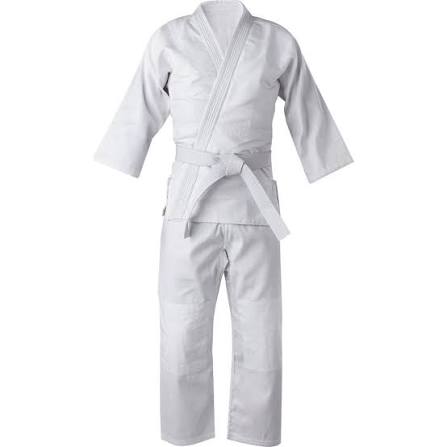
Buying karate uniforms in bulk requires more planning than purchasing a single gi for personal training. Martial arts academies, karate clubs, sports retailers, tournament organizers, and online sellers need to consider not only price, but also fabric quality, durability, sizing consistency, comfort, customization, and supplier reliability.
A uniform that looks good when new may not perform well after months of training and repeated washing. Likewise, choosing the cheapest wholesale option can become expensive if inconsistent sizing, weak stitching, or poor-quality materials lead to replacements and customer complaints.
Before placing a wholesale order, use the following ten considerations to evaluate the uniforms and supplier carefully.
1. Define Your Requirements Before Ordering
Start by identifying who will wear or purchase the uniforms.
A karate academy teaching young beginners may have very different requirements from a retailer serving experienced martial artists. Consider factors such as:
- Age groups
- Skill levels
- Training frequency and intensity
- Preferred karate styles
- Climate and training environment
- Required colors
- Quantity and size distribution
- Custom branding requirements
Beginners and children may benefit from lightweight uniforms that prioritize comfort and ease of movement. More experienced practitioners may prefer medium- or heavyweight uniforms depending on their training requirements and personal preferences.
If you need customized uniforms, determine requirements such as academy logos, embroidery, patches, names, or labels before requesting a quotation.
Creating a clear specification first makes it much easier to compare suppliers on equivalent terms.
2. Check the Fabric Quality and Material
Fabric is one of the most important considerations when purchasing karate uniforms wholesale.
Karate involves repeated punches, kicks, blocks, stretches, stances, and other movements. The material therefore needs to provide sufficient freedom of movement while withstanding regular training and washing.
Common materials can include cotton, cotton canvas, polyester blends, and other mixed fabrics. Each has different characteristics.
Cotton is commonly associated with a traditional feel and appearance, while heavier cotton or canvas constructions may provide greater durability. Blended materials can offer practical advantages such as easier care or reduced weight.
Do not judge fabric by its description alone.
Before committing to a large order, request detailed specifications covering material composition, fabric weight, care instructions, and expected shrinkage. When possible, order a sample and wash it according to the manufacturer’s instructions.
Check whether the material shrinks excessively, loses its shape, fades, or becomes uncomfortable after washing.
3. Choose the Appropriate Uniform Weight
Karate uniforms are manufactured in different fabric weights, and there is no single weight that is ideal for every practitioner.
Lightweight uniforms may suit beginners, younger students, warmer training environments, or practitioners who prioritize freedom of movement.
Medium-weight uniforms can provide a balance between comfort and durability and may be suitable for a broad range of students.
Heavyweight uniforms may appeal to experienced practitioners looking for a more substantial fabric, although suitability depends on training style, individual preference, and intended use.
When comparing wholesale products, ask suppliers to provide the actual fabric weight or relevant product specification rather than relying only on terms such as “light,” “medium,” or “heavy.”
If your customers have varied requirements, offering more than one weight may be preferable to assuming that a single uniform will suit everyone.
4. Inspect Stitching and Construction Quality
A karate uniform experiences repeated stress around its seams, shoulders, sleeves, trousers, waistband, crotch, and other high-movement areas.
Construction quality is therefore just as important as fabric quality.
When examining a sample, look closely at:
- Seam consistency
- Reinforcement in high-stress areas
- Jacket edges
- Underarm construction
- Trouser seams
- Waistband construction
- Loose threads
- Uneven stitching
- Overall finishing
Reinforced, double, or multiple-row stitching may improve durability in appropriate areas, but the overall workmanship matters more than simply counting visible stitch lines.
A uniform with poor construction may require replacement sooner, creating additional costs for academies and retailers.
Sampling becomes particularly important when placing a large wholesale order because even a relatively small quality problem can become significant when multiplied across hundreds of garments.
5. Review the Size Range and Size Chart
Sizing can become one of the biggest challenges in wholesale martial arts apparel.
Students vary considerably in age, height, build, and body proportions. A supplier’s size labels may also differ from those used by another manufacturer.
Request a detailed size chart and review measurements such as:
- Recommended height
- Chest measurement
- Jacket length
- Sleeve length
- Waist range
- Trouser length
- Inseam, where provided
Also check whether trousers use an elastic waistband, drawstring, or combination system and whether different sizing options are available for children and adults.
For academies, maintaining a sensible distribution of frequently used sizes can reduce last-minute shortages. Retailers should use previous sales data, where available, rather than dividing inventory equally between every size.
Most importantly, do not assume that a “Size 4” from one manufacturer will fit exactly like a Size 4 from another.
6. Compare Total Value, Not Just Unit Price
Wholesale purchasing naturally makes price important, but the lowest quoted unit cost does not necessarily represent the best deal.
Calculate the total landed cost of the order.
Depending on the supplier and destination, this can include:
- Unit price
- Customization costs
- Sample charges
- Packaging
- Shipping
- Taxes or duties where applicable
- Payment or transaction charges
- Replacement costs
- Minimum-order requirements
Quality should also be considered.
Saving a small amount per uniform may offer little benefit if a higher rate of defects, returns, inconsistent sizing, or premature wear follows.
When comparing suppliers, request equivalent specifications and quantities so that you are comparing like with like.
Buyers researching the broader range of martial arts apparel available through specialist suppliers can also review stores such as the Elite Fight Wears Fightwear Shop as part of their supplier and product comparison.
7. Ask About Customization Options
Customization can be particularly valuable for karate academies, clubs, tournament organizers, and retailers developing their own brands.
Depending on the manufacturer, options may include:
- Embroidered academy logos
- Printed branding
- Patches
- Student or instructor names
- National flags
- Custom labels
- Packaging
- Selected color combinations
However, customization introduces additional considerations.
Ask whether customized orders have different minimum quantities, production times, setup fees, or return conditions. Confirm the exact logo size, position, colors, and production method before approving a large run.
For significant orders, request a digital proof or physical pre-production sample where practical.
Small errors in logo placement or spelling can become expensive when repeated across an entire wholesale order.
8. Evaluate Comfort and Freedom of Movement
Durability alone does not make a good karate uniform.
The gi also needs to allow the practitioner to move comfortably through stances, kicks, punches, blocks, stretches, and other techniques.
When testing a sample, pay particular attention to the:
- Shoulders
- Sleeves
- Underarms
- Crotch
- Knees
- Waist
- Trouser cut
The uniform should provide appropriate mobility without being unnecessarily restrictive or excessively loose.
Testing the sample during actual martial arts movements can reveal issues that may not be obvious when simply examining the garment on a table.
Comfort is especially important for schools buying uniforms for beginners. An uncomfortable or poorly fitting uniform can distract students during training and negatively affect their overall experience.
9. Evaluate the Supplier, Not Just the Product
Even an excellent sample is only part of a successful wholesale relationship.
The supplier also needs to deliver consistent quality across the full order.
Before committing to a large purchase, evaluate factors such as:
- Responsiveness
- Clarity of product specifications
- Production capacity
- Minimum order quantity
- Quality-control procedures
- Customization capabilities
- Production lead times
- Shipping arrangements
- Payment terms
- Return or replacement policies
Ask what happens if part of the order arrives with incorrect sizes, defective stitching, damaged packaging, or customization that differs from the approved specification.
Communication becomes particularly important for custom orders involving multiple sizes, designs, or colors.
Keep important specifications and approvals documented so that both parties have a clear record of what was agreed.
10. Review Shipping, Returns and Final Quality Control
Do not treat shipping as an afterthought.
Large wholesale orders can involve substantial transportation costs and longer lead times, particularly when products are manufactured internationally.
Before confirming an order, establish:
- Estimated production time
- Shipping method
- Estimated delivery window
- Shipping charges
- Packaging method
- Tracking availability
- Responsibility for damaged shipments
- Return and replacement procedures
Once the shipment arrives, inspect it before distributing the uniforms to students or customers.
Check the quantity against the purchase order and sample products from different sizes or cartons. Review fabric consistency, stitching, sizing, colors, logos, labels, and packaging.
If there is a problem, document it immediately with photographs and relevant order information and contact the supplier according to the agreed process.
Final inspection provides an important quality-control checkpoint before the products reach end users.
A Practical Wholesale Karate Uniform Checklist
Before placing a large order, make sure you can answer these questions:
- Product: Is the fabric suitable for the intended type of training?
- Weight: Are lightweight, medium-weight, or heavyweight uniforms appropriate for your customers?
- Construction: Have you inspected seams and high-stress areas?
- Sizing: Do you have accurate measurements rather than relying only on size labels?
- Sample: Have you physically evaluated a sample where possible?
- Customization: Have all logos, colors, positions, and additional charges been approved?
- Price: Have you calculated total cost rather than only the unit price?
- Supplier: Are production timelines and quality-control processes clear?
- Shipping: Do you understand delivery costs, timelines, and responsibilities?
- Returns: Is there a documented process for defective or incorrect goods?
For organizations comparing suppliers, a specialist manufacturer such as Elite Fight Wears is one option to evaluate alongside other providers. Buyers should compare samples, specifications, pricing, policies, and service before selecting a wholesale partner.
Final Thoughts
Buying wholesale karate uniforms involves much more than finding the lowest price.
Fabric quality, weight, stitching, sizing, comfort, customization, manufacturing consistency, shipping, and supplier reliability can all affect the success of a bulk purchase.
The safest approach is to define your requirements first, compare suppliers using the same criteria, inspect samples where practical, document custom specifications, and understand the complete cost before placing a large order.
For martial arts academies, a good purchasing decision can mean students receive comfortable and dependable uniforms. For retailers and distributors, better product selection can reduce avoidable returns and improve customer satisfaction.
A few extra checks before ordering can prevent significantly more expensive problems after hundreds of uniforms have already been manufactured and shipped.
Frequently Asked Questions
What fabric is best for wholesale karate uniforms?
There is no single material that is best for every user. Cotton and cotton canvas are common choices, while blended materials can offer different characteristics related to weight and care. Buyers should choose based on training requirements, climate, budget, and customer preferences.
Should I order a sample before buying karate uniforms in bulk?
Yes, whenever practical. A sample allows you to evaluate fabric, stitching, sizing, comfort, appearance, and construction before committing to a larger quantity. Washing and testing the sample can provide additional useful information.
What should I check on a karate uniform size chart?
Look for recommended height and measurements covering the jacket, sleeves, chest, waist, and trousers. Do not assume sizing is identical across different manufacturers.
Can wholesale karate uniforms be customized?
Many suppliers offer customization such as embroidery, logos, patches, labels, names, and packaging. Confirm minimum quantities, additional charges, production time, artwork specifications, and return conditions before ordering.
Are heavyweight karate uniforms always better?
No. Heavier fabric may offer a more substantial feel and can suit certain practitioners, while lighter uniforms may be preferable for beginners, children, warmer conditions, or people who prioritize mobility. The appropriate weight depends on the intended user and application.
How do I choose a reliable wholesale karate uniform supplier?
Evaluate product samples, specifications, communication, manufacturing capabilities, quality-control procedures, lead times, shipping terms, customer feedback, and return policies. For large or customized orders, document all specifications before production begins.










Leave a Reply