






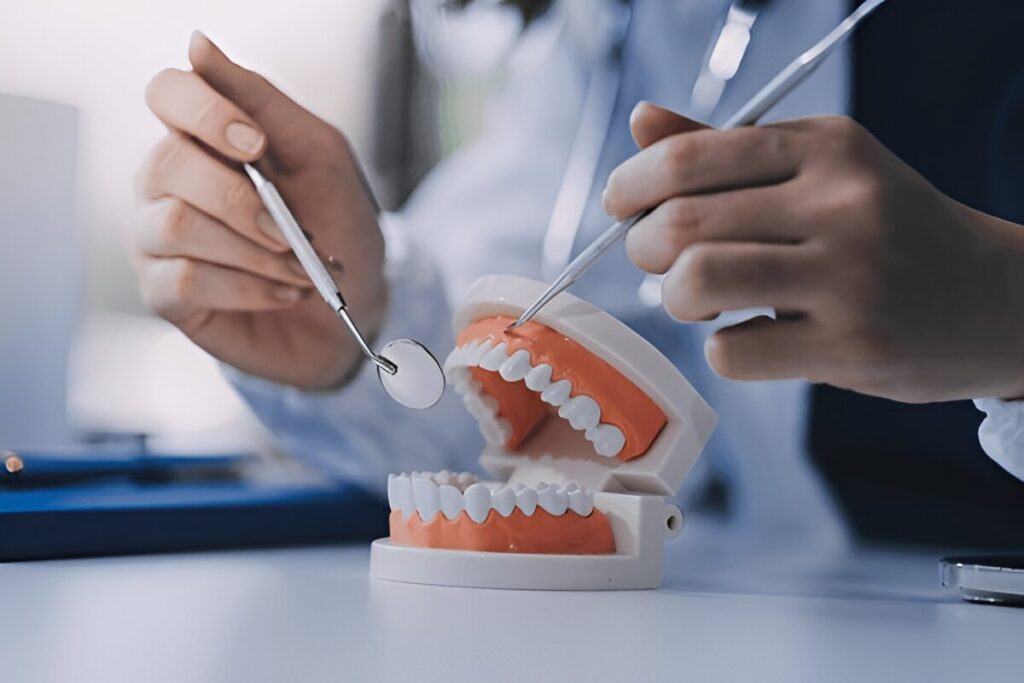
Visiting a new dentist can raise more questions than you expect.
Will the examination hurt? Will you need X-rays? Will your teeth be cleaned at the first appointment? What happens if the dentist finds a cavity? And perhaps just as importantly, how much is everything going to cost?
If you are visiting a new dentist in Shelby Township, Michigan—or anywhere else—the exact appointment will depend on your oral health, medical history, symptoms and reason for visiting.
A routine first appointment will look different from an emergency visit for severe tooth pain or swelling. Someone seeking preventive care may also need a different evaluation from a patient considering dental implants, cosmetic treatment or care for gum disease.
Even so, knowing the main elements of a new-patient dental visit can make the experience easier to understand and help you arrive prepared.
What to Bring to Your First Dental Appointment
Your dental team needs more than information about your teeth.
Medical conditions, medications, allergies and previous treatment can influence dental care. The American Dental Association emphasizes the importance of obtaining and reviewing an accurate medical and dental history before diagnosis or treatment.
Before your appointment, gather relevant information such as:
- photo identification;
- dental insurance information, if applicable;
- a list of medications and supplements you take;
- known allergies;
- important medical conditions or previous surgeries;
- contact information for relevant healthcare providers where appropriate;
- details of previous dental treatment;
- the name and contact information of your previous dentist;
- recent dental X-rays, if available, or information that can help the new practice request them;
- information about current tooth pain, sensitivity or other symptoms; and
- any questions or concerns you want to discuss.
If you wear a dental appliance such as a nightguard, retainer or removable prosthesis and have concerns about it, consider bringing it with you.
Do not worry if you cannot provide every piece of information before arriving. The practice can tell you what it specifically requires.
Your Medical and Dental History
New patients are commonly asked to complete medical and dental history forms before the clinical examination.
These questions are important because oral health does not exist separately from the rest of your health.
Your dentist may need to know about:
- current and previous medical conditions;
- medications;
- allergies;
- previous surgeries;
- pregnancy where relevant;
- previous dental treatment;
- problems with previous dental procedures;
- tobacco or alcohol use where clinically relevant;
- current oral-health concerns; and
- other information that could influence safe treatment.
The ADA notes that an accurate health history can identify medical conditions and medications that may affect treatment decisions or interact with aspects of dental care.
Answer as accurately as you can.
If you are unsure why a particular medical question matters to dental treatment, ask.
Talk About Your Concerns Before Treatment Begins
Your first appointment is also an opportunity to explain why you are there and what matters to you.
Tell the dental team about symptoms such as:
- tooth pain;
- sensitivity to hot or cold;
- bleeding gums;
- jaw discomfort;
- problems chewing;
- a broken or chipped tooth;
- concerns about existing fillings or crowns; or
- changes inside your mouth.
You can also discuss concerns that are not urgent.
Perhaps you dislike the appearance of a particular tooth. Maybe you grind your teeth. You may have questions about whitening, orthodontic treatment, implants or other options.
And if dental appointments make you anxious, say so.
That information can help the dental team understand how to approach your visit.
What Happens During the Dental Examination?
The exact examination depends on the patient, but a comprehensive evaluation can involve looking at the teeth, gums, bite and other oral structures.
Existing dental work may also be examined.
For example, the dentist may evaluate:
- teeth for signs of decay, damage or wear;
- gums and supporting tissues;
- existing fillings, crowns or other restorations;
- bite and jaw relationships where relevant;
- areas causing pain or sensitivity; and
- soft tissues of the mouth and surrounding structures.
For adult patients, ADA guidance supports obtaining an updated medical, social and dental history and performing a conventional visual and tactile intraoral and extraoral examination as part of evaluating for potentially malignant disorders. Suspicious findings may require further evaluation or referral.
The examination is also an opportunity to ask what the dentist is checking and why.
A patient should not need to understand dental terminology to understand their own oral health.
Will You Need Dental X-Rays?
Possibly—but being a new patient does not automatically mean that a new set of X-rays should be taken.
Current ADA recommendations emphasize that dental radiographs should be selected according to clinical need.
Factors can include your oral-health history, age, disease risk, symptoms, clinical findings and whether useful previous images are available. The ADA’s 2026 recommendations emphasize performing a thorough clinical examination before determining whether imaging is needed for diagnosis, treatment planning or clinical management.
Dental X-rays can reveal information that may not be visible during a clinical examination, depending on the type of image and reason it is taken.
Imaging may help evaluate issues involving teeth, supporting bone, impacted teeth, disease or other structures when clinically indicated.
If your previous dentist recently took useful X-rays, tell the new practice. Existing images may be relevant to the dentist’s decision about whether additional imaging is necessary.
If new X-rays are recommended, reasonable questions include:
- What images are being recommended?
- Why are they necessary?
- What is the dentist trying to evaluate?
- Are my previous X-rays still useful?
The important principle is not that X-rays are inherently good or bad. It is that imaging should have a clinical reason.
Will Your Teeth Be Cleaned at the First Visit?
A professional cleaning may be included during the first appointment, but it should not be assumed that every patient needs exactly the same type of cleaning.
The appropriate care depends on what the examination shows.
Someone with generally healthy gums who needs routine preventive care may have a different appointment from someone with signs of periodontal disease or substantial deposits that require a different treatment approach.
If a cleaning is appropriate, a dental hygienist or other qualified member of the dental team may remove plaque and hardened deposits that cannot be removed through ordinary brushing alone, and provide guidance about home oral care.
If a different type of periodontal care is recommended, ask:
- What did the examination show?
- How is the recommended treatment different from a routine cleaning?
- Why is it necessary?
- How many appointments are expected?
- What home care should I follow?
The goal should be to understand the recommendation rather than simply hearing the name of a procedure.
Understanding the Dentist’s Findings
Once the evaluation is complete, the dentist should be able to explain the significant findings and what they mean.
If your oral health is good, the discussion may focus mainly on prevention and future recall.
If a concern is identified, such as tooth decay, gum disease, a damaged restoration or another condition, ask the dentist to explain:
- what was found;
- whether it requires treatment;
- how urgent it is;
- what could happen if it is monitored instead;
- what treatment options are appropriate;
- whether alternatives exist; and
- what follow-up will be required.
For complex treatment, you may also want to understand which parts are essential for health and which are elective or cosmetic.
A treatment plan should make the next steps clearer—not create more confusion.
Treatment Costs and Dental Insurance
Cost is a legitimate part of healthcare decision-making.
Before proceeding with planned non-emergency treatment, ask for an explanation of the proposed treatment and an estimate of your expected cost.
For more extensive care, such as crowns, implants, cosmetic procedures or multi-stage treatment, also ask:
- how many appointments may be required;
- what each stage involves;
- whether laboratory or specialist costs are included;
- what your insurance may cover;
- what portion you may need to pay; and
- whether payment options are available.
Remember that an estimate of dental-insurance benefits is not necessarily a guarantee of what an insurer will ultimately pay.
Coverage can depend on the details of your plan, including deductibles, annual maximums, waiting periods, exclusions and insurer determinations.
If the financial side of the treatment is unclear, ask for clarification before committing to non-urgent care.
What If You Have Dental Anxiety?
Dental anxiety is something worth discussing rather than hiding.
Tell the dental team if you:
- have had a difficult previous dental experience;
- are worried about pain;
- dislike needles;
- have a strong gag reflex;
- feel uncomfortable lying back;
- prefer to know what is happening before each step;
- need breaks during longer appointments; or
- have concerns about a particular procedure.
Simple communication can make a significant difference.
For example, you can ask the dentist to explain a procedure before starting, agree on a signal if you need a pause, or discuss pain-control options.
For some patients and procedures, sedation may also be considered when clinically appropriate. Sedation is not simply a routine comfort feature; current ADA guidelines include patient evaluation, safety, training, monitoring and other requirements depending on the level of sedation.
If sedation is being considered, the dentist should assess whether it is appropriate for your health history and planned treatment and explain the relevant instructions and risks.
Ask How the Practice Handles Dental Emergencies
Your first appointment is also a useful time to understand what happens if you develop an urgent problem later.
Consider asking:
- Does the office reserve appointments for urgent dental problems?
- What should I do if the office is closed?
- Is there an after-hours contact procedure?
- When would the practice refer an emergency elsewhere?
- What should I do if I experience a problem after treatment?
Knowing the process before an emergency occurs can reduce uncertainty when something unexpected happens.
However, some symptoms require more than waiting for a routine dental appointment.
For example, rapidly increasing facial or neck swelling, particularly when accompanied by difficulty breathing or swallowing, can require urgent medical assessment.
When symptoms appear potentially life-threatening, seek emergency medical care rather than waiting for an ordinary dental appointment.
How Often Should You Return to the Dentist?
You may have heard that everyone should visit the dentist every six months.
For some people, a six-month interval may be appropriate.
But there is no single recall schedule that is ideal for every patient.
The ADA notes that recall frequency can be tailored according to individual need and assessed disease risk.
Your recommended schedule can depend on factors such as:
- history of tooth decay;
- gum health;
- current treatment;
- oral-hygiene needs;
- medical factors;
- smoking or other risk factors; and
- the dentist’s clinical assessment.
Rather than assuming you need exactly two visits every year, ask:
“Based on my oral health and risk factors, when should I come back?”
That produces a more useful answer.
Your First Visit May Look Different
Not every new-patient appointment follows the same sequence.
Someone attending for routine preventive care may receive a broad examination and preventive assessment.
Someone arriving with severe tooth pain may need the appointment focused primarily on identifying and managing the immediate problem.
A patient seeking implants may require different diagnostic information.
Someone concerned about gum disease may need a more detailed periodontal assessment.
A cosmetic consultation may focus on a completely different set of objectives.
Children also have different developmental and preventive needs from adults.
This is why articles describing a “typical” first visit should be treated as a guide rather than a promise of exactly what will happen.
Your dentist should tailor the appointment to you.
Questions Worth Asking Before You Leave
A first appointment is more useful when you leave understanding your oral health rather than simply knowing when the next appointment is.
Before leaving, consider whether you know the answers to these questions:
| Question | Why It Matters |
|---|---|
| What did you find? | Helps you understand your current oral health |
| Is anything urgent? | Separates immediate needs from issues that can be monitored |
| Do I need treatment? | Clarifies the next step |
| What alternatives do I have? | Helps you participate in treatment decisions |
| What will treatment cost? | Reduces financial surprises |
| What should I do differently at home? | Turns the visit into preventive action |
| When should I return? | Establishes an individualized recall plan |
| What should I do if I have an emergency? | Gives you a plan before you need one |
You do not need to ask every question on the list.
The important point is to leave with enough information to make informed decisions about your care.
Choosing a New Dental Practice
A first visit also gives you an opportunity to evaluate whether a practice meets your needs.
Beyond location and office hours, consider how well the practice:
- listens to your concerns;
- explains findings clearly;
- answers questions;
- discusses treatment options;
- communicates expected costs;
- handles anxiety or accessibility needs;
- explains urgent-care arrangements; and
- involves you in decisions about your treatment.
If you are researching practices in Shelby Township, you may come across local providers such as Pearly Smile Dental Studio. Whichever practice you consider, evaluate it using the same questions rather than relying solely on advertising, online rankings or promotional claims.
The objective is not simply to find a dentist close to home.
It is to establish a dental-care relationship in which you understand your oral health and feel able to participate in decisions about your treatment.
Final Thoughts
A first visit to a new dentist does not need to feel unpredictable.
You will usually begin by sharing relevant medical and dental information and explaining your concerns. The dentist can then perform the examination appropriate to your circumstances and determine whether additional information, such as dental X-rays, is clinically necessary.
Depending on what the evaluation shows, the appointment may include preventive care, further assessment, a professional cleaning or discussion of future treatment.
But there is no universal first-visit formula.
Not every new patient needs new X-rays. Not everyone needs the same type of cleaning. And not every patient should automatically return at precisely the same interval.
The most useful first appointment is therefore not the one that follows a rigid checklist.
It is the one that gives the dentist enough information to understand your health, gives you enough information to understand your options, and creates a clear plan for maintaining or improving your oral health over time.









Leave a Reply