






Radon is an invisible, naturally occurring radioactive gas that can enter homes through the ground. Because it cannot be detected by sight or smell, testing is the practical way to determine whether elevated radon levels are present inside a property.
Long-term exposure to radon is associated with an increased risk of lung cancer. The U.S. Environmental Protection Agency (EPA) recommends that homes be tested because radon levels can vary considerably between individual properties, including homes located in the same general area.
Understanding how radon testing works, where a test should be conducted, how results are interpreted, and when additional action may be appropriate can help homeowners make better-informed decisions about their indoor environment.
Understanding How Radon Testing Works
Radon testing measures the concentration of radon present in indoor air during a defined testing period.
A properly conducted test involves more than simply placing a measurement device somewhere inside the property. The type of device, testing location, testing duration, environmental conditions, and potential interference can all affect the usefulness of the result.
When professional testing is used, homeowners should understand what is being measured and ask how the testing procedure follows applicable guidance or protocols.
A qualified radon-testing professional should also be able to explain the device being used, where it will be placed, how long the test will run, what conditions need to be maintained, and how the final results will be reported.
Choosing an Appropriate Testing Location
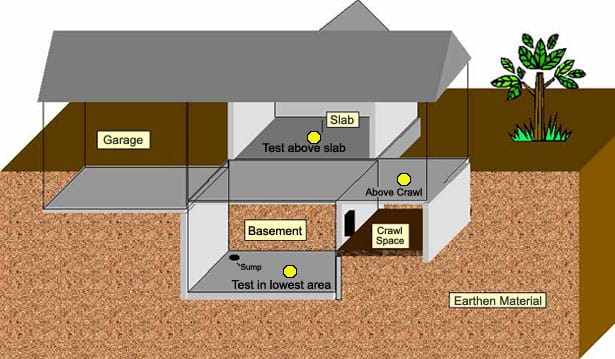
The location of a radon-testing device matters.
EPA guidance generally recommends testing in the lowest level of the home that could be regularly occupied. This does not necessarily mean automatically placing the device in a basement simply because one exists.
A finished or potentially occupiable lower level, for example, may be more appropriate than an unfinished area that is rarely used.
Testing devices should also be positioned according to the applicable testing instructions and should generally be kept away from locations where unusual airflow, moisture, heat, or other environmental conditions could interfere with the measurement.
Areas such as kitchens, bathrooms, closets, crawl spaces, or locations immediately beside windows and exterior doors may not be appropriate for certain testing situations.
Homeowners should follow the instructions for the particular device and applicable EPA, state, or professional testing guidance.
Understanding Different Radon-Testing Devices
Radon testing can involve passive or active measurement devices.
Passive devices operate without an external power source. Depending on the testing method, these may include devices such as charcoal-based detectors, alpha-track detectors, or electret ion chambers.
Active devices require power and may continuously monitor radon concentrations during the testing period. Continuous radon monitors can also record information over time that may help a qualified professional evaluate testing conditions.
The appropriate device depends on factors such as the purpose of the test, required testing duration, property circumstances, and any protocols that apply to the situation.
Rather than selecting a device solely because it is convenient or produces rapid results, homeowners should consider whether the testing method is appropriate for the decision they need to make.
Short-Term and Long-Term Radon Testing
Different testing periods can serve different purposes.
Short-term testing is commonly used when results are needed relatively quickly, including in some property transactions. The duration varies according to the device and testing protocol being followed.
Long-term testing takes place over a longer period and can provide a broader indication of average radon conditions because indoor radon concentrations may fluctuate over time.
The appropriate approach depends on why the property is being tested, previous results, the time available, and applicable testing guidance.
When results are close to a decision threshold or appear inconsistent with previous measurements, additional testing may sometimes provide useful information.
Maintaining Appropriate Testing Conditions
A radon test should be conducted under the conditions required for the particular testing method.
Testing devices should remain in their intended location and should not be moved, covered, obstructed, unplugged, or otherwise disturbed during the measurement period.
Depending on the test, instructions may also address windows, exterior doors, ventilation systems, heating or cooling equipment, and other factors that could affect indoor air movement.
Anyone occupying the property during the test should understand these requirements before testing begins.
Professional testers should explain the applicable conditions and document relevant circumstances that could influence the result.
Choosing a Qualified Radon-Testing Professional
When selecting a radon-testing professional, homeowners should verify the individual’s applicable radon qualifications rather than relying solely on general home-inspection experience.
EPA directs consumers toward applicable state radon programs and recognized proficiency programs when looking for qualified radon professionals. National credentialing programs include the National Radon Proficiency Program (NRPP) and the National Radon Safety Board (NRSB).
Requirements can vary by state, so homeowners should also check whether their state has licensing, certification, registration, or other requirements for people providing radon measurement or mitigation services.
Useful questions to ask a testing professional include:
- What radon-specific qualifications or credentials do you hold?
- What type of measurement device will be used?
- Why is the proposed testing location appropriate?
- What conditions must be maintained during the test?
- How will possible interference be identified?
- What information will appear in the final report?
- What should I do if the result is elevated?
Credentials should be verified through the relevant state or credentialing organization where possible.
Understanding Radon Test Results
Radon concentrations in the United States are commonly reported in picocuries per litre of air (pCi/L).
EPA recommends taking action to reduce radon when a home’s level is 4 pCi/L or higher.
However, 4 pCi/L should not be interpreted as a dividing line between completely safe and unsafe air. EPA notes that radon exposure can still present risk below that level and advises homeowners to consider reducing radon when levels are between 2 pCi/L and 4 pCi/L.
A test result should therefore be considered in context.
Depending on the result and the type of test conducted, additional measurement or consultation with a qualified radon professional may be appropriate before deciding on the next step.
What Happens After an Elevated Result?
An elevated result does not mean that the testing process has failed. The purpose of testing is to identify whether radon may require attention.
Depending on the circumstances, the next step may involve confirmation testing or discussing mitigation options with a qualified radon professional.
Radon mitigation systems are designed to reduce the amount of radon entering or accumulating within a building. The appropriate approach depends on the property and should be evaluated by someone qualified to perform the work.
After mitigation, follow-up testing is important for determining whether radon levels have been reduced as intended.
Homeowners should follow applicable EPA guidance as well as any state or local requirements relevant to testing and mitigation.
Radon Testing During a Property Transaction
Radon testing can be particularly important when buying or selling a home.
Unlike many property conditions, radon cannot be identified through an ordinary visual inspection. Testing provides information about the radon concentration measured during the testing period.
During a real-estate transaction, buyers and sellers should understand the testing method, device location, testing conditions, measurement period, and reported result.
They should also determine whether state or local rules, real-estate procedures, or professional testing protocols apply to the transaction.
Reliable documentation can make it easier for everyone involved to understand the result and discuss whether additional testing or mitigation is appropriate.
Keep Useful Testing Records
Homeowners should consider retaining radon-testing reports for future reference.
Useful documentation may include:
- Date and duration of the test
- Type of measurement device
- Device location
- Reported radon concentration
- Relevant testing conditions
- Name and qualifications of the professional, where applicable
- Previous test results
- Details of any mitigation work
- Post-mitigation testing results
Maintaining these records can make future comparisons easier and may also be useful during a property transaction.
When Should a Home Be Tested Again?
Radon concentrations can change over time, which means a previous result should not necessarily be assumed to represent conditions indefinitely.
Retesting may be worth considering when there have been significant changes to the property, particularly modifications that could affect airflow, foundations, lower-level occupancy, ventilation, or the way the building interacts with the surrounding soil.
Additional testing may also be appropriate after mitigation or when previous measurements were elevated or close to levels at which action may be considered.
Homeowners should follow current EPA recommendations and any applicable state guidance when deciding when to test again.
Make Radon Testing Part of Home Awareness
Radon testing is a relatively straightforward way of obtaining information about an indoor environmental condition that cannot be identified through sight or smell.
Useful results depend on more than simply having a testing device. Appropriate device selection, suitable placement, proper testing conditions, qualified professionals when professional testing is required, and careful interpretation of the results all contribute to a more reliable assessment.
Testing is especially important because prolonged exposure to elevated radon levels is associated with increased lung-cancer risk.
Homeowners do not need to become radon experts, but they should understand enough about the process to ask informed questions, verify professional qualifications, maintain useful records, and respond appropriately when elevated levels are identified.
Final Thoughts
Radon levels can differ from one property to another, making testing an important part of understanding a home’s indoor environment.
For homeowners, the key steps are straightforward: use an appropriate testing method, follow the required testing conditions, choose qualified professionals where necessary, understand what the results mean, and take appropriate action when elevated levels are identified.
For authoritative and current information, homeowners should consult the U.S. Environmental Protection Agency’s radon guidance, their state radon program, and applicable state or local requirements.
This article provides general educational information about radon testing and should not replace property-specific advice from qualified radon measurement or mitigation professionals or applicable public-health authorities.









Leave a Reply