






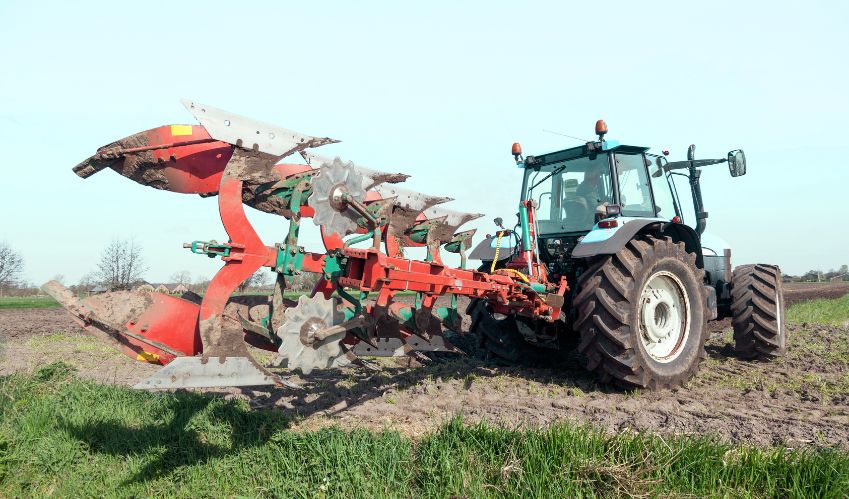
Agriculture is entering a technology-driven era as farmers face growing pressure to increase productivity, manage resources efficiently, and respond to changing environmental conditions. Modern agricultural equipment is evolving beyond traditional tractors and harvesting machines, with automation, electrification, connectivity, and precision farming becoming increasingly important.
According to Expert Market Research, the global agricultural equipment market reached USD 231.77 Billion in 2025. The market is projected to grow at a CAGR of 8.90% during 2026-2035, reaching USD 543.67 Billion by 2035. This growth reflects increasing mechanization, technological advancement, the need for higher agricultural productivity, and growing adoption of smart farming practices.
Automation Is Transforming Agricultural Operations
Automation is one of the most important trends shaping the future of agricultural equipment. Farmers are increasingly using automated machinery to perform repetitive and labor-intensive activities such as planting, harvesting, spraying, and soil preparation.
Automated systems can reduce dependence on manual labor while improving operational consistency. Advanced machinery can follow predefined routes, adjust operating parameters, and perform tasks with limited human intervention.
Autonomous tractors are also attracting attention. These machines can use sensors, cameras, GPS, and navigation technologies to operate across fields. As autonomous systems become more reliable, they could play a larger role in large-scale farming operations.
Precision Farming Is Improving Resource Management
Precision farming uses technology and data to help farmers make more informed decisions about crops and field conditions. GPS, sensors, drones, satellite imagery, and connected equipment can provide detailed information about soil quality, crop health, moisture levels, and nutrient requirements.
Agricultural machinery can use this information to apply seeds, fertilizers, pesticides, and water more precisely. Instead of treating an entire field uniformly, farmers can adjust inputs according to specific conditions.
This approach can improve resource efficiency while potentially reducing unnecessary input usage. It also allows farmers to identify problems earlier and respond before they significantly affect crop yields.
GPS and Smart Navigation
GPS technology has become an important part of modern agricultural machinery. Precision navigation systems can help tractors and other equipment maintain accurate routes across fields.
Accurate positioning can reduce overlapping passes during planting, spraying, and harvesting. This can save fuel, reduce input waste, and improve overall field coverage.
More advanced systems can combine GPS with sensors and automated steering technologies. These solutions can reduce the amount of manual steering required and allow operators to focus on monitoring equipment and field conditions.
Electrification of Agricultural Machinery
Electrification is emerging as another important development in agricultural equipment. Battery-powered tractors, utility vehicles, compact machines, and other electric equipment can provide an alternative to traditional diesel-powered systems.
Electric motors can offer lower noise levels and fewer moving components than conventional engines. They can also provide precise torque control, which can be useful for certain agricultural applications.
Battery technology remains an important factor in the development of electric agricultural machinery. Larger farming equipment requires substantial energy, meaning manufacturers must continue improving battery capacity, charging speed, durability, and thermal management.
Alternative Power Solutions
While battery-electric machinery is gaining attention, different agricultural applications may require different energy solutions. Larger equipment operating for long periods may face limitations related to battery weight and charging infrastructure.
As a result, manufacturers and technology companies are also exploring alternative power systems, including hybrid solutions and other lower-emission technologies.
The future agricultural equipment market may therefore feature a combination of powertrains rather than a single universal technology. Equipment requirements will vary according to farm size, operating conditions, terrain, and the type of agricultural activity.
Artificial Intelligence and Machine Learning
Artificial intelligence is creating new opportunities for agricultural equipment manufacturers. AI systems can process large amounts of data from sensors, cameras, drones, and connected machinery.
Computer vision can help agricultural machines identify crops, weeds, pests, and other objects. This information can support more targeted spraying and harvesting operations.
Machine learning can also help improve equipment performance over time by analyzing operating conditions and historical data. Predictive systems may identify potential equipment failures before they result in significant downtime.
Connected and Data-Driven Equipment
Connected agricultural machinery can communicate with farm management platforms and other equipment. This allows farmers to monitor machine location, fuel or battery levels, operating hours, maintenance requirements, and productivity.
Data collected from machinery can also contribute to broader farm management decisions. Farmers can compare field performance, analyze operating costs, and identify opportunities to improve efficiency.
Cloud-based systems can make this information accessible across multiple devices, allowing farmers and agricultural managers to monitor operations remotely.
Robotics in Farming
Agricultural robotics is another technology with significant long-term potential. Robots can perform specific tasks such as weeding, harvesting, planting, and crop monitoring.
Robotic systems can be particularly useful for tasks that are labor-intensive or require repetitive precision. Small autonomous machines can operate close to crops while minimizing disturbance to surrounding areas.
As robotics technology develops, agricultural robots may become more capable of working alongside conventional tractors and farm machinery rather than completely replacing them.
Drones Are Supporting Precision Agriculture
Drones are increasingly being used to monitor agricultural land. Equipped with cameras and sensors, drones can capture aerial information about crop health, irrigation conditions, and field variability.
Farmers can use this information to identify areas requiring attention. Drones may also support targeted spraying and crop monitoring in suitable applications.
Their relatively flexible operation makes them valuable tools for both large farms and specialized agricultural operations. Integration between drone data and agricultural equipment could further strengthen precision farming capabilities.
Addressing Labor Challenges
Labor availability is a major concern in many agricultural markets. Seasonal work, rural population changes, and the physical demands of farming can make it difficult for producers to find sufficient workers.
Automation and robotics can help address some of these challenges by reducing the amount of manual labor required for repetitive tasks.
However, technology is not expected to eliminate the need for agricultural workers entirely. Instead, the nature of farm work may shift toward equipment supervision, data management, maintenance, and technology-assisted decision-making.
Sustainability and Efficient Resource Use
Sustainability is becoming increasingly important in agriculture. Farmers need to improve productivity while managing water, soil, fuel, fertilizers, and other resources responsibly.
Precision equipment can help reduce unnecessary input application, while electric machinery can potentially reduce direct emissions during operation. Automated systems can also improve efficiency by optimizing routes and reducing overlapping field operations.
Manufacturers are therefore focusing on technologies that combine productivity with more efficient resource utilization.
Challenges to Technology Adoption
Despite the opportunities, advanced agricultural equipment can involve significant upfront costs. Small and medium-sized farms may find it difficult to invest in expensive autonomous machinery, sensors, software, and connectivity infrastructure.
Technical skills and reliable connectivity can also influence adoption. Farmers need appropriate training to operate and maintain increasingly sophisticated equipment.
Battery charging infrastructure is another consideration for electric machinery. In rural areas, access to reliable power and suitable charging facilities may affect the practicality of electrification.
Addressing these challenges will be important for making advanced agricultural technologies accessible across different farm sizes and regions.
The Future of Agricultural Equipment
The agricultural equipment industry is moving toward greater automation, connectivity, electrification, and precision. Future machinery is likely to combine mechanical capabilities with software, sensors, artificial intelligence, and real-time data.
According to Expert Market Research, the global agricultural equipment market is projected to increase from USD 231.77 Billion in 2025 to USD 543.67 Billion by 2035, expanding at a CAGR of 8.90% during 2026-2035.
This strong projected growth highlights the expanding demand for advanced equipment capable of improving agricultural productivity and resource management.
Conclusion
The future of agricultural equipment will be shaped by the convergence of automation, electrification, precision farming, artificial intelligence, and connected technologies. Autonomous tractors, electric machinery, drones, robotics, and smart sensors are creating new ways for farmers to manage crops and equipment.
These technologies can help address labor shortages, improve resource efficiency, and support more data-driven farming decisions. However, cost, infrastructure, connectivity, and technical training will remain important considerations for adoption.
As agriculture continues to modernize, equipment manufacturers that combine reliable machinery with intelligent digital technologies will be well positioned to meet the evolving needs of farmers. With the global agricultural equipment market expected to reach USD 543.67 Billion by 2035, technology-led farming is likely to become an increasingly important part of the agricultural landscape.










Leave a Reply