






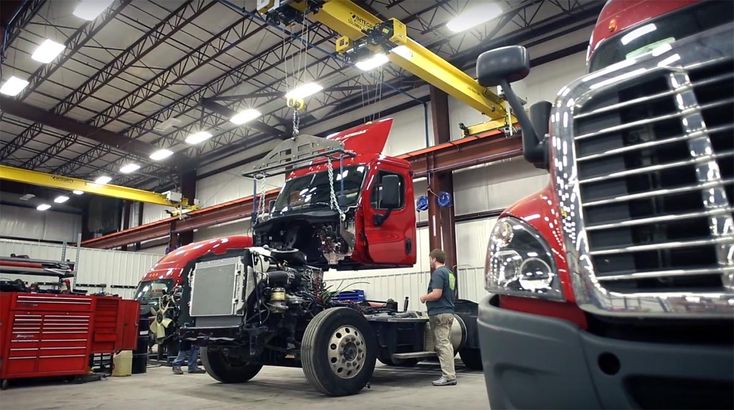
Managing a fleet of trucks, vans, buses, or heavy-duty vehicles requires much more than scheduling routine oil changes. Fleet managers may need to coordinate inspections, preventive maintenance, repairs, parts inventory, work orders, technician activity, maintenance costs, and vehicle availability while minimizing unnecessary downtime.
As fleets grow, managing these activities through spreadsheets, paper records, phone calls, and disconnected systems can become increasingly difficult. Fleet maintenance management software provides a centralized way to organize maintenance information, automate routine processes, and give managers greater visibility into vehicle and equipment maintenance.
This guide explains how fleet maintenance management software works, the capabilities businesses should consider, its potential operational benefits, and how to evaluate a platform for different fleet requirements.
What Is Fleet Maintenance Management Software?
Fleet maintenance management software is a digital solution designed to help organizations manage the maintenance, repair, inspection, and service requirements of vehicles and equipment.
Depending on the platform, the software may support preventive maintenance scheduling, vehicle inspections, parts inventory, work orders, purchase orders, labor tracking, maintenance costs, reporting, and other fleet-maintenance activities.
By centralizing this information, fleet managers can more easily determine which vehicles require service, which repairs are underway, what maintenance is costing, and whether individual vehicles are available for operation.
These systems can be useful for organizations such as trucking and transportation companies, delivery fleets, construction businesses, municipalities, passenger transportation operators, and other organizations managing commercial vehicles or equipment.
Why Do Fleets Use Maintenance Management Software?
Fleet maintenance becomes more difficult as the number of vehicles, drivers, technicians, locations, and maintenance activities increases.
A small operation may be able to manage maintenance using spreadsheets or basic records. As the fleet expands, however, manual processes can make it harder to maintain consistent information and identify upcoming maintenance requirements.
Common challenges can include:
- Missed preventive maintenance
- Unexpected vehicle breakdowns
- Incomplete maintenance records
- Poor visibility into parts inventory
- Excessive vehicle downtime
- Difficulty understanding repair costs
- Disorganized work orders
- Limited visibility into technician labor
- Difficulty identifying recurring mechanical problems
A centralized maintenance system can help organizations move from a primarily reactive approach—responding when something fails—to a more structured approach built around scheduled maintenance, inspections, repair histories, and operational data.
Key Features of Fleet Maintenance Management Software
Fleet maintenance platforms vary considerably in scope. Some focus primarily on vehicle service schedules, while others provide broader shop, inventory, technician, reporting, and integration capabilities.
The following features are worth considering.
1. Preventive Maintenance Scheduling
Preventive maintenance is one of the central functions of fleet maintenance management.
Software can help schedule service according to factors such as:
- Mileage
- Engine hours
- Calendar dates
- Vehicle usage
- Operating conditions
- Manufacturer recommendations
Maintenance schedules may cover oil and filter changes, brake inspections, tire rotations, fluid checks, batteries, engine and transmission servicing, safety inspections, and other manufacturer-recommended procedures.
Automated reminders can reduce the likelihood of scheduled maintenance being overlooked and may help teams address maintenance requirements before they contribute to larger operational problems.
2. Vehicle Maintenance Records
A complete maintenance history can help managers understand how individual vehicles perform over time.
A centralized vehicle record may contain:
- Vehicle identification information
- Mileage or engine hours
- Service dates
- Repair history
- Parts used
- Labor hours
- Maintenance costs
- Inspection results
- Warranty information
Historical information can also support decisions about whether to continue maintaining an asset, investigate recurring problems, or consider replacement.
3. Work Order Management
Digital work orders help organize maintenance from the initial reported problem through completion.
A work order may include:
- Reported issue
- Diagnostic information
- Assigned technician
- Required parts
- Labor hours
- Technician notes
- Repair status
- Final repair costs
Centralizing this information can improve communication between fleet managers, service advisors, technicians, parts teams, and other employees involved in the repair process.
4. Parts and Inventory Management
A vehicle can remain out of service longer than necessary when an essential part is unavailable.
Fleet maintenance software may help organizations monitor:
- Parts quantities
- Part numbers
- Suppliers
- Purchase orders
- Inventory usage
- Reorder levels
- Unit costs
- Parts assigned to work orders
Better inventory visibility can help maintenance teams maintain commonly used parts while identifying excess, obsolete, or slow-moving inventory.
5. Inspection Management
Vehicle inspections can help identify maintenance requirements before they contribute to more significant failures or operational disruptions.
Some platforms provide digital inspection checklists that drivers or technicians can complete using mobile devices or computers. Inspection results can then become part of the vehicle’s maintenance history.
Failed inspection items may also be converted into work orders, helping maintenance teams move from problem identification to corrective action.
6. Labor and Technician Tracking
For organizations operating their own maintenance facilities, technician time is an important operational resource.
Software may track labor hours against individual work orders and compare estimated repair times with actual completion times.
This information can help managers investigate workflow bottlenecks, recurring repair delays, staffing requirements, and potential training opportunities.
The objective should not simply be to measure how quickly technicians work. Repair complexity, quality, safety, parts availability, and diagnostic requirements should also be considered when interpreting productivity information.
7. Maintenance Cost Tracking
Fleet maintenance involves numerous cost categories.
These may include:
- Parts
- Labor
- Preventive maintenance
- Unscheduled repairs
- Tires
- External vendors
- Individual vehicles
- Vehicle groups
Analyzing costs at vehicle and fleet level can help managers identify unusual spending patterns, recurring repairs, and assets that may be becoming increasingly expensive to operate.
8. Tire Management
Tires can represent an important maintenance consideration for commercial trucks and other high-mileage vehicles.
Some fleet maintenance systems can track information such as tire installation, replacement, mileage, inspections, tread depth, position, and costs.
Maintaining this history can help operators identify unusual wear patterns and improve tire maintenance planning.
9. Alerts and Notifications
Maintenance alerts can help teams keep track of upcoming or unresolved activities.
Depending on the platform, notifications may be generated when:
- Preventive maintenance is approaching or overdue
- A vehicle requires inspection
- A work order remains open
- Parts inventory reaches a reorder level
- A service interval is approaching
- Recurring repair issues are identified
Alerts are most useful when they are configured carefully. Too many unnecessary notifications can make it harder for teams to identify genuinely important maintenance issues.
10. Telematics and Maintenance Data Integration
Fleet maintenance software can become more useful when relevant vehicle information flows into the system automatically.
Depending on the vehicles, telematics provider, and software integrations available, useful data may include:
- Mileage
- Engine hours
- Vehicle utilization
- Diagnostic information
- Fault codes
- Location or operating information
For example, mileage or engine-hour data can potentially trigger maintenance schedules without requiring employees to update odometer information manually.
Before selecting a platform, organizations should confirm which telematics systems and vehicle-data sources are supported and exactly what information can be exchanged.
Potential Benefits of Fleet Maintenance Software
Software by itself does not guarantee lower costs or fewer breakdowns. Results depend on factors such as maintenance practices, implementation quality, data accuracy, vehicle condition, staff adoption, and management processes.
When implemented effectively, however, a maintenance-management platform can support several operational improvements.
Reduced Avoidable Downtime
Unexpected breakdowns can affect deliveries, projects, routes, and customer commitments.
Preventive maintenance, inspection management, parts availability, and better repair planning can help organizations reduce some forms of avoidable downtime.
Better Maintenance Cost Visibility
Centralized cost information makes it easier to examine spending by vehicle, repair category, time period, or fleet segment.
Managers can then investigate assets with unusually high maintenance costs instead of relying only on aggregate fleet expenditure.
Improved Operational Visibility
Rather than searching across spreadsheets, paper files, and separate systems, authorized users can access maintenance information through a centralized platform.
More Organized Technician Workflows
Digital work orders can reduce some administrative work and provide technicians with clearer information about assigned repairs, required parts, vehicle history, and job status.
More Consistent Maintenance Records
Accurate maintenance histories can support troubleshooting, warranty management, maintenance planning, asset evaluation, and replacement decisions.
Who Can Use Fleet Maintenance Management Software?
Fleet maintenance platforms can support different industries and operating models.
Trucking and Transportation Companies
Operators can manage tractors, trailers, and other commercial vehicles while tracking maintenance schedules, repairs, costs, and availability.
Construction Fleets
Construction companies may operate trucks, service vehicles, heavy equipment, and other assets in demanding environments. Centralized maintenance information can help coordinate their service requirements.
Delivery Fleets
Vehicle availability is particularly important when deliveries depend on scheduled routes. Preventive maintenance and repair planning can help reduce service-related disruption.
Government and Municipal Fleets
Public-sector organizations may use fleet software to organize maintenance histories, inspections, costs, and service schedules across different vehicle categories.
School and Passenger Transportation
Bus and passenger fleets can use maintenance-management systems to organize preventive maintenance, inspections, repair histories, and vehicle-service records.
How to Choose the Right Fleet Maintenance Software
There is no single platform that is right for every fleet. Selection should begin with operational requirements rather than the longest possible feature list.
Fleet Size and Asset Types
Consider the number and types of vehicles or equipment being managed.
Organizations operating heavy-duty trucks, trailers, buses, or specialized equipment should verify that the system supports those asset types and the maintenance information they require.
Ease of Use
Fleet managers, technicians, drivers, and administrators may interact with the platform differently.
A system with extensive functionality can still deliver poor results if employees find it too complicated to use consistently.
Mobile Access
Mobile functionality can allow drivers and technicians to access inspections, work orders, maintenance information, photographs, and other records away from a desktop computer.
Reporting and Analytics
Useful reporting can help organizations examine:
- Maintenance costs
- Vehicle downtime
- Repair frequency
- Preventive maintenance compliance
- Labor utilization
- Vehicle performance
Organizations should focus on reports that support actual operational decisions rather than selecting software simply because it offers a large number of dashboards.
Integrations
If a business already uses accounting, fuel management, GPS, telematics, procurement, or other operational systems, integrations can reduce duplicate data entry and improve information consistency.
Before purchasing, determine whether integrations are native, API-based, provided by third parties, or require additional fees.
Data Ownership and Exportability
Fleet-maintenance records can become valuable operational data over many years.
Before selecting a platform, ask:
- Who owns the data?
- Can complete records be exported?
- Which export formats are available?
- Can attachments and historical records be retrieved?
- What happens to the data if the subscription ends?
- How difficult would migration to another platform be?
Data portability can be especially important for organizations planning to use the system over the long term.
Security and Access Controls
Not every employee needs access to every part of a fleet-management system.
Consider whether the platform provides appropriate user roles and permissions for managers, technicians, drivers, administrators, and other users.
Organizations should also evaluate security, authentication, backup, data-protection, and audit capabilities according to their own requirements.
Implementation, Training and Support
A technically capable platform may still fail if implementation is poorly managed.
Before purchasing, evaluate:
- Initial setup requirements
- Existing-data migration
- Employee training
- Customer support
- Documentation
- Implementation assistance
- Ongoing software updates
Scalability
Consider whether the platform can continue supporting the organization as vehicle numbers, locations, employees, maintenance facilities, and reporting requirements increase.
Fleet Maintenance Software vs. Manual Tracking
Spreadsheets can be sufficient for some very small fleets, particularly when maintenance requirements are simple and one person manages most of the records.
The limitations become more apparent as operations grow.
Manual systems rely heavily on employees entering, updating, reviewing, and sharing information consistently. Missing records, outdated schedules, formula errors, multiple file versions, and communication gaps can become increasingly difficult to manage.
Fleet maintenance software can automate some of these processes and provide a centralized source of maintenance information.
For example, instead of manually checking a spreadsheet for upcoming services, a manager may receive maintenance notifications generated from dates, mileage, or engine-hour intervals.
The decision to move from spreadsheets to specialized software should therefore depend on operational complexity, fleet size, maintenance workload, reporting requirements, and the value of automation—not simply the number of vehicles.
Maintenance Records and Compliance Considerations
Inspection and maintenance records can have regulatory significance for some commercial fleets depending on vehicle type, location, and operating jurisdiction.
A fleet-maintenance platform may help organizations maintain inspection histories, service records, repair documentation, and other information in a more organized form.
However, software does not itself establish regulatory compliance.
Fleet operators remain responsible for understanding applicable inspection, maintenance, record-retention, safety, and reporting requirements in every jurisdiction in which they operate.
When evaluating software for compliance-related use, organizations should confirm that its recordkeeping and reporting capabilities match their actual regulatory requirements.
Best Practices for Fleet Maintenance Management
Software is most effective when supported by consistent maintenance processes.
Establish Preventive Maintenance Schedules
Define service intervals using appropriate manufacturer recommendations, mileage, engine hours, vehicle usage, and operating conditions.
Standardize Inspections
Consistent inspection procedures help drivers and technicians understand what should be checked and how problems should be recorded.
Maintain Accurate Data
Automation is only useful when the underlying information is reliable. Vehicle details, odometer readings, work-order status, parts usage, and repair costs should be kept current.
Monitor Maintenance Costs
Review expenditure by vehicle, repair category, fleet segment, and time period to identify meaningful trends.
Track Recurring Repairs
Repeated failures may indicate mechanical, operational, maintenance, or usage problems that deserve further investigation.
Keep Parts Inventory Accurate
Maintain appropriate quantities and reorder levels for critical components while periodically reviewing obsolete or slow-moving stock.
Review Maintenance Reports
Reports should support decisions. Monitor metrics that are meaningful to the operation, such as preventive-maintenance completion, downtime, repair costs, recurring failures, and asset availability.
Frequently Asked Questions
What is fleet maintenance management software?
Fleet maintenance management software is a digital system used to organize vehicle maintenance activities such as preventive maintenance, inspections, repairs, work orders, parts, costs, and service histories.
What is the difference between fleet management and fleet maintenance software?
Fleet management can encompass broader operational activities such as vehicle tracking, routing, fuel management, driver management, utilization, and compliance. Fleet maintenance software focuses more specifically on keeping vehicles and equipment serviced, repaired, inspected, and available for operation.
Some platforms combine capabilities from both categories.
Can fleet maintenance software track preventive maintenance?
Yes. Many systems can schedule maintenance according to dates, mileage, engine hours, usage, or other service intervals and generate notifications as maintenance becomes due.
Can fleet maintenance software integrate with telematics?
Some platforms integrate with telematics and other vehicle-data systems. Capabilities vary, so businesses should verify supported integrations and the specific data that can be exchanged before selecting software.
What fleet size needs maintenance software?
There is no universal minimum fleet size. A small fleet with complex maintenance requirements may benefit from specialized software, while another organization with a similar number of vehicles may manage adequately with simpler tools.
The better indicators are maintenance complexity, administrative workload, number of users, reporting requirements, and the difficulty of managing information manually.
Can fleet maintenance software replace spreadsheets?
It can replace many spreadsheet-based maintenance processes, but whether that is worthwhile depends on the organization. Businesses should consider the benefits of automation, centralized records, alerts, integrations, reporting, and multi-user access against software and implementation costs.
What should businesses look for when choosing a platform?
Important considerations include asset support, preventive maintenance capabilities, work orders, inspections, inventory, reporting, mobile access, integrations, security, data portability, implementation support, usability, and scalability.
Final Thoughts
Fleet maintenance management software can provide organizations with a more structured way to manage preventive maintenance, repairs, inspections, work orders, inventory, costs, and maintenance histories.
The potential value goes beyond replacing paperwork with software. When supported by accurate data and disciplined maintenance processes, a centralized system can help fleet managers identify upcoming maintenance, understand repair patterns, coordinate technicians and parts, monitor costs, and make better-informed asset decisions.
The right platform, however, depends on the fleet. Businesses should evaluate their vehicle types, maintenance complexity, existing systems, reporting requirements, security needs, integration requirements, and long-term data strategy before making a decision.
Ultimately, effective fleet maintenance comes from combining appropriate technology with sound maintenance practices, reliable information, trained people, and consistent operational processes.










Leave a Reply