






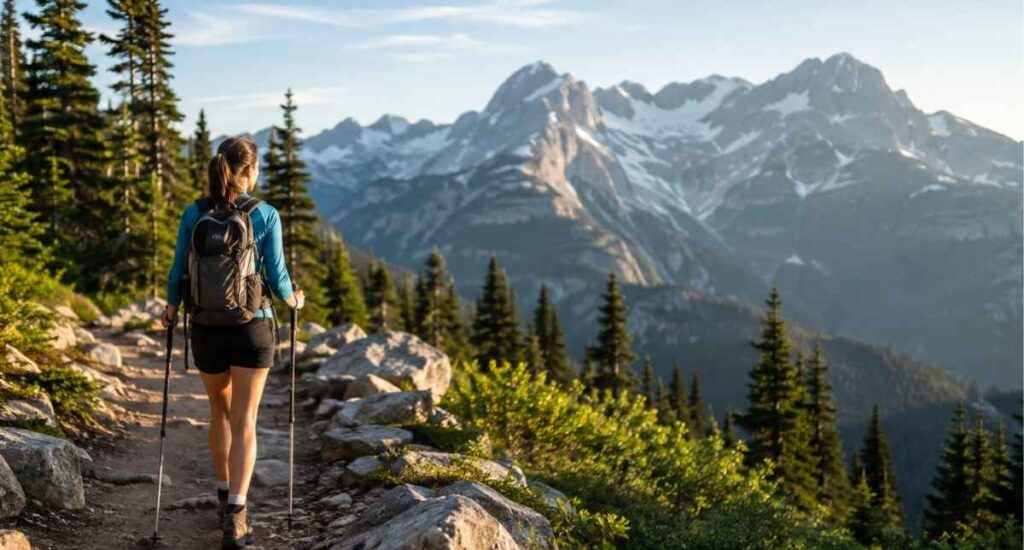
Starting a hike can feel surprisingly intimidating. You may wonder whether you are fit enough, whether you have packed the right gear, or what you should do if the trail becomes harder than expected.
The good news is that trail confidence does not appear all at once. It develops through preparation, manageable challenges, experience, and learning how to make sensible decisions outdoors. A practical beginner hiking guide can provide a useful starting point, but genuine confidence comes from putting those lessons into practice one hike at a time.
You do not need to begin with a long, steep, or remote trail. In fact, choosing something manageable is usually the smarter approach. The goal of your first few hikes should be to become comfortable walking on uneven ground, navigating a trail, carrying essential supplies, managing your energy, and responding calmly when conditions change.
Start With a Trail That Matches Your Experience
One of the easiest ways to undermine your confidence is to choose a hike that is significantly beyond your current ability.
When selecting a trail, consider more than distance. Look at:
- Elevation gain
- Terrain and trail surface
- Expected weather
- Route-finding difficulty
- Remoteness
- Estimated completion time
- Available daylight
- Water availability
- Opportunities to turn around safely
A relatively short trail with steep climbs and rocky sections can be considerably more demanding than a longer route across gentle terrain.
For your first outings, consider a well-marked trail with straightforward navigation and a reasonable distance. A route where you can turn around easily is especially useful because it gives you an alternative if you become tired, uncomfortable, or encounter unexpected conditions.
There is nothing embarrassing about choosing an easier trail. Hiking is not a competition. Building confidence gradually is far more useful than struggling through an ambitious route simply to say you completed it.
Prepare Before You Leave Home
Confidence often begins before you reach the trailhead.
Check the weather forecast and research the route beforehand. Look at the trail length, elevation changes, expected conditions, sunset time, and whether reliable water sources are available.
Recent official trail reports can also help you identify temporary problems such as flooding, snow, mud, fallen trees, wildfire closures, damaged bridges, or other hazards.
Importantly, trail conditions and weather can change quickly. Before leaving, check current information from the relevant park authority, land-management agency, or another official local source rather than relying entirely on older online guides or reviews.
Tell someone where you are going, particularly if you will be hiking alone. Give them the trail or route name, your starting point, expected return time, and what they should do if they do not hear from you.
For a typical day hike, appropriate essentials may include water, food or snacks, a charged phone, navigation tools, basic first-aid supplies, weather-appropriate clothing, sun protection, and other equipment required for the specific environment.
The more familiar you are with your equipment before hiking, the less mental energy you will spend worrying about it on the trail.
Prepare for Communication and Navigation Problems
Mobile phones are extremely useful outdoors, but they should not create a false sense of security.
Some hiking areas have limited or no cellular coverage. Batteries can also drain more quickly than expected, particularly when navigation applications, GPS, photography, or cold conditions are involved.
Where appropriate, download maps for offline use before leaving. For more remote or complicated routes, consider carrying an appropriate backup navigation method and knowing how to use it.
You should also understand the communication limitations of the area you are entering. A phone that works perfectly at the trailhead may lose reception farther along the route.
For remote hiking, your emergency planning and communication equipment may need to be considerably more comprehensive than for a short, popular local trail.
Wear Comfortable, Suitable Footwear
Foot discomfort can quickly turn an enjoyable hike into a miserable one.
Choose footwear that fits properly and suits the terrain. A smooth, maintained trail may not require the same footwear as a rocky, muddy, steep, or uneven route. Whatever you choose, make sure it is comfortable and provides suitable traction for the expected conditions.
Avoid taking brand-new footwear on a demanding hike. Wear it beforehand so you can discover whether it causes rubbing, pressure points, or other discomfort.
Socks matter too. Moisture, bunching fabric, and poor fit can contribute to hot spots and blisters.
Your feet are doing much of the work, so footwear should be selected for comfort and terrain rather than appearance alone.
Learn to Read the Trail
One of the biggest confidence boosts comes from understanding what you are looking at as you move along a route.
Pay attention to:
- Trail markers
- Directional signs
- Junctions
- Bridges and crossings
- Distinctive landmarks
- Changes in terrain
- Your position on the map
If you are using a navigation application or map, check your location periodically rather than waiting until you become completely uncertain.
One particularly useful habit is to look behind you occasionally.
A junction, rock formation, tree line, or trail intersection can look surprisingly different when approached from the opposite direction. Remembering distinctive landmarks can therefore make the return journey easier.
And do not assume that following another hiker means you are on the correct route. At junctions, take a moment to confirm your direction independently.
Navigation is a skill that develops with practice. Becoming temporarily uncertain is not necessarily a serious problem; continuing for a long distance without checking can turn a small navigational error into a much bigger one.
Pace Yourself Instead of Racing
Many new hikers make the same mistake: they start too quickly.
The beginning of a trail can feel easy when you are rested and excited. Then the first sustained climb arrives, and suddenly the pace becomes difficult to maintain.
Try walking at a speed that feels sustainable.
On uphill sections, shorter steps can help you maintain a steady rhythm. Take breaks when necessary, but do not wait until you are completely exhausted before resting, drinking, or eating.
There is also no rule saying everyone in a hiking group must walk at exactly the same speed. If you are hiking with more experienced friends, discuss your preferred pace before starting.
A slower hike that leaves you feeling capable and comfortable is more valuable for building confidence than a fast hike that leaves you completely drained.
Use Small Goals to Build Confidence
Instead of thinking, “I have to finish this entire hike,” divide the route into smaller goals.
Your first objective might be reaching the next trail marker. Then it could be reaching a viewpoint, completing a particular climb, arriving at a junction, or walking another 20 minutes comfortably.
This approach makes a challenging route feel more manageable and allows you to recognize improvement.
Perhaps your first hike required frequent breaks, while your next one requires fewer. Navigation may initially feel confusing, but after several outings you begin recognizing trail signs and junctions more naturally.
Those seemingly small improvements are exactly how outdoor confidence develops.
Know When to Slow Down or Turn Around
Confidence does not mean pushing through every uncomfortable or potentially unsafe situation.
If weather deteriorates, daylight is running short, you become unusually tired, navigation becomes uncertain, someone in your group becomes unwell, or the trail is significantly more difficult than expected, reassess your plan.
Turning around is a legitimate hiking decision. It is not a failure.
This is particularly important for beginners because enthusiasm can sometimes override judgment. You may have spent considerable time planning a hike and feel determined to reach the destination.
But completing a particular route should never become more important than making a sensible decision.
Learning to recognize your limits—and being willing to change your plan—is one of the most valuable outdoor skills you can develop.
Build Skills One Challenge at a Time
Once you are comfortable on easy trails, gradually introduce new challenges rather than changing everything at once.
For example, you might first increase your hiking distance while remaining on familiar terrain.
Later, try a route with more elevation.
After becoming comfortable with climbing, you might practice navigation on a somewhat less straightforward trail.
Eventually, experience may prepare you for longer or more remote routes, provided you also develop the additional skills and preparation they require.
Changing one major variable at a time helps you understand your abilities. If you suddenly choose a longer, steeper and more remote trail in unpredictable weather, it becomes much harder to identify what made the experience difficult.
Think of hiking confidence as a series of small upgrades rather than one dramatic achievement.
Respect the Trail, Wildlife, and Other Hikers
Becoming a confident hiker also means learning how to use outdoor spaces responsibly.
Follow local rules and stay on designated trails where required. Avoid disturbing wildlife, plants, geological features, or cultural sites. Carry out your rubbish and anything else local regulations require you to remove.
Trail etiquette can vary by location and activity, so pay attention to posted guidance concerning hikers, runners, cyclists, horses, pets, camping, fires, and other trail users.
If you encounter wildlife, maintain an appropriate distance and follow the guidance provided by the relevant local authority.
Responsible hiking protects both the environment and the experience of people who use the trail after you.
Avoid Common Beginner Mistakes
Several common mistakes are worth watching for.
- Overpacking: Carrying unnecessary equipment can make a hike considerably more tiring. Focus on useful essentials appropriate for the route and conditions.
- Underestimating weather: Conditions can change quickly, particularly on exposed or elevated terrain. Check the forecast and carry appropriate layers.
- Ignoring daylight: Know approximately when darkness will arrive and allow sufficient time for delays.
- Neglecting hydration and food: Do not wait until you are exhausted or extremely thirsty before taking care of basic needs.
- Relying entirely on your phone: Phones are valuable navigation tools, but batteries can run down and reception may disappear. Prepare an appropriate backup for the type of hike you are undertaking.
Ignoring official trail information: Closures and conditions can change. Check current information before starting.
Trying to impress other hikers: Your pace, route choice, and turnaround decisions should reflect your abilities and circumstances—not someone else’s expectations.
Make Every Hike a Learning Experience
After completing a hike, spend a few minutes considering what worked and what did not.
Ask yourself:
- Was my backpack comfortable?
- Did I carry enough water?
- Did I carry too much?
- Were my shoes suitable for the terrain?
- Did I start too quickly?
- Did I understand the route?
- Was the trail harder than its distance suggested?
- Did I have enough daylight?
- What would I change next time?
These observations turn each outing into preparation for the next one.
You may discover that you prefer an earlier start, need a lighter backpack, should carry different clothing, or need to spend more time studying maps before unfamiliar hikes.
There is no single perfect setup that works for every person, trail, climate, or season. Experience helps you learn what works for you.
Confidence Comes From Preparation, Judgment, and Practice
You do not have to feel fearless to become a confident hiker.
Start with realistic trails. Research the route and current conditions. Carry appropriate essentials. Learn basic navigation. Control your pace. Respect the environment. Pay attention to changing conditions, and be willing to turn around when circumstances require it.
Then gradually increase the challenge as your skills and experience develop.
After several manageable hikes, many things that initially seemed intimidating—reading trail markers, managing climbs, judging your pace, packing your equipment, or navigating unfamiliar terrain—begin to feel routine.
And when that happens, you can spend less time worrying about whether you belong on the trail and more time appreciating where it takes you.
Trail confidence is not about never feeling uncertain. It is about developing the preparation, judgment, and experience to make sensible decisions when uncertainty appears.










Leave a Reply