






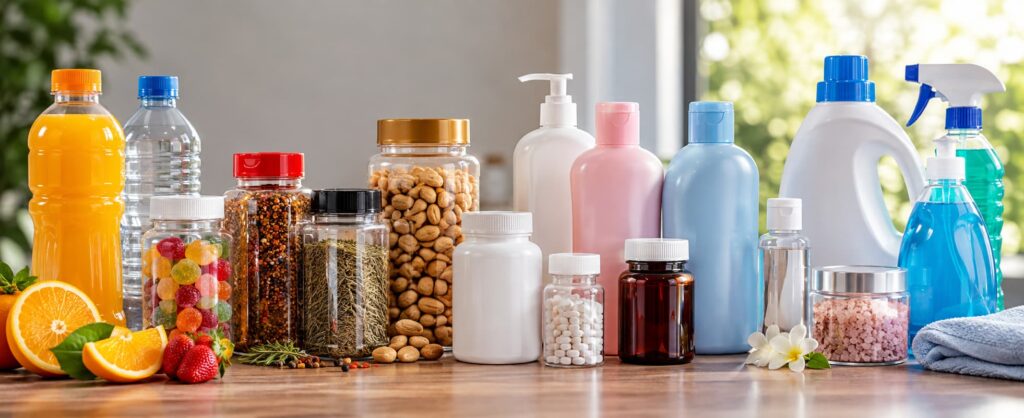
When choosing plastic packaging, appearance is only one part of the equation. A high-quality rigid plastic bottle needs to protect its contents, withstand expected handling, maintain its shape, and remain reliable throughout filling, transportation, storage, and use. The right bottle should also be appropriate for the product inside it, whether that product is a beverage, food item, personal care product, household liquid, or another formulation.
For businesses, packaging consistency matters just as much as the quality of an individual bottle. Bottles need to maintain their dimensions, closure fit, appearance, and performance across production runs. Understanding the basic characteristics of quality rigid plastic packaging can help buyers make better purchasing decisions and reduce packaging-related problems later in the supply chain.
What Is a Rigid Plastic Bottle?
A rigid plastic bottle is a container made from plastic that maintains its shape during normal handling and use. Unlike flexible pouches or films, rigid bottles have a defined structure and are designed to provide physical protection for their contents.
Rigid plastic packaging is widely used for food, beverages, pharmaceuticals, personal care products, household products, and many other applications. Common formats include bottles, jars, and containers in different shapes, capacities, neck finishes, and closure styles.
Materials and designs can vary depending on the product being packaged. A bottle intended for a beverage, for example, may have different requirements from a container designed for shampoo, spices, or household chemicals.
What Makes a Rigid Plastic Bottle High Quality?
Quality depends on more than the appearance of an individual bottle. The material, manufacturing process, dimensions, closure, surface finish, and compatibility with the product all contribute to overall performance.
1. Strong and Durable Construction
A quality rigid plastic bottle should be designed to withstand the normal handling conditions expected for its application without easily cracking, breaking, denting, or losing its intended shape.
Bottles may experience pressure and impact during filling, stacking, transportation, warehouse storage, and retail handling. If construction is inconsistent, individual units may perform differently.
Consistent wall thickness can be important because substantial variation may affect strength, appearance, weight, and dimensional stability. For larger production runs, maintaining consistent construction between batches can help reduce packaging-related problems.
2. Suitable Plastic Material
The choice of plastic material should be based on the product and its intended use. Different materials offer different combinations of strength, clarity, flexibility, chemical resistance, moisture protection, and other characteristics.
For example, some products may benefit from clear packaging that allows customers to see the contents, while others may require an opaque container where light protection is important. Products containing certain ingredients may also require materials that are compatible with their formulation.
Material selection should therefore be evaluated before production rather than treated as an afterthought.
3. Consistent Bottle Shape and Dimensions
A bottle may look simple, but its dimensions can matter considerably in commercial production.
Consistent height, diameter, capacity, neck dimensions, and overall shape help bottles work properly with filling equipment, caps, labels, cartons, shelves, and storage systems.
This becomes especially important for large-volume production. Even relatively small dimensional variations can create problems when many bottles need to move through automated filling, capping, or labeling processes.
Manufacturing precision and appropriate quality-control procedures help maintain consistency from one production batch to another.
4. Secure and Reliable Closures
The bottle itself is only part of the packaging system. The closure also needs to perform properly.
A suitable cap should fit securely and create an effective seal for the intended application. Appropriate closure performance can help reduce the risk of leakage, contamination, moisture exposure, and accidental opening during transportation and storage.
Different products may require different closure designs. A beverage bottle, shampoo bottle, and food jar may all use different closure systems based on how the product is stored, dispensed, and used.
5. Product Compatibility
A bottle should be suitable for the product it contains.
Food, beverages, chemicals, personal care products, pharmaceuticals, and household liquids can have different packaging requirements. The plastic material and closure system should be evaluated for compatibility with the formulation and expected storage conditions.
Factors such as temperature, acidity, oils, solvents, moisture, and storage duration may influence packaging requirements. Compatibility testing or technical assessment may be appropriate for products with specific formulation or storage requirements.
Businesses should establish these requirements before placing a large production order.
6. Good Clarity, Color, and Finish
Appearance can influence how customers perceive a packaged product, but it can also serve practical purposes.
Clear bottles can make products such as beverages, sauces, and other contents visible to customers. Colored or opaque bottles may be preferred where the product requires protection from light or where a particular visual appearance is desired.
The surface should also have a clean and consistent finish. Scratches, deformation, uneven coloring, rough areas, and other visible defects can affect the appearance of the finished product.
Why Manufacturing Quality Control Matters
Quality control helps ensure that bottles consistently meet the required specifications rather than relying on the appearance of a single sample.
Depending on the product and manufacturing process, quality checks may include:
- Bottle dimensions and weight
- Wall thickness
- Closure fit
- Surface appearance
- Color consistency
- Structural strength
- Leakage or sealing performance
- Overall dimensional consistency
Quality-control requirements can become particularly important when packaging is produced in large quantities or across multiple production batches.
A sample can demonstrate what a bottle is intended to look like, but consistent manufacturing determines whether the required specifications are maintained throughout the actual production run.
Choosing the Right Plastic Bottle for Different Products
Different products require different packaging characteristics. The appropriate bottle is one that matches the product, filling process, storage environment, distribution conditions, and intended use.
Plastic Juice Bottles
Plastic juice bottles are commonly used for beverages where durability, secure closures, practical handling, and a clean appearance are important.
The bottle material should be appropriate for the intended beverage, while the shape and capacity should match filling equipment, transportation requirements, and customer use.
Bottle design also matters. A comfortable grip can make the product easier to handle, while an appropriately designed neck and closure can support reliable sealing and dispensing.
The specific material and packaging requirements should be assessed according to the beverage formulation and applicable food-packaging requirements.
Plastic Jar Containers
Plastic jar containers are useful when a product needs a wider opening for filling, removal, or convenient access.
They can be used for products such as spices, confectionery, pickles, food products, stationery, and other goods. The wide opening can make it easier to access solid or semi-solid contents compared with some narrow-neck bottle designs.
The jar should still provide appropriate closure performance and structural strength for the intended product and distribution conditions.
Bottles for Personal Care and Household Products
Personal care and household products can require different bottle designs depending on their consistency and method of use.
Shampoo, liquid soaps, cleaners, lotions, and similar products may use dispensing caps, pumps, flip-top closures, or other formats.
The plastic material should be evaluated for compatibility with the formulation. Shape, grip, capacity, and dispensing design can all influence how practical the finished packaging is for consumers.
Pharmaceutical and Healthcare Packaging
Packaging for pharmaceutical and healthcare products requires particularly careful consideration of product compatibility, hygiene, protection, consistency, and applicable regulatory requirements.
The exact packaging specifications depend on factors such as the type of product, formulation, intended use, storage conditions, market, and applicable regulations. Requirements may include material suitability, container-closure performance, protection from environmental conditions, and appropriate quality-control procedures.
Businesses should establish the relevant technical and regulatory requirements before selecting a bottle or closure system. For regulated pharmaceutical products, packaging decisions should be reviewed against the requirements applicable to the product and jurisdiction rather than relying on general packaging guidance alone.
What Should You Check Before Buying Plastic Bottles?
Before placing an order, buyers can use a simple checklist to evaluate a bottle and its supplier:
- What material is the bottle made from?
- Is that material suitable for the intended product?
- Are the bottle dimensions consistent?
- Does the closure provide an appropriate seal?
- Can the bottle withstand expected transportation and storage conditions?
- Are different sizes and shapes available?
- Can the bottle be customized?
- What is the minimum order quantity?
- What quality-control procedures are used during production?
- Are samples available before placing a large order?
- Can the supplier maintain specifications across repeated production batches?
- Are the filling, labeling, storage, and distribution requirements understood?
It is also useful to discuss the filling process, labeling requirements, storage conditions, transportation environment, and expected order frequency before finalizing the bottle design.
Customization Options for Rigid Plastic Bottles
Businesses do not always need standard packaging. Depending on production capabilities, rigid plastic bottles can be customized in several ways.
Common options include:
- Bottle shape
- Size and capacity
- Color
- Cap style
- Neck finish
- Labeling area
- Surface design
Customization can help a bottle fit a specific filling system or product requirement. It can also create a more consistent visual identity across a product range.
For example, a business may need a particular bottle height to fit existing cartons or a specific neck finish to work with an existing cap. These practical requirements should be established before production begins.
How to Evaluate a Plastic Bottle Supplier
When selecting a plastic bottle supplier, businesses should look beyond the product catalog. Manufacturing consistency and the ability to meet specific requirements are equally important.
Start by reviewing the supplier’s available product range and whether it includes the required bottle or container formats, sizes, capacities, and closure options.
Manufacturing consistency is another important consideration. Buyers can ask how specifications such as dimensions, weight, wall thickness, and closure fit are maintained between production batches.
Material selection should also be discussed. The supplier should be able to provide relevant material information and help identify suitable options based on the intended application.
Customization capability matters when a business needs specific shapes, sizes, colors, or finishes. Production capacity may also be relevant when packaging is required on a recurring basis.
Quality-control procedures, samples, packaging methods, delivery arrangements, minimum order quantities, and communication processes should also be clarified before a large order is placed.
Clear technical specifications at the beginning can help prevent misunderstandings and packaging inconsistencies later.
Rigid Plastic Bottles vs. Other Packaging Options
Rigid plastic packaging has different characteristics from glass and flexible packaging.
Compared with glass, many rigid plastic containers are lighter and are less susceptible to shattering during ordinary handling. This can influence transportation, storage, and workplace handling considerations.
Flexible packaging can use less material and may be easier to compress or store in certain applications, while rigid bottles provide a defined shape and can offer structural protection.
Product visibility, customization, closure options, weight, break resistance, storage, transportation, product compatibility, and end-of-life considerations should all be considered when selecting packaging.
There is no single packaging material that suits every product. The appropriate choice depends on the specific application and its technical, commercial, and environmental requirements.
Environmental Considerations
Environmental performance is another factor that can be considered when selecting rigid plastic packaging.
The overall impact of a package can depend on the type and amount of plastic used, manufacturing processes, transportation requirements, whether the package can be reused, and how it is managed at the end of its useful life.
Lightweight plastic packaging can reduce transportation weight compared with some heavier alternatives, but this does not by itself determine the overall environmental impact. Recyclability also depends on the material, package design, local collection systems, recycling infrastructure, and contamination levels.
Where appropriate, businesses can consider reducing unnecessary material, designing packaging for efficient use, selecting widely recyclable materials, and providing clear disposal or recycling information consistent with local systems.
Environmental considerations should be evaluated alongside product protection, safety, durability, cost, and regulatory requirements rather than considered in isolation.
Final Checklist for High-Quality Rigid Plastic Bottles
A high-quality rigid plastic bottle should have durable construction, suitable material, consistent dimensions, an appropriate closure, and compatibility with its intended product. A clean finish and effective quality-control process are also important.
For customized packaging, consider the bottle’s shape, size, color, neck finish, and labeling area. Before ordering, evaluate the product, filling process, storage conditions, transportation requirements, expected production volume, and applicable regulatory requirements.
Environmental considerations, including material efficiency, recyclability, reuse potential, and local waste-management infrastructure, may also form part of the packaging decision.
Frequently Asked Questions
What is a rigid plastic bottle?
A rigid plastic bottle is a structured plastic container that maintains its shape during normal handling. It is commonly used for beverages, food products, personal care items, household products, and other applications.
How do I choose the right plastic bottle for my product?
Consider the product’s material compatibility, required capacity, bottle dimensions, closure type, storage conditions, filling process, transportation requirements, and applicable regulatory requirements before selecting a bottle.
Are plastic juice bottles suitable for beverages?
They can be, provided the bottle material, design, closure, and manufacturing specifications are suitable for the intended beverage and its storage and distribution conditions.
What are plastic jar containers used for?
Plastic jar containers can be used for spices, confectionery, pickles, food products, stationery, and many other products that benefit from a wider opening.
Can plastic bottles be customized?
Yes. Depending on the supplier’s capabilities, businesses may customize bottle size, shape, color, capacity, neck finish, and closure style to meet specific packaging requirements.
Are rigid plastic bottles environmentally friendly?
Environmental performance depends on factors such as material type, material quantity, manufacturing, transportation, reuse, recyclability, and local waste-management systems. A packaging option should therefore be evaluated across its intended lifecycle rather than based on a single characteristic.









Leave a Reply