






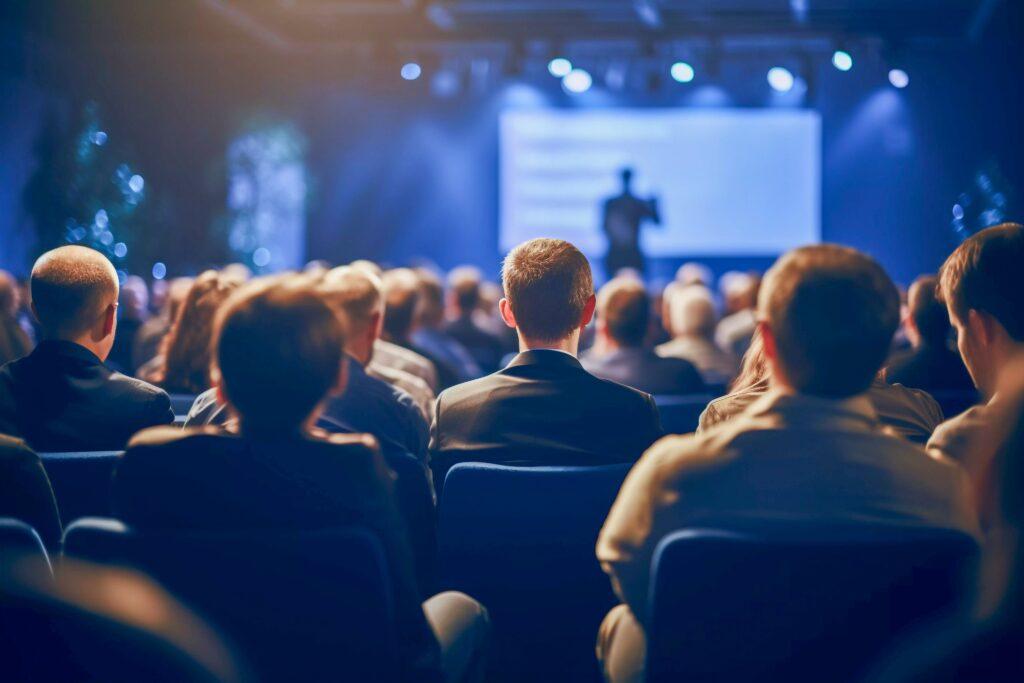
There is a strange moment that can happen at an event.
Everything looks perfect.
The venue is impressive. The lighting is expensive. The branding is everywhere. The stage looks incredible.
And yet something feels off.
The event is polished, but it does not feel alive.
That is the problem with overproduction.
A great event does not have to look unfinished to feel authentic. Professional production still matters. But there is a difference between polish and personality, and audiences increasingly recognize when an experience has been designed around them rather than primarily to look impressive in photographs.
The most memorable events usually have something much simpler in common: they know why they exist, understand the people they are bringing together, and pay attention to how those people will actually experience the occasion.
The venue, programming, technology, hospitality, and production should support that experience rather than compete with it.
If you want to create an authentic event, start with the people—not the production.
1. Start With Purpose, Not Production
Before choosing a venue, designing promotional material, booking entertainment, or planning the stage, ask one question:
Why does this event exist?
The answer might be to bring a community together, celebrate culture, support local artists, create professional connections, introduce people to new ideas, celebrate a milestone, support small businesses, educate an audience, or simply give people a place to relax and connect.
Once that purpose is clear, it becomes easier to decide what belongs at the event and what does not.
If the objective is intimate conversation, a massive stage may create unnecessary distance between speakers and attendees.
If the purpose is community celebration, spending most of the available budget on elaborate décor may provide less value than investing in programming, hospitality, accessibility, or local participation.
If the objective is professional networking, the room layout, sound level, schedule, and available conversation spaces may matter more than dramatic visual production.
Whenever you consider adding something to the event, ask whether it genuinely improves the experience you want attendees to have.
If it does not, it may not deserve the budget, time, or attention.
2. Design Around the Audience
Authenticity becomes easier when organizers listen before they design.
Talk to potential attendees, community members, previous participants, customers, partners, or other relevant groups.
Ask questions such as:
- What kind of event would you actually attend?
- What would make the experience valuable?
- What makes you uncomfortable at events?
- What makes you leave early?
- Who would you like to meet?
- What would make you bring someone else?
- What price feels reasonable for the experience?
- What do you wish organizers did better?
The answers may challenge your assumptions.
You might discover that attendees want fewer speakers and more opportunities for conversation.
Or less networking and more entertainment.
They may care more about food, seating, parking, transportation, accessibility, timing, or a relaxed atmosphere than elaborate production.
Good event design begins with listening.
Stop Designing for Social Media First
Social media can be an important part of event marketing, but the physical experience should not exist primarily to create photographs or short-form videos.
Ask a simple question:
Would this still improve the event if nobody posted it online?
Comfortable seating may not generate thousands of views, but it can create better conversations.
A thoughtful host may not be the most visually dramatic element of the event, but they can determine whether attendees feel welcomed.
A carefully planned playlist may never appear in a social post, but people may remember how the room felt.
A clear sign showing attendees where to go may never become content, but it removes unnecessary frustration.
Social media should help document and extend the experience. It should not dictate the entire experience.
3. Choose the Venue, Talent, and Programming With Care
The most impressive option is not automatically the right one.
Choose the Right Venue, Not Just the Most Photogenic One
A venue should support the personality and purpose of the event.
A community conversation might work well in a bookstore, gallery, café, library, or intimate venue.
A dance-focused event needs appropriate open space.
A dinner requires comfortable seating and effective service.
A workshop needs a practical room layout.
A cultural event may benefit from a location with genuine relevance to the community.
Consider practical factors such as capacity, layout, acoustics, accessibility, transportation, parking, lighting, temperature, restrooms, food-service requirements, technology, safety, and the way people will move between spaces.
The venue should make the desired experience easier to deliver.
Involve People Who Understand the Community
Local talent can give an event cultural and community context that cannot always be created through production alone.
Depending on the event, this might include musicians, DJs, artists, photographers, chefs, designers, speakers, hosts, creators, small businesses, community organizations, and local vendors.
This does not mean every supplier must be local.
What matters is involving people who understand the audience, culture, subject, or community the event is intended to serve.
Authenticity is difficult to manufacture from the outside.
4. Give People a Reason to Participate
People often remember what they participated in more strongly than what they simply watched.
Instead of filling the entire schedule with presentations or performances, create opportunities for attendees to contribute.
Depending on the event, that could include:
- Live Q&As
- Community discussions
- Interactive workshops
- Open-mic sessions
- Collaborative art
- Tastings
- Demonstrations
- Group activities
- Audience voting
- Networking circles
- Local showcases
- Small-group conversations
Participation changes the relationship between the organizer and the audience.
Attendees stop being passive recipients and become part of the experience.
Leave Room for Natural Moments
Authenticity does not mean poor organization.
Professional events still need a run-of-show, backup plans, trained staff, reliable vendors, clear communication, safety procedures, registration systems, venue coordination, and defined responsibilities.
But not every moment needs to be scripted.
A speaker might respond to an unexpected audience question.
A musician or DJ can respond to the mood of the room.
A host can acknowledge something spontaneous.
A valuable conversation may deserve a few additional minutes.
Good production provides enough structure for an event to run smoothly without making the experience feel robotic.
5. Make People Feel Welcome
Hospitality is not simply about spending more money.
It is about demonstrating that someone considered the attendee’s experience before they arrived.
Think about seating, water, food and dietary requirements, temperature, restrooms, accessibility, clear signage, storage where appropriate, transportation information, staff friendliness, quiet spaces where relevant, and whether attendees know where to go when they need assistance.
Accessibility should not be treated as an afterthought.
Depending on the event and audience, organizers may need to consider physical access, accessible seating, readable information, dietary needs, sensory considerations, communication requirements, and whether people with different needs can participate meaningfully.
The First Five Minutes Matter
Imagine arriving at an event alone.
You do not know anyone. You are unsure where to stand. Nobody explains what happens next. You cannot immediately tell where to go.
That experience can create discomfort before the event has really begun.
Now imagine arriving and being welcomed by someone. Check-in is simple. You immediately know where to go. Staff members are easy to identify. The atmosphere feels comfortable, and someone explains what happens next.
If appropriate, a host introduces you to another attendee.
Same venue. Completely different experience.
Some of the most memorable aspects of an event are often these small moments of consideration.
6. Use Technology Without Letting It Take Over
Technology works best when attendees barely have to think about it.
People should be able to discover the event, understand what they are registering for, complete payment where required, receive useful information, arrive prepared, check in without unnecessary delays, and receive appropriate follow-up afterwards.
At each stage, organizers should ask whether the technology is making the experience easier or simply adding another process for attendees to navigate.
Sophisticated technology is not automatically better.
A simple system that works reliably can create a better experience than a complicated one that introduces unnecessary steps.
The goal is not to make technology visible.
The goal is to make logistics feel effortless.
7. Use AI Where It Genuinely Helps
Artificial intelligence can save organizers time on repetitive work.
It can help prepare first drafts of planning checklists, event descriptions, FAQs, content calendars, email ideas, summaries, and routine administrative material.
But efficiency should not come at the expense of personality.
Community relationships, cultural understanding, sensitive communications, creative direction, hospitality, speaker relationships, and live interaction still depend heavily on human judgment.
The language used to describe an event should ultimately sound like the people and organization behind it—not like every other event being promoted online.
AI is most useful when it gives organizers more time to concentrate on the parts of an event that require genuine human attention.
8. Market the Event Honestly
Authenticity begins before attendees arrive.
Marketing creates expectations, and the actual experience should match those expectations.
If an event is an informal community gathering, do not market it like an exclusive luxury experience.
If it is primarily a networking event, make that clear.
If attendees will be expected to participate in a workshop, tell them.
If seating is limited, explain it.
If part of the experience takes place outdoors, provide relevant information.
The event description should accurately represent what people are buying, registering for, or committing their time to attend.
Trust is one of the most valuable assets an organizer can develop.
Misleading promotion may increase short-term interest while damaging long-term credibility.
Tell Stories About People
Event marketing does not need to consist entirely of graphics, slogans, and promotional messages.
Introduce the people behind the experience—the chef, artist, speaker, musician, founder, host, vendor, community partner, or organizer.
Explain why they are involved and what they bring to the event.
People give an event a story, and that story can often communicate more about the experience than another promotional graphic.
9. Look Beyond Ticket Sales When Measuring Success
Ticket sales and revenue matter, particularly for commercial events.
But they do not tell the entire story.
A sold-out event that leaves attendees disappointed may not represent sustainable success.
Alongside commercial performance, look at what people actually did and how they responded.
Did they participate?
Did they stay?
Did they recommend the event to others?
Did previous attendees return?
Were vendors and partners satisfied?
Did people remain connected after the event?
Did attendees register for future activities?
Direct feedback, repeat attendance, referrals, participation, community relationships, and future engagement can reveal things that revenue figures alone cannot.
The objective is not only to understand whether people purchased tickets.
It is to understand whether the experience created enough value for them to want to return.
10. Learn From What Attendees Tell You
Post-event feedback does not need to involve an exhausting questionnaire.
Two simple questions can reveal a great deal:
What is one thing you would want us to keep for the next event?
What is one thing you would change?
The first identifies what attendees valued.
The second identifies friction.
More detailed surveys may be useful for larger or more complex events, but organizers should collect information they genuinely intend to use.
Feedback becomes valuable when it influences future decisions.
Over time, repeated comments can reveal patterns that are difficult for an organizing team to see from the inside.
Frequently Asked Questions
What makes an event feel authentic?
An event tends to feel authentic when there is a clear reason for bringing people together and the experience reflects that purpose. The venue, programming, communication, hospitality, and production should feel connected rather than assembled primarily for appearance.
Does an authentic event have to be small?
No. Large conferences, festivals, exhibitions, and corporate events can feel authentic when the programming, culture, people, hospitality, and attendee experience have been planned thoughtfully.
Authenticity is not determined by audience size.
How can a small event feel professional without a large budget?
Spend first on the things attendees will actually experience.
Clear communication, reliable organization, an appropriate venue, welcoming staff, good programming, comfortable surroundings, and thoughtful hospitality can create a professional event without elaborate production.
What is experiential event design?
Experiential event design considers how attendees move through, interact with, and feel about an event rather than treating it simply as a schedule of activities.
It looks at the whole experience, from discovering the event and arriving at the venue to participating, interacting, and leaving.
How can organizers measure attendee engagement?
Useful signals may include participation, session attendance, time spent at the event, repeat attendance, referrals, direct feedback, future registrations, and interactions with speakers, vendors, activities, and other attendees.
No single metric provides a complete picture.
Can technology and authenticity work together?
Yes. Technology can simplify registration, ticketing, communication, check-in, operations, feedback, and follow-up while human relationships remain at the center of the experience.
The important question is whether the technology reduces friction or creates more of it.
Conclusion
The best events are not necessarily the ones with the largest budgets or the most elaborate production.
They are the ones where people feel welcomed, involved, comfortable, and connected.
They are the events where the venue makes sense, the programming has a reason to exist, the organizers understand who they are bringing together, and the small details show that someone has thought carefully about the people in the room.
Professional production still matters. Technology still matters. Marketing still matters.
But they should support the experience rather than become the experience.
An event does not become memorable simply because everything looked perfect.
It becomes memorable because something about being there felt meaningful.
That is what makes an event feel real.









Leave a Reply